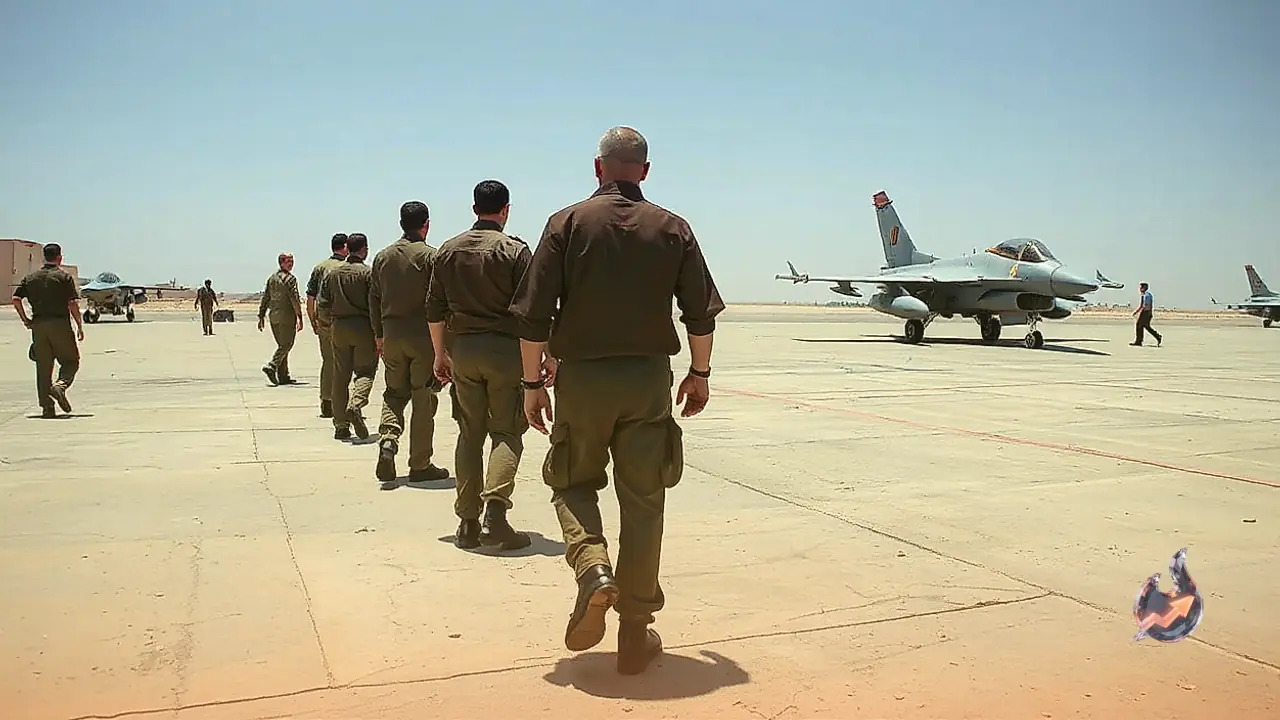

Geopolitical friction in the Middle East has intensified sharply following conflicting reports regarding a military confrontation over the Gulf. According to statements released by the Iranian military, an American F-16 fighter jet was targeted with a missile late Friday night after being detected by integrated air defense networks. While Tehran maintains that the aircraft sustained damage and was forced to make an emergency landing, Washington has strongly disputed the version of events.
The Iranian Claims of a Missile Strike
State-affiliated media reports indicate that Iranian air defense systems operating under the country's integrated network tracked an intruding aircraft above the Gulf waters. The military stated that a missile fired toward the US F-16 detonated in close proximity, causing notable damage and compelling the pilot to abandon the mission prematurely. According to these accounts, the aircraft had to execute an emergency landing following the alleged strike.
US Central Command Refutes the Allegations
In sharp contrast, the US Central Command issued a statement on the social media platform X categorically rejecting the assertions made by Tehran. The American military asserted that no such attack occurred against any US F-16 aircraft and confirmed that all military jets stationed across the Middle East remain completely safe and accounted for. Given these diametrically opposed stances, independent verification of the actual events in the Gulf remains unavailable.
Economic Sanctions and Ongoing Diplomatic Channels
Amidst this military friction, Iranian Deputy Foreign Minister Kazem Gharibabadi declared that Washington's economic blockades are viewed by Tehran as a form of warfare, vowing that the nation will take all necessary measures to counter them. Speaking to local journalists, he emphasized that Iran will never bow to economic coercion aimed at forcing political concessions and will respond appropriately.
Despite the heightened tensions, diplomatic efforts persist through regional intermediaries. Gharibabadi confirmed that a Qatari delegation visited Tehran on Friday night for approximately two hours of talks before departing, praising Doha's ongoing mediation role. He also reiterated that a proposal previously presented to the Sultan of Oman by Foreign Minister Abbas Araghchi remains on the table, with future diplomatic progress depending on whether the US fulfills the conditions required to implement the plan.