




















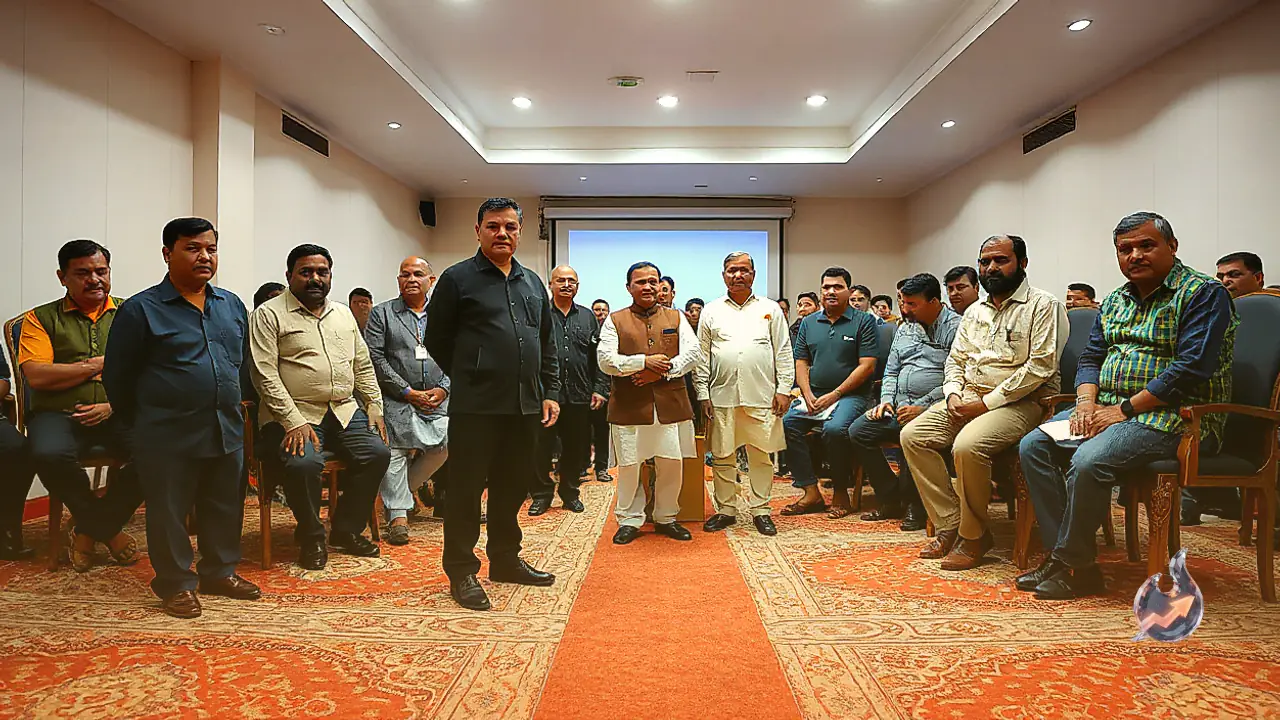

In a major push to reinforce grassroots governance and accelerate public infrastructure construction, Assam Chief Secretary Ravi Kota chaired a high-level review meeting to assess the devolution and utilisation of funds exceeding Rs 33,263 crore. The funds, drawn from both the 16th Finance Commission and the 7th Assam State Finance Commission, are designed to boost financial accountability, improve service delivery, and transform local administrative institutions across urban and rural zones.
Detailed Allocation Under the 16th Finance Commission
The meeting evaluated Assam's central allocation of Rs 17,829 crore earmarked under the 16th Finance Commission for the period spanning 2026 to 2031. Out of this total figure, Rural Local Bodies (RLBs) have been assigned Rs 14,580 crore, while Urban Local Bodies (ULBs) will receive Rs 3,249 crore. Strategic allocation mechanisms covering Basic, Performance, tied, and untied grants formed a key element of the administrative discussion.
Chief Secretary Ravi Kota underscored that releasing subsequent financial installments depends strictly on meeting compliance norms. Local bodies were urged to intensify internal revenue generation, submit pending audit reports promptly, and clear backlogs of utilisation certificates. Furthermore, the meeting addressed development issues in Sixth Schedule areas, the setup of new urban local units, and the timely execution of local body elections.
State Finance Commission Framework and Key Development Schemes
The committee also examined recommendations under the 7th Assam State Finance Commission for the 2026-31 term, which involve an expenditure of Rs 15,434 crore. This sum includes Rs 7,128 crore in devolution grants alongside Rs 8,306 crore in specific grants allocated to Panchayati Raj Institutions (PRIs), Urban Local Bodies, and Sixth Schedule territories.
Additionally, proposed infrastructure spending worth Rs 347.46 crore for the financial year 2026-27 came under close review. These proposals encompass essential public works projects, including the construction and repair of local roads, proper drainage networks, installation of street lighting systems, upgrading of public markets, sanitation drives, and building administrative office space for local units.
Building Institutional Capacity and Governance Integrity
Addressing existing financial bottlenecks, the leadership stressed the urgent necessity of clearing outstanding liabilities and completing pending audit documentations. Timely financial reporting was highlighted as a mandatory step for maintaining institutional credibility and avoiding delays in project execution.
The central premise of the review was that Finance Commission allocations must do more than transfer monetary balances. The administration stressed that resources should translate into long-term financial empowerment, enhanced local planning capacity, and efficient civic service delivery for citizens throughout Assam.