
A car does not need the engine’s full output in every driving situation. During steady highway cruising or slow movement in city traffic, demand can be low, yet a conventional engine continues running all its cylinders and consuming fuel. Active Cylinder Technology, or ACT, addresses that mismatch by temporarily shutting down some cylinders while the car keeps moving.
In a four-cylinder engine, ACT can deactivate two cylinders during normal cruising. The remaining cylinders keep the car running until the driver needs more power. The system is designed to improve fuel efficiency under light load, rather than limit the engine’s output whenever acceleration is required. Volkswagen and Skoda use the technology in selected cars in India.
How the system decides when to switch
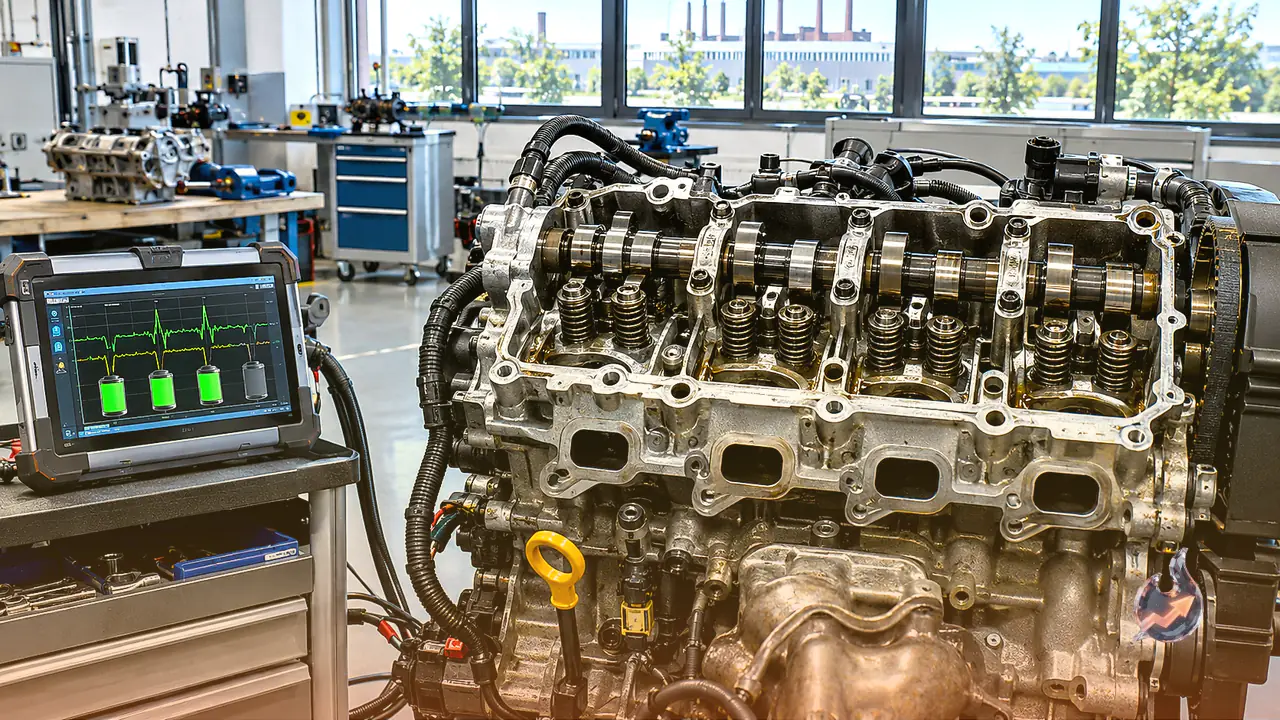
ACT is an engine management system, and its operation depends on the engine control unit (ECU) and sensors. Sensors continuously monitor engine speed, accelerator pedal position and the load on the vehicle. Together, those readings help the system assess how much power the car needs at that moment.
When the driver is maintaining a steady speed and the engine does not need to deliver much power, the ECU signals that selected cylinders can be deactivated. This usually happens while the car is travelling at a stable speed, typically between 1,400 and 4,000 RPM. In a four-cylinder car, two cylinders may stop working, leaving the other two to keep the vehicle moving.
What happens inside the engine
Once the ECU selects cylinders to deactivate, their intake and exhaust valves close, and fuel injection to those cylinders stops. With no fuel being injected into them, the inactive cylinders do not burn fuel while the engine is operating in this lower-demand state. The other cylinders continue running, so the car does not have to stop when the system switches modes.
The change is temporary. If the driver presses the accelerator to overtake or move forward quickly, the ECU brings the inactive cylinders back within milliseconds. Their valves and fuel injection resume, allowing the engine to provide more power. The transition is smooth enough that the driver does not feel a jolt.
Fuel savings while keeping power available
Cars equipped with ACT can use 10 to 15 percent less fuel. The reduction comes from shutting down cylinders when the engine does not need all of them, rather than continuing to burn fuel across every cylinder during light-load driving. The system can also reduce harmful gas emissions because less fuel is being burned in those conditions.
That efficiency measure does not mean the car has to stay in a reduced-power state. When the driver asks for stronger acceleration, the deactivated cylinders resume operation quickly. The driver can still get the engine’s full power and pickup when needed, while the system can conserve fuel when demand is lower. Volkswagen and Skoda offer ACT in selected cars in India, and the technology’s operation depends on the ECU’s assessment of engine speed, accelerator input and vehicle load.