













August 15 marks India's Independence Day, but the very same date in 1947 also witnessed the birth of one of Hindi cinema's most revered actresses. Born in Ranaghat, located in the Nadia district of West Bengal, Rakhee Gulzar captivated film audiences for decades through her innocence, grace, and remarkable acting talent. Over a career spanning several eras, she successfully anchored films as a leading romantic heroine before seamlessly reinventing herself in powerful maternal and character roles. However, alongside her illustrious professional journey, her personal life remained marked by significant emotional turmoil and turning points.
Early Marriage, Separation, and Entry into Bengali Cinema
Rakhee experienced major personal upheaval at a very young age. When she was just 16 years old, she married Bengali film director Ajay Biswas. The marriage proved short-lived, and the couple parted ways approximately two years later. Refusing to let the early divorce derail her future, Rakhee gathered herself and directed her complete focus toward establishing a career. She turned to the performing arts and officially began her acting journey in 1967 with the Bengali feature film Badhu Baran.
Hindi Debut with Jeevan Mrityu and Breakthrough in Sharmilee
Her work in Bengali cinema quickly opened doors for her in Mumbai. In 1970, she secured her debut Hindi film role alongside lead actor Dharmendra in Jeevan Mrityu. The film turned out to be a commercial success and laid a firm foundation for her career in Hindi cinema during the golden era of the 1970s. Opportunities followed rapidly, and in 1971, the film Sharmilee catapulted her to nationwide fame. Playing a double role in Sharmilee, she delivered distinct performances in both characters, cementing her popularity across households. Following this success, she starred in a string of acclaimed hits including Lal Patthar, Paras, Daag, Kabhie Kabhie, Trishul, Kasme Vaade, Muqaddar Ka Sikandar, and Kala Patthar. Her on-screen pairing with Shashi Kapoor gained widespread praise, leading to multiple successful collaborations between the two actors.
Marriage to Gulzar, Birth of Daughter Meghna, and Personal Differences
As her acting career reached new heights, Rakhee met acclaimed lyricist, poet, and film director Gulzar. Their relationship grew closer, culminating in marriage in 1973. Following the wedding, she adopted the name Rakhee Gulzar. In the same year, 1973, their daughter Meghna Gulzar was born, who would later build a distinguished career as a prominent film director. Despite their shared affection, marital discord surfaced over professional choices. Rakhee had temporarily stepped back from acting after marriage but expressed a strong desire to return to the screen, whereas Gulzar preferred that she step away from mainstream filmmaking. These differences escalated during the shooting schedule of the film Aandhi in Kashmir, ultimately leading the couple to live separately.
Transition to Maternal Roles, National Award, and Padma Shri Recognition
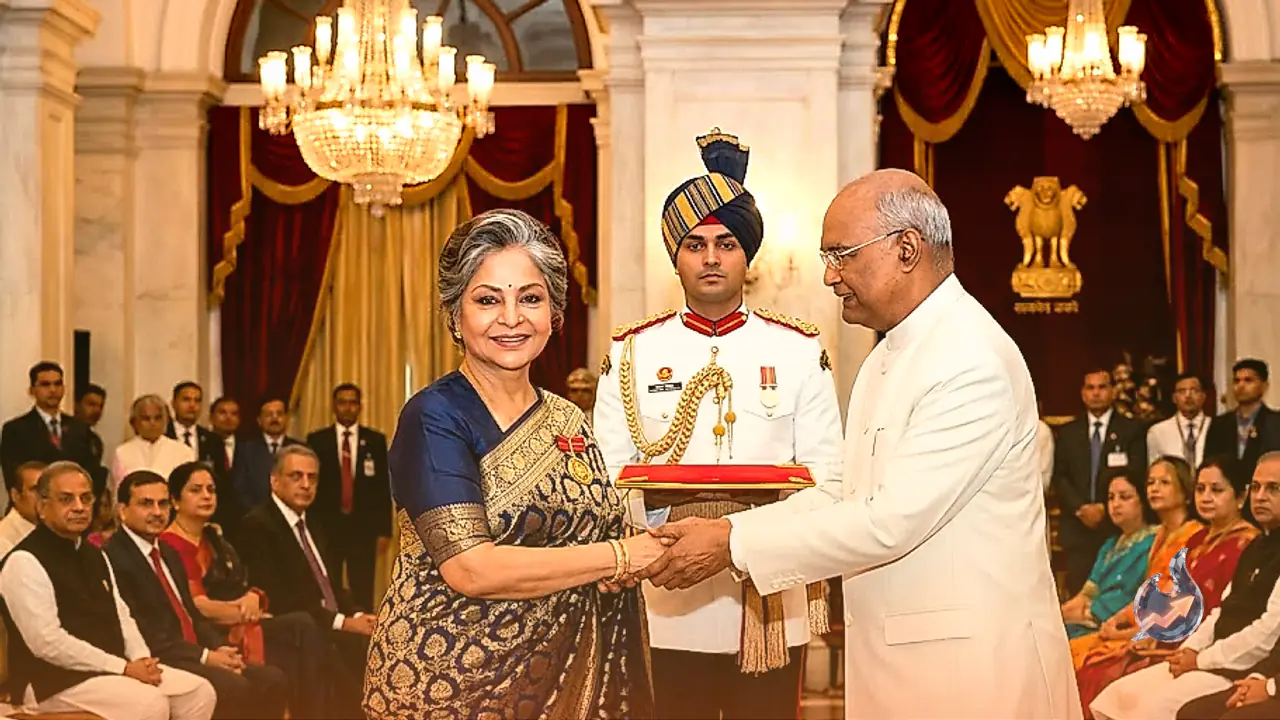
Transitioning beyond leading lady roles, Rakhee embraced powerful character and maternal roles with equal dedication. Throughout the late 1980s and 1990s, she delivered memorable performances in major hit movies such as Ram Lakhan, Baazigar, Khalnayak, Karan Arjun, Border, Soldier, and Ek Rishtaa. Her versatile acting continued to receive industry accolades. In 1990, she won the Filmfare Award for Best Supporting Actress for her role in Ram Lakhan, building upon her previous Filmfare wins for Tapasya and Daag. In 2003, she was honored with the National Film Award for Best Supporting Actress for her performance in the Bengali film Shubho Mahurat. That same year, in 2003, the Government of India conferred upon her the prestigious civilian honor, the Padma Shri, recognizing her enduring contributions to Indian cinema.