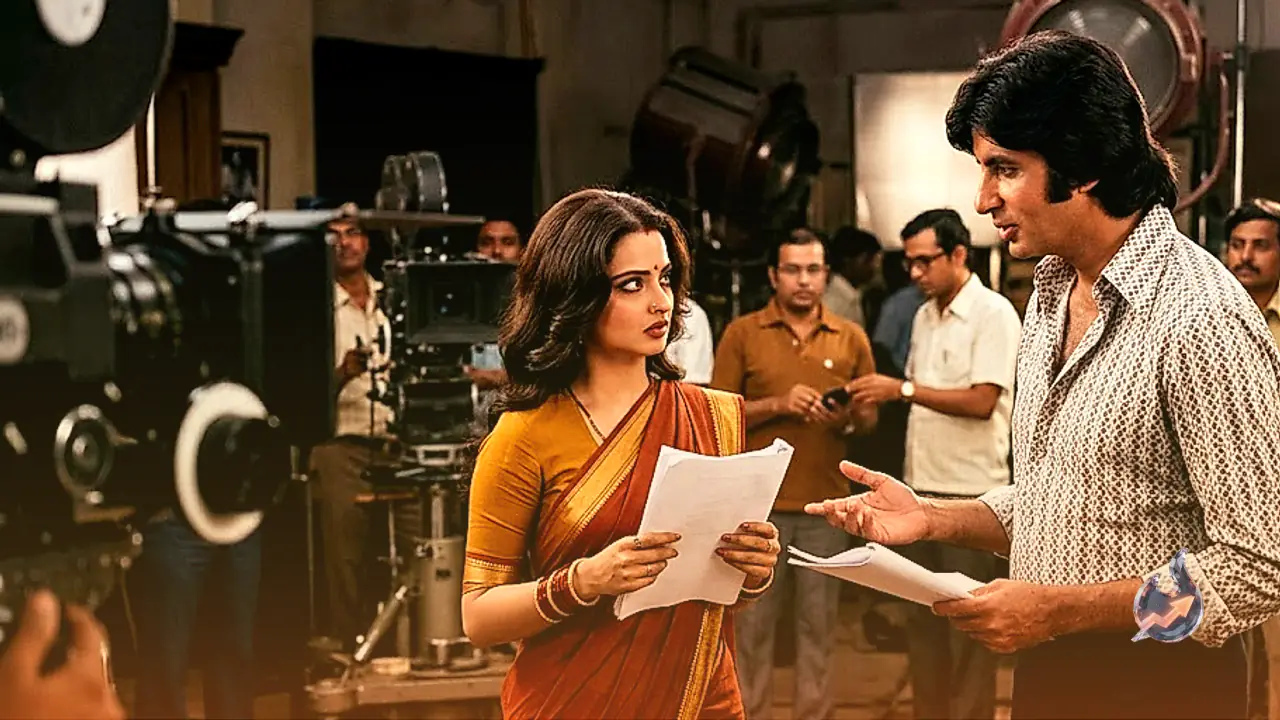



















In the rich tapestry of Indian cinema, the 1981 cinematic adaptation of Umrao Jaan stands as a defining milestone that elevated Rekha to the absolute pinnacle of the film industry. Bringing an exquisite blend of sorrow, longing, unrequited love, and dignified loneliness to the silver screen, Rekha delivered a performance so profoundly etched into public memory that the character of Umrao Jaan remains synonymous with her face. Yet, one of the most remarkable truths behind this cult classic is that Rekha agreed to do the film without accepting a single rupee as her acting fee from director Muzaffar Ali. The story behind her decision reveals how artistic instinct took precedence over commercial considerations.
Muzaffar Ali’s Vision and a Choice Dictated by the Heart
During the June 2025 re-release of Umrao Jaan in theatres, director Muzaffar Ali revisited the journey of making the classic during an in-depth conversation. When asked about Rekha’s compensation for such an intensive assignment, the filmmaker explained that the decision came purely from the heart. Rekha had fallen deeply in love with the soul of the character and felt so intensely drawn to the narrative that she refused to place a financial price tag on her involvement.
Muzaffar Ali recalled that Rekha was always his undisputed first choice for the titular role. He carried a distinct mental canvas of the historical protagonist, and he felt certain that only Rekha possessed the artistic temperament needed to translate that vision onto the screen. According to the filmmaker, Rekha’s eyes held an exceptional depth. She had the rare ability to convey shattering grief and dignified resilience within the exact same beat, portraying a woman who could break emotionally and yet compose herself with poise. That emotional transparency made her indispensable to the film.
The Initial Meeting and a Promise of Cinematic Immortality
The journey of bringing Rekha on board began with an earnest personal appeal. To pitch the project, Muzaffar Ali visited Rekha’s mother alongside his wife, Subhashini. The director laid out his creative aspirations with complete candour, explaining that while he was determined to mount Umrao Jaan, his budgetary constraints meant he would not be able to offer Rekha her standard acting fee.
When Rekha returned home later that day, her mother shared the filmmaker’s honest dilemma with her. Intrigued by the premise, Rekha arranged a formal meeting with Muzaffar Ali to hear the story. As the director narrated the script, Rekha found herself entirely captivated by its emotional resonance. During their conversation, Muzaffar Ali made a memorable promise: while he could not offer her monetary compensation, he vowed that this film would immortalise her on screen. That prophetic assurance came true when Rekha went on to win the prestigious National Film Award for Best Actress for her performance.
A Full Year of Intensive Preparation with Urdu Poetry
Embodying a courtesan of nineteenth-century Awadh required rigorous preparation that went far beyond ordinary rehearsals. Muzaffar Ali explained that Rekha devoted immense attention to mastering the rhythms and nuances of Urdu poetry before stepping in front of the camera. The ground work on poetry commenced roughly a full year before principal photography began.
Poetry served as the primary emotional doorway into understanding the psyche of the protagonist. By immersing herself in verse, Rekha grasped the unspoken pain, cultural elegance, and emotional cadence of the courtesan’s world. The graceful diction, measured vocal inflections, and delicate facial expressions witnessed throughout the film were the direct outcome of that dedicated twelve-month immersion.
The 1981 Masterpiece Rooted in Mirza Hadi Ruswa’s Novel
The film drew its narrative foundation from Mirza Hadi Ruswa’s celebrated 1899 Urdu novel, Umrao Jaan Ada. At its core is the journey of Amiran, a young girl abducted during her childhood and sold into a Lucknow courtesan house, who evolves through hardship into the celebrated poetess and courtesan Umrao Jaan. Despite enduring tragic twists of fate and social displacement, she carves out her dignity through art, verse, and unmatched creative expression.
Released in 1981, the production featured a powerhouse ensemble cast, including Naseeruddin Shah, Farooq Shaikh, and Raj Babbar in pivotal parts. The film’s music, composed by Khayyam, remains one of the finest classical soundtracks ever produced in Hindi cinema. Legendary playback singer Asha Bhosle lent her voice to the iconic ghazals, cementing the production’s enduring status in cinematic history.