

















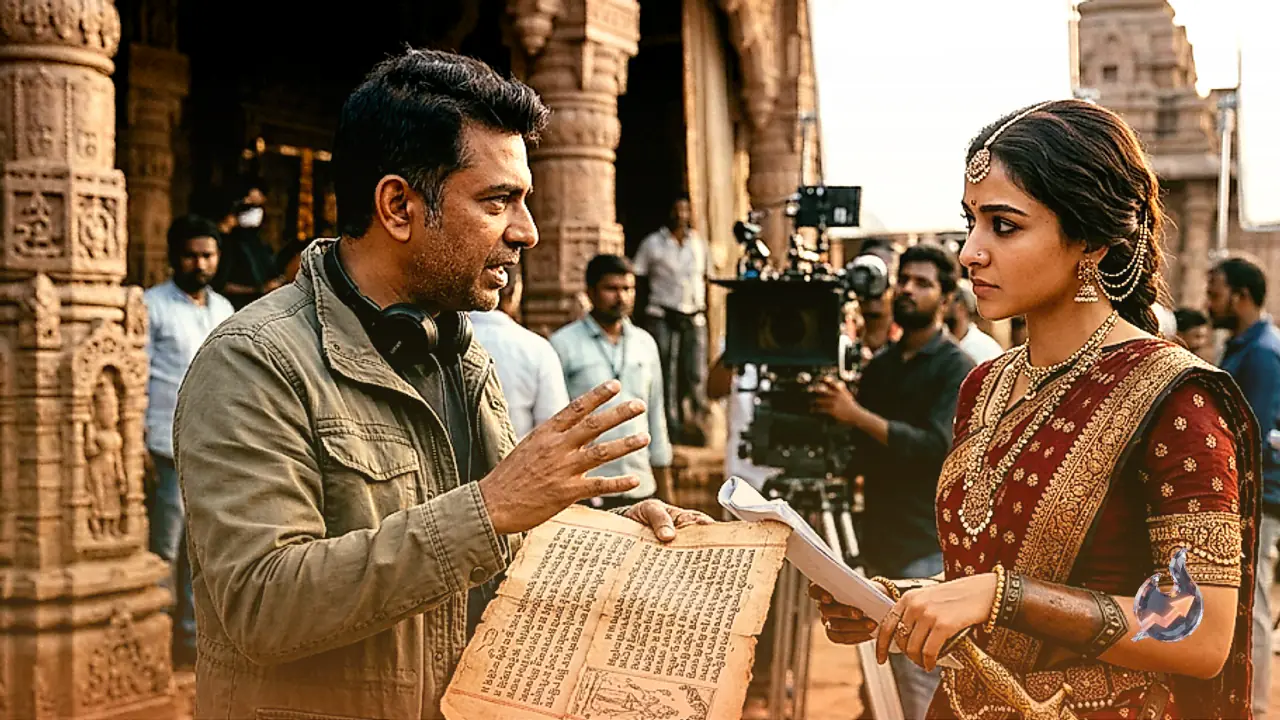

Recent viral clips from the upcoming cinematic adaptation of 'Ramayana' have sparked intense online debate, showing actress Sai Pallavi, who portrays Sita, wielding a sword on the battlefield. The action sequences led several viewers to question why Sita is depicted engaged in combat, as modern pop-culture narratives traditionally portray her as a symbol of patience, sacrifice, and endurance. Addressing these queries, director Nitesh Tiwari clarified the creative rationale behind the sequence, explaining that Sita's warrior persona is not a contemporary fiction but is deeply rooted in classical Indian scriptures and literary traditions.
Referencing Ancient Texts and Alternate Retellings
Nitesh Tiwari explained that while developing Sita's character arc for the movie, he deliberately consulted multiple regional and Sanskrit versions of the Ramayana text. According to the filmmaker, Indian literary heritage contains several traditional retellings where Sita's character goes far beyond the conventional depiction of passive resilience.
While standard screen representations often focus primarily on her gentleness and quiet fortitude, Tiwari pointed out that ancient manuscripts highlight a multifaceted individual capable of taking up arms when cosmic balance requires it. By researching these lesser-known textual traditions, the director sought to present a more complete and authentic exploration of her character.
References to Adbhuta Ramayana and Bilanka Ramayana
Elaborating on his textual research, Nitesh Tiwari specifically highlighted the Sanskrit work 'Adbhuta Ramayana' alongside the 15th-century Odia literary composition 'Bilanka Ramayana'. He noted that both scriptures depict Sita not merely as an enduring victim or onlooker, but as an active warrior and an embodiment of supreme cosmic energy, often referred to as 'Shakti Swaroopa'.
In these specific classical accounts, a key narrative event occurs where Lord Ram finds himself unable to defeat the formidable thousand-headed demon, Sahasra Ravan. In that decisive moment, Sita steps into battle herself, assuming the fierce incarnation of Mahakali to vanquish Sahasra Ravan and lead the fight to victory. This establishes that her role as a formidable warrior on the front lines is firmly backed by traditional lore.
An Authentic Depiction Rather Than Modern Invention
Tiwari emphasized that portraying Sita's action sequences is grounded in centuries-old religious and literary history rather than being a modern cinematic gimmick. He maintained that Sita's multifaceted identity should not be confined to a single dimension, as Indian traditions have long celebrated her divine strength and power.
The viral clips and the director's rationale have drawn widespread interest from across the film fraternity and audiences alike, notably recalling earlier comments by veteran actress Deepika Chikhalia, who played Sita in Ramanand Sagar's iconic television series and had also reacted to the inclusion of action scenes for Sita in Tiwari's film. Tiwari's explanation offers a fresh perspective on how ancient heritage inspires this ambitious film project.