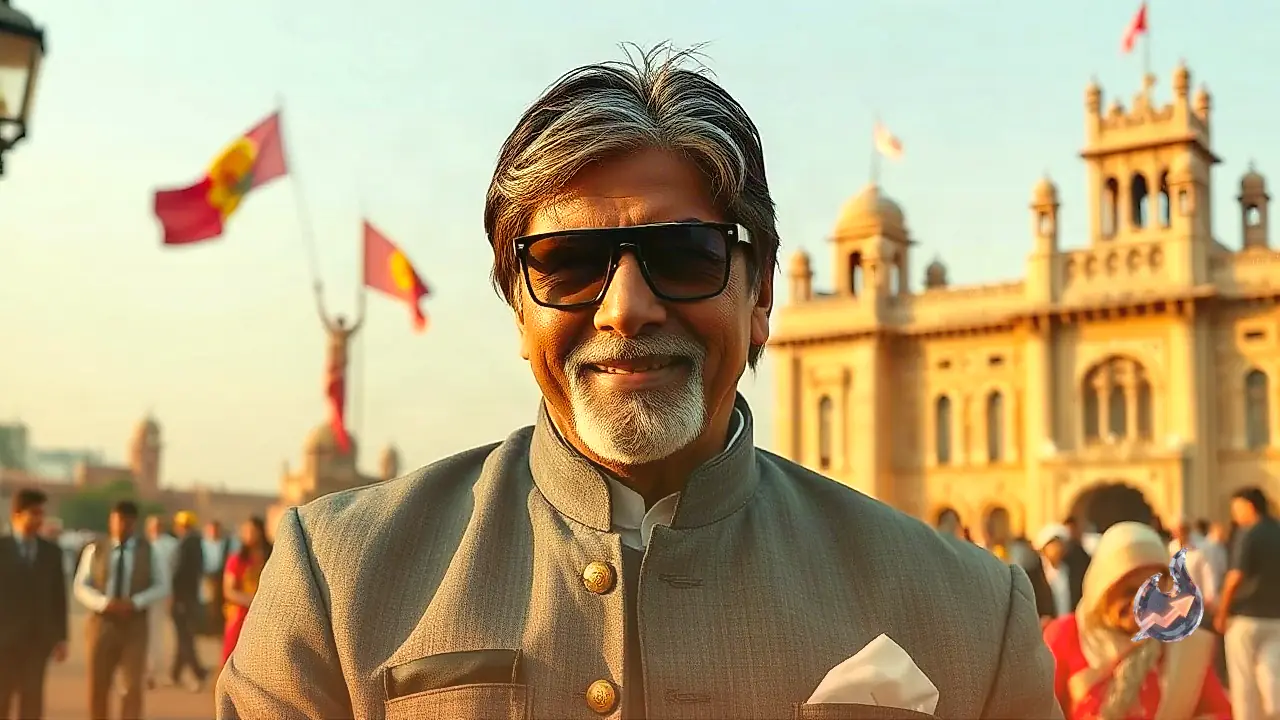

















In an industry where lineage often dictates career choices, the artistic path chosen by Lucky Ali stands completely apart from typical Bollywood trajectories. The son of celebrated actor and comedian Mehmood, he possessed every opportunity to follow his father's established stature in mainstream cinema. However, despite early appearances in front of the camera and an eventual rise to massive musical stardom, he ultimately walked away from the conventional Hindi film framework. His step back was never driven by commercial failure or a lack of projects; rather, it stemmed from deep creative disillusionment with how the industry functioned. Now, following years of selective work, the veteran singer has officially returned to major cinematic playback with a new composition in Drishyam 3.
Acting Began as a Wish to Please His Father
Mehmood remains one of Indian cinema's most revered comedic performers, commanding unmatched screen respect across decades. Yet, his son Lucky Ali never leveraged that immense family influence or sought industry recommendations to build his own path. Even his early entry into films was not born out of a personal ambition to act. In an interview given in 2025, he revealed that stepping before the camera was primarily driven by his desire to make his father happy. While acting satisfied family expectations, he soon realised that his true expressive medium was music rather than screen performance.
During his acting phase, Lucky Ali took on roles in notable cinematic projects. His credits included titles like Chhote Nawab, Chhoti Si Baat, and Hamare Tumhare. Later, he ventured into parallel and artistic cinema, taking roles in Trikal and the acclaimed historical television series Bharat Ek Khoj. These assignments brought him into close artistic collaboration with prominent directors like Shyam Benegal and Sanjay Gupta. Working under Shyam Benegal gave him rare exposure alongside legendary performers such as Naseeruddin Shah, Shabana Azmi, and Om Puri, allowing him to observe the finest nuances of performing arts. Even so, the craft of acting remained secondary to the melodic pull he felt inside.
The Sunoh Breakthrough and Indie-Pop Stardom
True public recognition embraced Lucky Ali only when he brought his own voice and compositions into the spotlight. In 1996, he launched his non-film musical album Sunoh, arriving precisely as the Indian indie-pop movement was discovering its creative prime. The signature composition from that record, O Sanam, captured listener attention almost instantaneously across India. Its acoustic arrangements, unhurried tempo, and natural vocal delivery offered a striking alternative to the high-energy, heavily produced film music dominating radio waves at the time.
Rather than adopting the glitzy styles of contemporary commercial tracks, Lucky Ali steadfastly preserved simplicity and organic warmth throughout his discography. Subsequent tracks further cemented his status as an era-defining vocalist. Songs like Safarnama, Aa Bhi Ja, Ek Pal Ka Jeena, and Tu Hi Hai demonstrated his versatility and lyrical sensitivity, securing him an enduring place in both film playback and independent Indian music history.
Walking Away From Commercial Bollywood Monotony
Despite enjoying widespread admiration, a phase arrived where Lucky Ali completely stepped back from commercial Hindi playback singing. After 2015, his voice was virtually absent from major Bollywood soundtracks. The prolonged silence led to diverse assumptions regarding his motivations. Addressing this period during an interview in 2025, he articulated the exact circumstances that led to his exit.
While acknowledging that certain individuals within the industry had mistreated him, he explicitly dismissed notions that he left due to alleged industry toxicity. Instead, his main grievance was the pervasive monotony, creative repetition, and predictability of mainstream studio culture. Furthermore, following the death of his father Mehmood, the emotional warmth and sense of belonging he previously found in film circles faded away. Believing that the commercial framework no longer held anything meaningful for his creative spirit, he chose to focus on making music purely on his own terms.
Embracing Solitude, Travel, and Sustainable Living
While industry peers remained absorbed in high-profile events, publicity circuits, and red-carpet gatherings, Lucky Ali deliberately sought a quieter, grounded lifestyle. He removed himself from artificial glamour to live in closer proximity to the natural environment. His time was invested in organic farming, travel, and finding contentment away from metropolitan demands.
This departure from cinema screens did not mean cutting ties with his listeners. He maintained contact with audiences exclusively through live musical concerts, occasionally performing in informal settings. Videos of his impromptu performances in Goa circulated widely across social media platforms, regularly earning praise for his unpretentious stage presence and intact musical resonance.
Personal Milestones and Later Life
Lucky Ali's personal journey has witnessed its own distinctive phases. Over the years, he entered into three marriages and is the father of five children. His first marriage was with New Zealand model Megan Jane McCleary, with whom he shares two children, daughter Tasmiyah and son Ta'awwuz.
He subsequently married Inaya, with whom he had two children named Sara and Raiyan. In 2010, he married British model and former beauty queen Kate Elizabeth Hallam, with whom he shares a son named Dani Maqsood Ali. That marriage ended in 2017. At the age of 68, the singer lives independently.
Musical Resurgence in Drishyam 3
After an extended recording gap, Lucky Ali gradually stepped back into playback singing in 2024 by performing the composition Tu Hai Kahan for the feature film Do Aur Do Pyaar. His return has now expanded further with a major theatrical release. His vocals feature prominently in Ajay Devgn's Drishyam: The Conclusion, commonly known as Drishyam 3.
The newly unveiled song, titled Muskura Do, features Lucky Ali on lead vocals, with composition by Rochak Kohli and lyrics penned by Manoj Muntashir. The musical theme centres on family bonds, personal relationships, and discovering optimism during testing circumstances. With Drishyam 3 scheduled for a theatrical release on 2 October 2026, cinema audiences will once again hear his distinct timbre on big-screen sound systems.