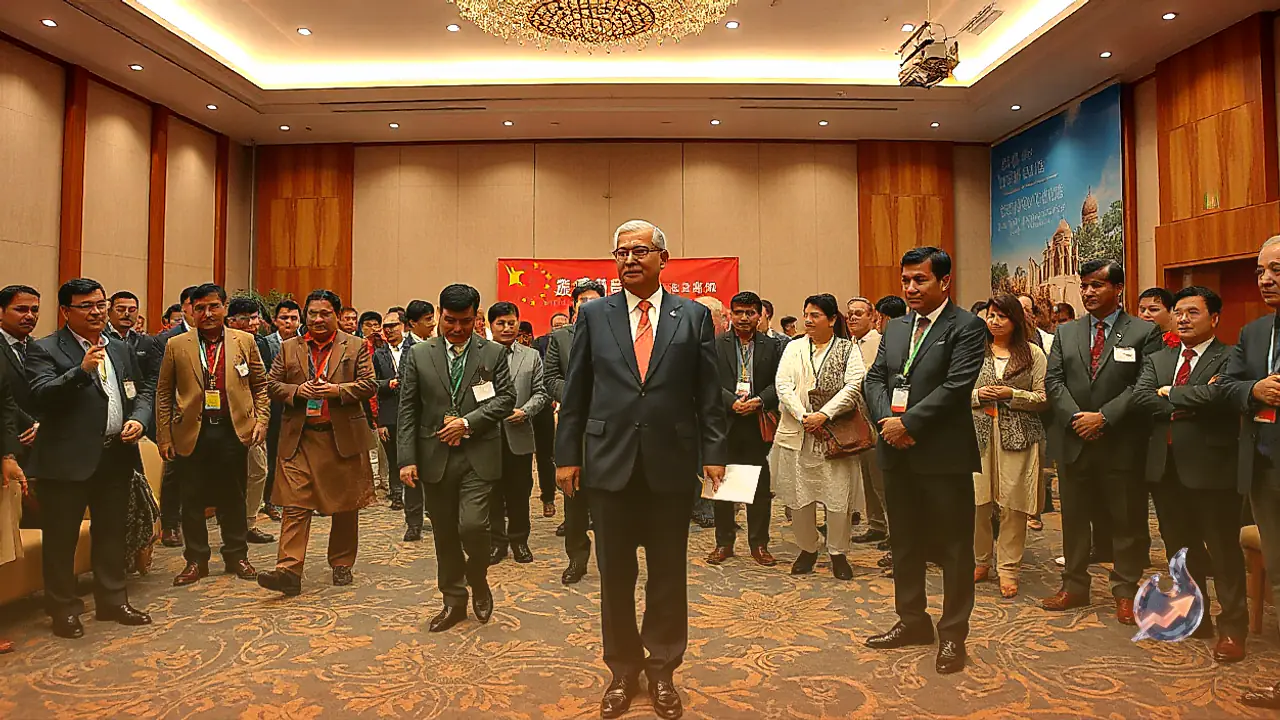

Major proposals concerning pay structure, allowances, and social security benefits for central government employees have been submitted to the 8th Pay Commission. During the second round of discussions held with the Pay Commission chairman on 18 November 2026, the Bharatiya Pratiraksha Mazdoor Sangh (BPMS), a recognized employee federation under the Ministry of Defence, presented a comprehensive list of demands. Key proposals include raising the annual increment rate to 6 percent, restoring the Old Pension Scheme (OPS), and merging 50 percent of existing Dearness Allowance (DA) into basic pay prior to salary revision.
Revised Pay Structure and Fitment Factor Criteria
The employee federation emphasized adopting scientific benchmarks for salary revision and minimum wage calculation. BPMS urged the commission to merge 50 percent of the prevailing DA into basic pay and pension before implementing overall pay restructuring. Additionally, the union advocated using the standards of the Indian Labour Conference, the Aykroyd Formula, and prevailing market prices as the core basis for fixing the minimum wage.
To shield employees against inflationary pressures, the union requested an appropriate fitment factor to preserve purchasing power. It also proposed maintaining balanced pay progression across pay levels by capping the ratio between minimum and maximum pay at 1:10.
Enhancements in Bonus, Insurance Cover, and Provident Fund Interest
Significant updates to financial protection schemes were submitted to the panel. BPMS demanded that all central government employees, including senior staff, receive ad-hoc or productivity-linked bonuses equivalent to at least 30 days of salary plus DA. Furthermore, the union recommended increasing the insurance cover under the Central Government Employees Group Insurance Scheme (CGEGIS) from its current limit of ₹30,000 to at least ₹15 lakh.
Similarly, the federation suggested raising the maximum benefit under the Deposit Linked Insurance scheme to ₹10 lakh. It also requested aligning the interest rate on the General Provident Fund (GPF) with that of the Employee Provident Fund (EPF) to ensure better retirement savings for government staff.
Leave Policy Modifications and Provisions for Female Staff
To improve work-life balance for public sector employees, BPMS proposed several changes to existing leave regulations. The union called for expanding annual casual leave to 12 days. It also requested restarting the LTC Special Cash Package alongside leave encashment of 20 days for every eligible LTC block.
Regarding family welfare, the submission includes extending paternity leave, including cases of child adoption, to 45 days, and providing child care leave for up to two years with full pay. To address specific health needs, the union proposed granting one day of monthly menstrual leave for female employees.
Provisions for Ex-Servicemen, Union Representatives, and Workplace Safety
For re-employed ex-servicemen, BPMS requested leave encashment benefits of up to 300 days without deducting previous service records. On workplace safety and health, the union urged full-pay leave under Work Related Illness and Injury Leave (WRIL) along with suitable compensation in cases of job-related injuries or illnesses.
To support trade union operations, the federation requested increasing special casual leave for union office bearers to 60 days and executive committee members to 30 days annually.