
The ambitious push to move computing data centers into Earth orbit is confronting a reality check that has less to do with aerospace engineering and more to do with Wall Street balance sheets. While modern semiconductors have proven resilient enough to survive the harsh radiation and vacuum of space, paying for those high-end components is quickly turning into an unprecedented financial bottleneck. The fundamental structure of AI hardware financing simply does not translate to orbit.
How Terrestrial Chips Secure Cheap Capital
On Earth, the expansion of artificial intelligence infrastructure is overwhelmingly powered by debt financing. Cloud service providers borrow massive sums from financial institutions to construct data centers, pledging to pay back those loans over time using a portion of their operational revenue. The bedrock of these lending agreements is the physical chips themselves, which serve as collateral. If a data center operator defaults on its loan commitments, the lenders retain the right to seize the hardware and liquidate it on the secondary market to recover their capital.
This safety net significantly lowers borrowing costs for tech firms. High-performance graphics processing units maintain considerable resale value even after years of operation. Data from the Compute Credit Research Index illustrates this longevity, showing that certain Nvidia H100 units originally released in 2023 still command roughly half their initial purchase price. Higher-end H200 configurations introduced in 2024 have maintained secondary market prices nearly identical to their launch pricing, offering lenders a reliable hedge against default.
The Problem with Repossessing Hardware at 17,500 MPH
That entire risk mitigation framework breaks down the moment hardware is launched into outer space. Financial institutions cannot repossess a server rack embedded inside a satellite traveling at 17,500 miles per hour in an orbit 300 miles above Earth's surface. According to recent reports regarding SpaceX's massive $40 billion chip financing deal, participating lenders specifically requested protective covenants stipulating that none of the acquired chips be deployed in orbital data center operations. Whether SpaceX formally acquiesced to that restriction remains unconfirmed.
In the short term, such financing restrictions may not severely hinder SpaceX's broader strategy. The company has developed a lucrative business deploying heavy compute at terrestrial ground stations. During a recent financial presentation, Chief Executive Officer Elon Musk described how he reassigned specialist engineers from the company's rocket division to overcome terrestrial bottlenecks, such as accelerating the casting of turbine blades for power generators far faster than traditional industrial suppliers could manage.
Terrestrial Bottlenecks Versus the Promise of Orbit
Despite those operational workarounds, building data centers on ground level faces mounting friction. Real estate acquisition, power grid access, and local environmental opposition regularly stall earthbound projects. Simultaneously, financial markets are closely watching whether commercial buyers can generate sufficient revenues from their massive compute investments to justify current spending levels.
Musk stated in early 2026 that he expects space to become the most cost-effective location to operate compute clusters within two to three years. Achieving that economic threshold, however, hinges entirely on SpaceX achieving routine, fully reusable flights with its heavy-lift Starship rocket. While a recent flight test successfully demonstrated the pinpoint landing of Starship's upper orbital stage back at its Texas launch facility, the company was unable to recover the massive booster stage. Questions remain regarding how quickly the upper stage can be refurbished and the exact costs required to prepare it for subsequent orbital missions.
Higher Capital Costs and the Competitive Landscape
Even if Starship slashes launch costs, SpaceX and emerging space startups including StarCloud, Cowboy Space Company, Sophia Space, and Orbital will still need to buy silicon. Lacking the ability to pledge those chips as loan collateral means space-based operators will likely face significantly higher borrowing costs and steeper capital expenditure hurdles than their ground-based competitors.
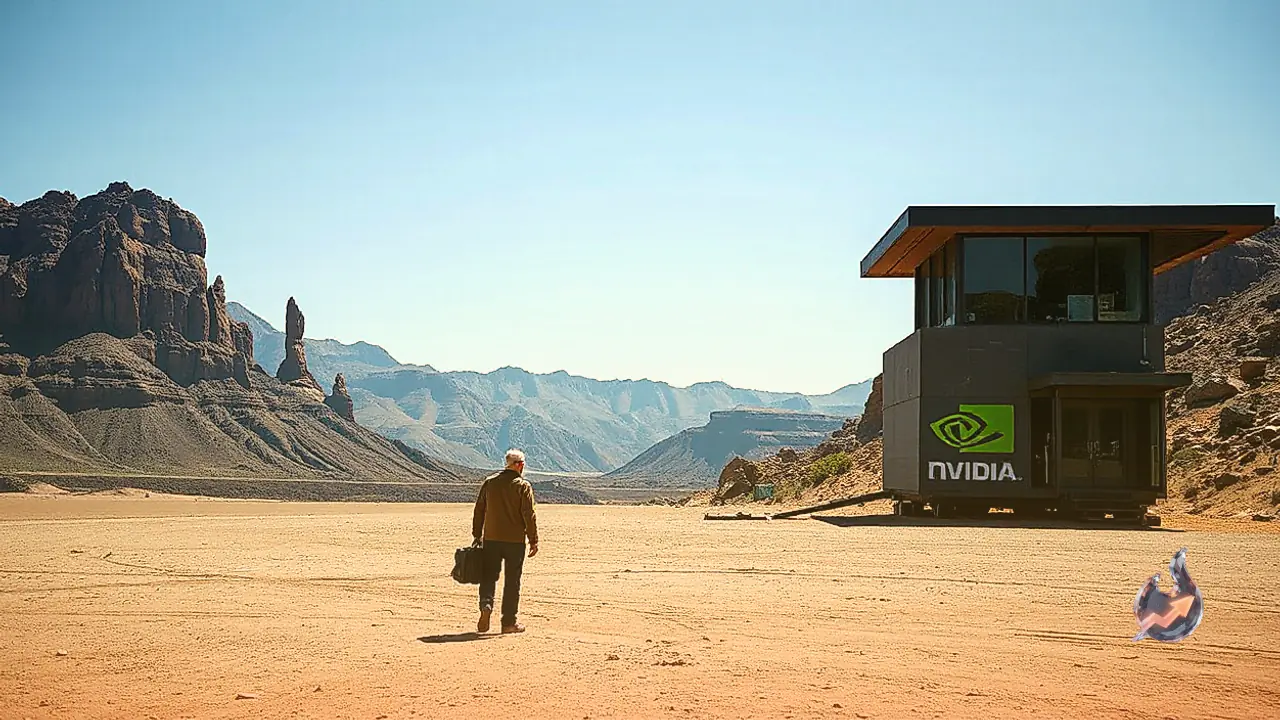
This emerging divide could grant an advantage to tech giants with proprietary hardware ecosystems like Google, which is advancing its own space compute initiative, Project Suncatcher, using internal TPU silicon. SpaceX and Tesla are attempting to build their own semiconductor manufacturing facility, dubbed Terrafab, in the United States. However, that foundry project has yet to break ground and will require years of development and billions of dollars in capital expenditure before producing semiconductors at scale.