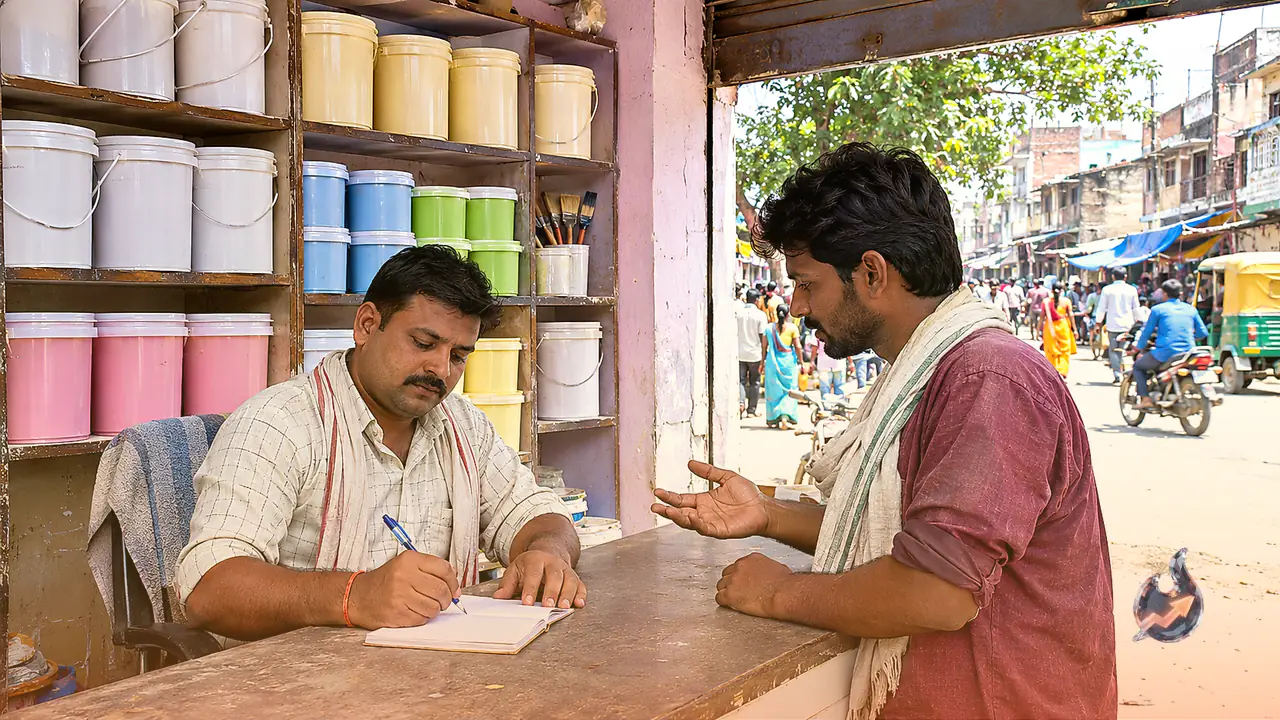

Opening a paint shop takes more than buying products and putting up a sign. Jamui trader Roshan Kumar says the choice of location, the local demand for goods and the way start-up capital is used all shape the early decisions. Construction of homes, shops and buildings continues throughout the year, which can sustain demand for paint and construction supplies.
That does not guarantee low risk or a particular profit. Anyone considering the business still needs to study the nearby market, find a place customers can reach and decide how much stock fits the available space and budget. Kumar's advice focuses on those practical choices rather than on a promised return.
Choose a shop customers can reach and notice
Kumar recommends a location with convenient foot traffic and visibility from the street. If customers have trouble reaching or spotting the shop, a chance to make a sale may be lost. Location decisions therefore need to account for access and visibility as well as the shop's size or rent.
He says a space of two hundred to four hundred square feet can be enough to get started. That gives a shopkeeper room to arrange stock and show products to customers. With a compact shop, using the available floor space thoughtfully matters: goods need to be stored in an orderly way while remaining easy to present.
Build the opening inventory around local demand
The amount of each product to keep on hand should reflect what people in the surrounding area are looking for. Kumar advises carrying more of the items that see stronger local demand. A customer who cannot find a needed product may leave for another shop, costing the business a sales opportunity.
Before opening, a new shopkeeper can therefore pay attention to nearby buying needs and use that understanding to shape the first order. Buying too much of a product without checking demand could tie up money in stock that moves slowly. The article does not identify specific paints, products or brands that are in demand, so the opening mix has to be based on the needs of the shop's own area.
Give customers a choice of brands
Relying on a dealership from just one large company can leave customers with fewer options. Kumar suggests stocking products from different brands and companies so shoppers can compare choices under one roof. A wider selection may make it easier for customers to find something that suits their preference and can support sales.
Offering variety does not mean buying large quantities of every product. The shopkeeper can balance the initial selection against the space and money available. Paying attention to the brands customers ask about and the products they buy can help shape later purchases.
Keep some capital back at the start
Kumar advises against putting all available capital into the shop at once. For example, someone with a total of six to seven lakh rupees for the business could begin by investing only three to three and a half lakh rupees. That approach keeps the entire amount from being tied up in the market immediately.
During the first few days, the shopkeeper can observe sales and market trends before deciding how to use the remaining money. If a particular product sells quickly and demand stays steady, the business can gradually add more of it using the funds left over. The article does not set out rent, licensing, staffing or other costs, so its example covers only the stated total capital and initial investment.
Track products customers cannot find
When a customer leaves without buying because an item is unavailable, the shopkeeper should record what was missing. Reviewing that list from time to time can reveal which products customers repeatedly ask for. The record helps identify missed sales and can also inform the next supply order.
If the same requests keep coming up, the advice is to bring those products into the shop. That makes it possible to adjust stock in response to observed customer needs and market trends. Kumar says matching the business to local demand can help it gain momentum and earn a good profit, though these suggestions do not promise a particular sales result or income.