























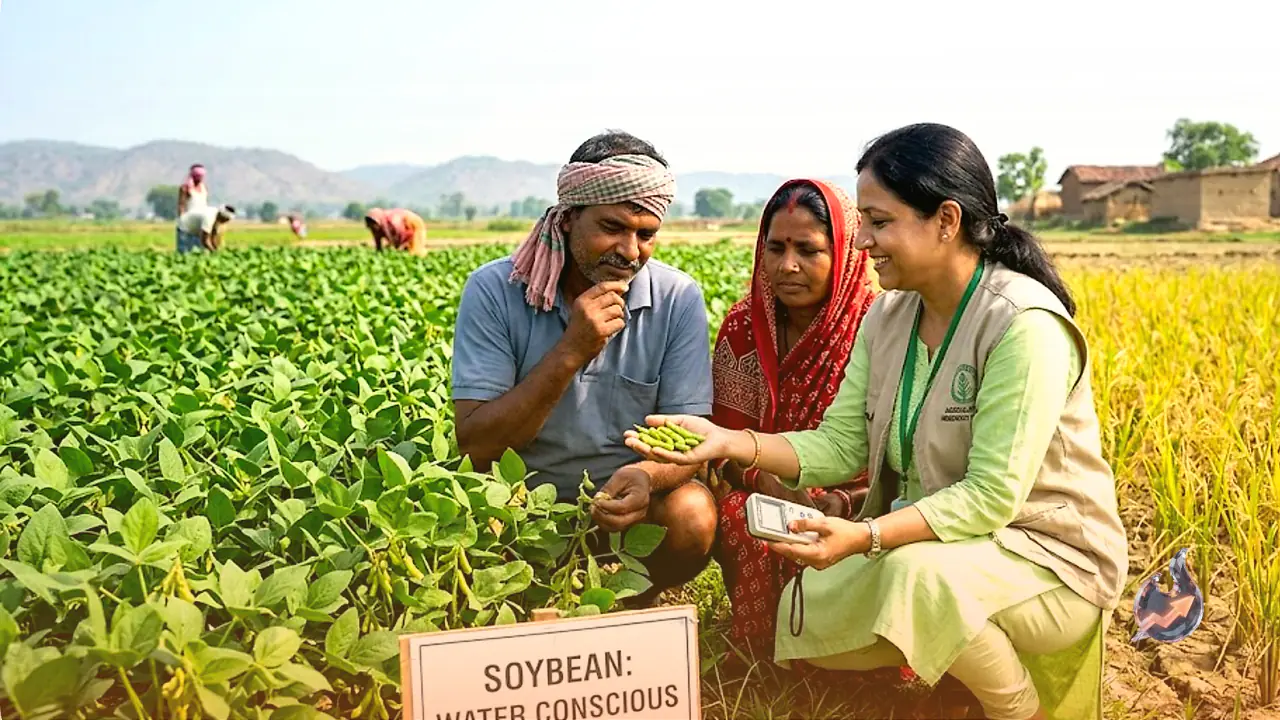

As Bihar heads into the kharif season, paddy has traditionally been the crop of choice for most farmers, but this year the weather outlook is nudging them to think differently. The India Meteorological Department, or IMD, has forecast below normal rainfall in several parts of the state this year, creating a fresh dilemma for farmers in Sitamarhi and the surrounding belt over which crop to sow. Agricultural scientist Anuradha Ranjan says farmers in regions expecting scanty rainfall should move away from the conventional paddy cycle and turn instead to alternative crops that mature faster. According to her, soybean farming in the state's upper and middle plain areas could turn out to be a far more profitable and safer bet than paddy. Districts like Sheohar, with their light sandy soil and elevated terrain, are particularly well suited to soybean cultivation because water does not stagnate there, a problem that often plagues paddy fields.
How Long Does Soybean Take To Mature
Soybean is considered an excellent oilseed crop precisely because it needs less water and less time to mature, which is what makes it such a reassuring option when rainfall is uncertain. Several improved varieties with different maturity periods are available in the market, allowing farmers to pick one that suits their soil, water availability and local climate. A standard soybean crop typically takes around 120 days to ripen, but scientists have also developed specialised varieties that mature in just 110 days. For areas facing an even tighter timeline or a more severe water shortage, farmers can opt for the 'Anamika' variety, which is ready in only 90 days. These shorter duration varieties not only cut down the risk from drought but also help farmers free up their fields in time for the next sowing cycle, keeping the overall crop rotation running smoothly.
Preparing The Field And Soil Before Sowing
Getting a good soybean yield depends heavily on following the right technique and scientific methods at every stage. The field should first be ploughed two to three times until the soil turns loose and crumbly, which helps germination, and proper drainage arrangements must be made at the same time. Before sowing, treating the seeds with fungicide and Rhizobium culture is essential, since this protects the young plants from disease and enables them to fix nitrogen from the air. Soybean seeds should always be sown in rows, keeping a distance of roughly 30 to 45 centimetres between rows and about 10 centimetres between individual plants. It is also important that the soil carries adequate moisture at the time of sowing, because insufficient moisture can hamper germination.
Getting Fertiliser, Nutrition And Weed Control Right
Since soybean is a leguminous crop by nature, it does not require large quantities of nitrogen fertiliser. However, applying a balanced dose of phosphorus, potash and sulphur at the time of sowing is important, as it noticeably improves grain quality and boosts the oil content of the crop. The field must be kept completely free of weeds during the first 30 to 40 days after sowing, since this is the window in which weeds do the most damage to plant growth. Farmers can either carry out manual weeding or use an appropriate herbicide available in the market to keep the field clean.
When To Harvest, And What Farmers Stand To Gain
Timing the harvest correctly matters just as much as every other step in the process. Farmers should cut the crop only once the leaves turn yellow and start falling and the pods have dried out completely. Agricultural scientists believe that by adopting this kind of alternative farming instead of sticking with paddy, farmers can not only shield themselves from the losses caused by low rainfall and drought like conditions, but also make their annual income considerably more secure and stable than before.