





















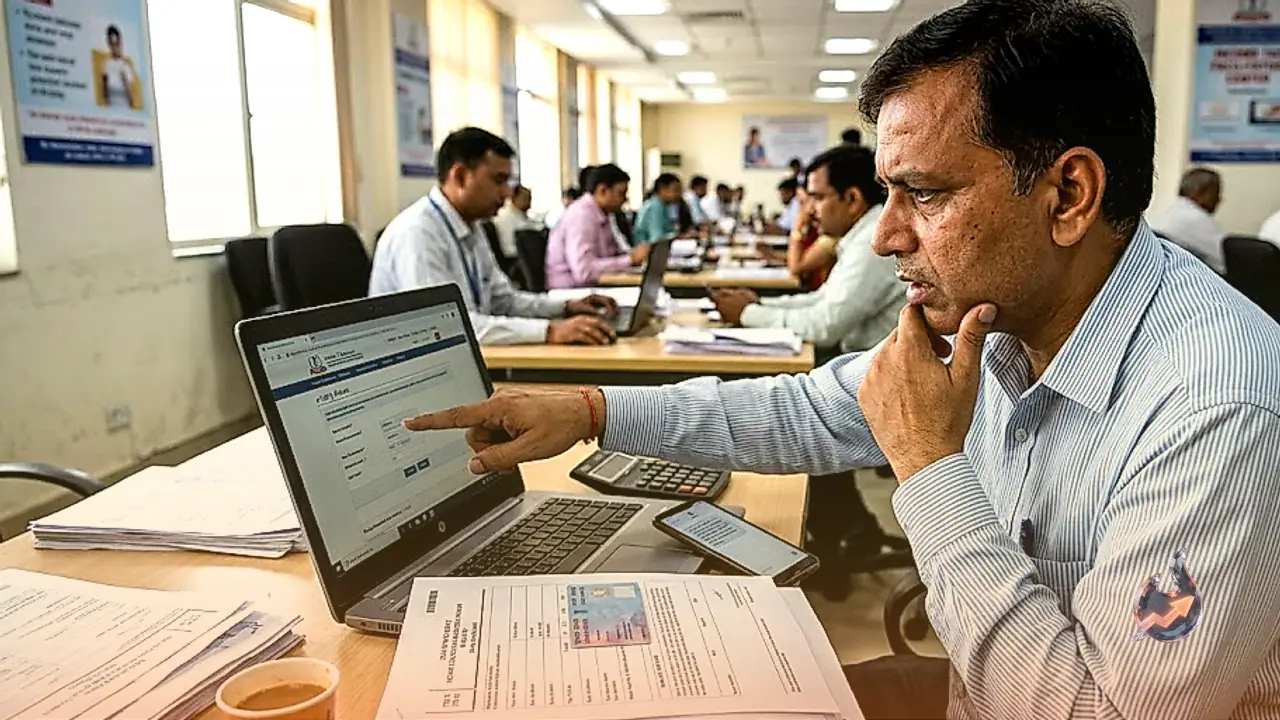

The month of July is always a period of intense activity for salaried individuals and business owners alike, as the deadline for filing Income Tax Returns is consistently set for July 31. For the 2026 financial year, this deadline remains unchanged. With over a week of the month already elapsed, only about 40% of taxpayers have completed their filings. In the coming days, more than 40 million people are expected to rush to file their returns. In this flurry of activity, mistakes are bound to occur. It is imperative to remember that filing your return is only part of the process; failing to complete the necessary secondary steps can lead to a blocked refund and the imposition of hefty penalties, regardless of how accurate your information might be.
The importance of validation for return validity
The primary condition for a successful Income Tax Return filing is that it must be submitted accurately, matched against proper documentation, and verified within the prescribed timeframe. For the millions of young professionals receiving their first salaries, this process may be unfamiliar. Due to a lack of awareness, many taxpayers forget to validate their ITR after submission. Under the Income Tax Act of 1961, an unverified return is considered invalid. This oversight could lead to your return being rejected and potentially inviting a fine from the tax authorities.
Why validating your ITR is mandatory
According to the Income Tax Act of 1961, it is mandatory to verify an ITR within 30 days of filing. An ITR that has not been verified is deemed invalid. If you file such a return and fail to verify it on time, the Income Tax Department may impose both late fees and penalties. In such cases, not only will you be unable to claim your refund, but you will also end up paying thousands of rupees in fines and fees. Validation serves as an affidavit confirming that all information provided in your return is truthful and verified by you.
How validation triggers the refund process
The significance of validation can be understood by the fact that the Income Tax Department does not initiate the refund process until the ITR is verified. Even if you are entitled to a tax refund, it will remain stagnant if the verification step is omitted. By failing to validate, you are effectively halting the processing of your own money, which could lead to significant financial inconvenience.
Provisions for penalties
If you have filed your ITR on time but neglected to validate it within the 30-day window, your return will be treated as invalid under Section 234F of the Income Tax Act. Once the 30-day deadline passes, the Income Tax Department will impose a penalty of 5,000 rupees if your income exceeds 5 lakh rupees. For those with an income of less than 5 lakh rupees, the penalty is 1,000 rupees. Furthermore, if your failure to validate leads to an outstanding tax liability, the department will charge interest on the unpaid tax in addition to the late fees.
Steps to take if you miss the validation deadline
If you realize that you have missed the 30-day window for verifying your ITR, the first step is to inform the income tax authorities immediately. You can communicate this via email or by submitting a formal request through the online grievance portal. You must provide a valid reason for the delay. If the tax authority finds your explanation genuine and acknowledges that the omission was an honest mistake, they may consider your request and initiate the process to validate your ITR late.