























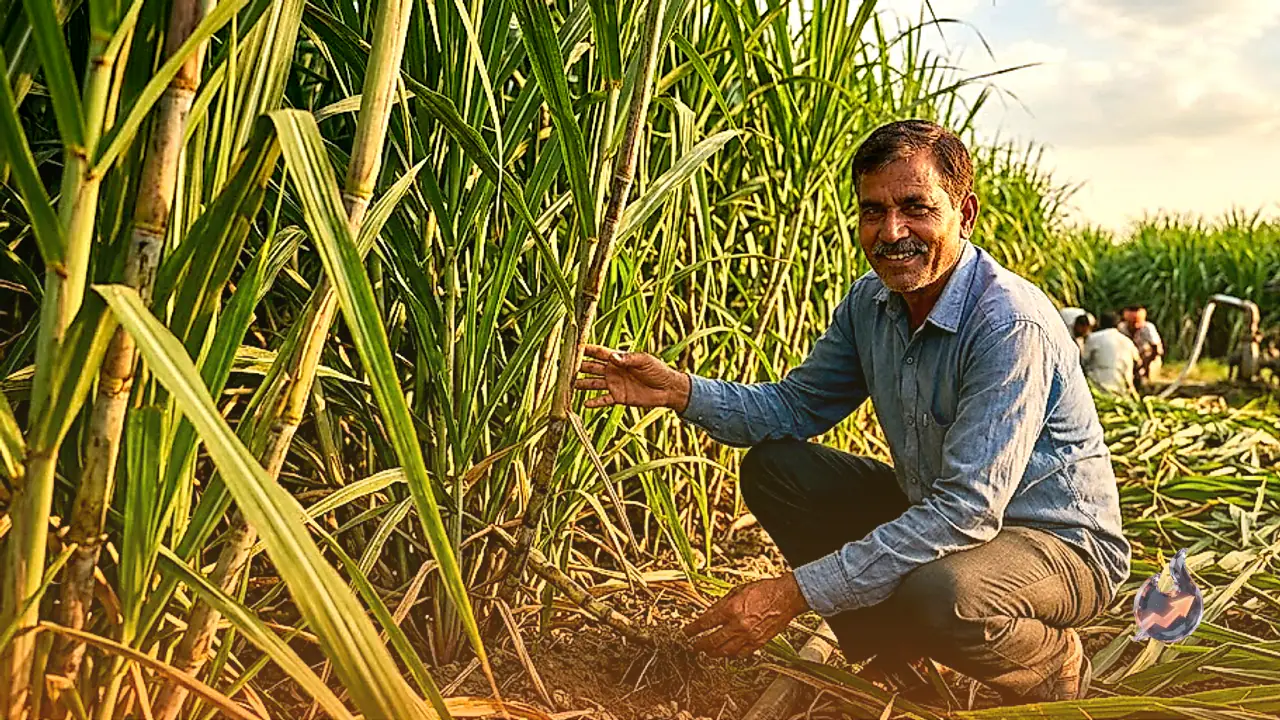

Uttar Pradesh's Bahraich district is a prominent agricultural hub, and for the past ten years, Durgesh Kumar Singh, a resident of Tikuri village, has been transforming his fields into highly profitable sugarcane plantations. Sugarcane is widely recognized as a lucrative cash crop that holds the potential to completely change a farmer's economic trajectory. Drawing on a decade of hands-on experience, Durgesh Kumar Singh has shared crucial insights that can turn a standard agricultural endeavor into a highly rewarding business. His comprehensive guidelines, which cover everything from critical post-sowing care and meticulous cost management to defending the crop against devastating diseases, serve as a practical roadmap for farmers aiming to maximize their agricultural income.
The Critical Phase of Moisture and Weed Management
Simply planting the sugarcane seeds is never enough; the real work begins during the crucial post-sowing phase. Agricultural scientists and seasoned farmers alike emphasize that maintaining adequate soil moisture immediately after planting is the first condition for a successful harvest. When the sugarcane sets begin to sprout and germinate, the field must never be allowed to dry out completely. Applying light irrigation at regular intervals during this fragile stage is absolutely essential to ensure rapid and healthy plant development. Alongside moisture management, keeping the field entirely free from weeds is another major challenge that demands constant vigilance. If grass and wild vegetation are permitted to grow freely, they aggressively absorb the vital soil nutrients that are meant for the main crop, effectively dividing the soil's strength and stunting the sugarcane's growth. To combat this, timely weeding and hoeing are mandatory agricultural practices. Hoeing does more than just eradicate unwanted plants; it loosens the topsoil, allowing essential air to reach deep into the root system, which ultimately anchors the sugarcane firmly and boosts its overall robustness.
Analyzing Costs, Yield, and Net Profit Margins
When viewed through a commercial lens, sugarcane farming is an exceptionally profitable venture if executed with precision and care. According to the detailed calculations provided by Durgesh Kumar Singh, cultivating one bigha of sugarcane requires a total initial investment ranging from 10,000 to 12,000 rupees. This comprehensive cost includes purchasing high-quality seeds, applying necessary fertilizers, plowing the land, managing irrigation cycles, and finally, covering the harvesting labor. If the farmer maintains the crop scientifically and weather conditions remain favorable, a single bigha can yield an impressive average of 80 to 100 quintals of premium sugarcane. When this substantial harvest is sold in the open market or supplied directly to sugar mills at prevailing commercial rates, it easily generates a gross revenue of 30,000 to 35,000 rupees. Deducting the initial input cost of 10,000 to 12,000 rupees from this gross revenue leaves the farmer with a handsome net profit of 20,000 to 25,000 rupees per bigha. For progressive farmers who cultivate sugarcane on a massive commercial scale, this profit margin scales exponentially.
Defending Against Red Rot and Stem Borers
Achieving a bountiful harvest also requires protecting the vulnerable crop from severe biological threats. In sugarcane farming, the two most destructive adversaries are the dreaded red rot disease and the relentless stem borer caterpillars. Red rot is widely considered the cancer of the sugarcane world; the disease causes the internal core of the stem to turn completely red, leading the once-healthy plant to gradually dry up and perish. The most effective strategy to prevent this lethal outbreak is to rigorously select only certified, disease-free, and robust seeds for planting. Furthermore, treating these seeds before they are sown is an indispensable preventive measure. On the other hand, during the early vegetative stages, the tender crop is highly susceptible to attacks from stem borer caterpillars and various other harmful insects. To thwart these infestations and keep the crop secure, farmers must routinely spray targeted insecticides at exactly the right intervals. Cultivators are strongly advised to consult with agricultural experts or visit their local Krishi Vigyan Kendra to obtain accurate guidance on the best pest control methods.
Overcoming Waterlogging and Ensuring Crop Recovery
The relentless rains of the monsoon season introduce a completely different set of formidable challenges for sugarcane cultivators, with severe waterlogging topping the list. While heavy rainfall is expected, allowing stagnant water to pool in the fields for extended periods can prove disastrous for the crop. Prolonged exposure to standing water causes the sugarcane's root system to rot rapidly, bringing plant development to a sudden halt and severely weakening the entire crop structure. When faced with acute waterlogging, the farmer's immediate priority must be to establish an effective drainage system to channel the excess water out of the field without delay. Once the torrential rain stops and the bright sun emerges to dry the field, a specialized recovery protocol must be initiated to nurse the crop back to health. After the standing water has been fully drained, applying a light, measured dose of urea or zinc directly near the root zone works wonders. This targeted fertilization delivers an instant nutritional boost to the distressed plants, bringing a vibrant green hue back to the yellowing foliage and kick-starting rapid growth once again.