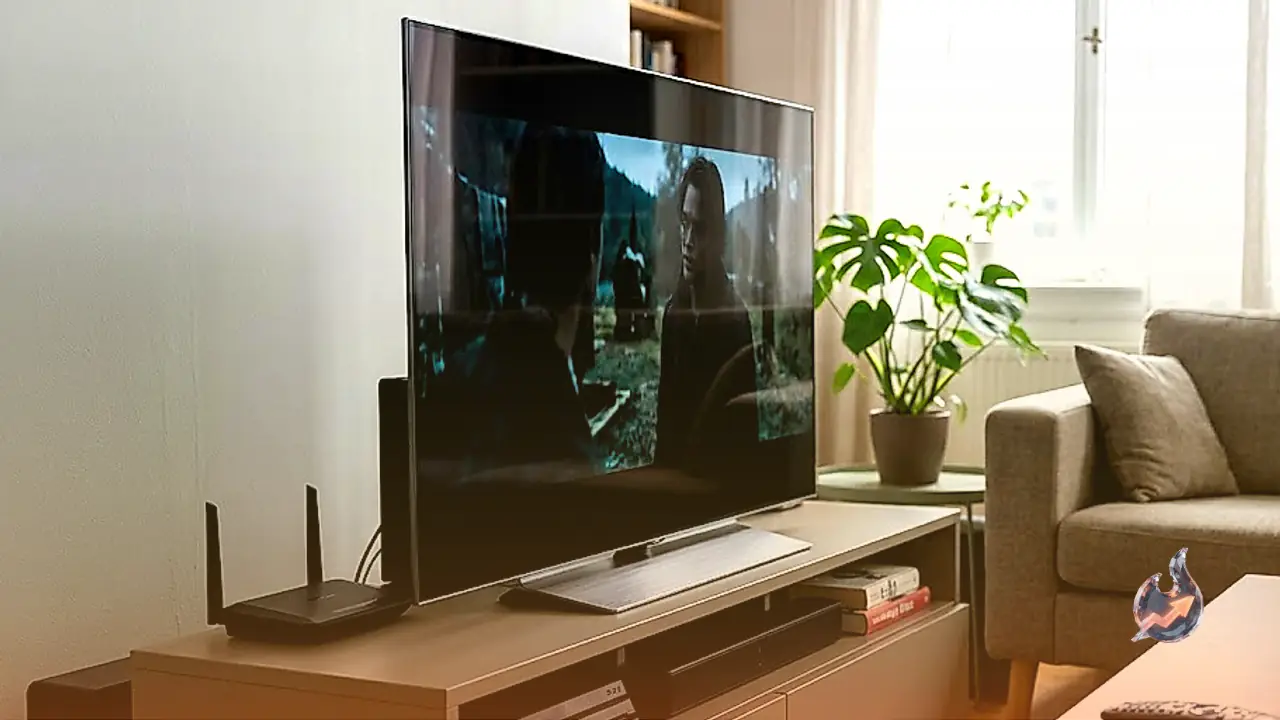



















The TCL RM9L stands out as a flagship television within TCL's 2026 lineup, launched alongside the TCL X11L. Unlike its sibling, it introduces RGB Mini LED backlighting, marking a first for the brand, and positions itself just above the TCL RM8L. It arrives equipped with the robust feature set expected from a top-tier TCL television, including an ATSC 3.0 NEXTGEN TV tuner capable of handling 4K over-the-air broadcasts, four HDMI 2.1 inputs, and smart capabilities driven by Google TV 14. Gamers are also well-catered to with a rapid 144Hz refresh rate that can scale up to 288Hz by reducing the resolution. The model tested features an 85-inch screen, while the lineup also extends to 98-inch and 115-inch variants.
Home Theater and Dark Room Performance
Delivering an exceptional home theater experience, the television excels in dark environments due to its high contrast ratio and highly effective local dimming engine. Blacks appear profound and uniform with minimal haloing around bright highlights or subtitles. Colors remain vivid and radiant, allowing subtle elements in cinematic scenes to stand out with striking clarity. Format support is comprehensive, featuring eARC audio passthrough compatible with all standard audio formats, alongside native Dolby Vision and HDR10+ support, with future readiness for Dolby Vision 2. This ensures the display remains modern and adaptable to evolving media standards.
Bright Room Utility and Sports Viewing
When placed in brightly lit spaces, the display maintains strong visibility. It generates enough luminance to comfortably counteract daytime glare, keeping bright lighting from becoming overly distracting. Although the glossy finish does little to mitigate direct reflections, ambient illumination has no noticeable negative impact on perceived contrast or color volume. For sports enthusiasts, the high brightness level ensures daylight viewing is hassle-free. However, the RGB backlight setup introduces some color cross-talk, occasionally giving whites a subtle tint from neighboring hues. While the center of the screen shows negligible dirty screen effect, the outer edges appear slightly darker, and the narrow viewing angle means images fade when viewed from wide seating positions.
Gaming Capabilities and Responsiveness
Gamers will find plenty to appreciate here, as the display accommodates high refresh rates, particularly benefiting PC players who choose to lower resolution for smoother motion, alongside VRR support to mitigate tearing. Four full-bandwidth HDMI inputs allow multiple consoles and a gaming PC to stay connected simultaneously. Activating the lowest-latency Game Mode preserves the contrast ratio, though accurate settings result in dimmer real-world scenes that can be adjusted easily without sacrificing overall image quality. Responsiveness is commendable with low input lag at elevated refresh rates, though 60Hz lag is slightly higher than average. Motion remains relatively clear with minimal blur trails and no disruptive overshoot.
Brightness Peaks and Image Processing
Peak brightness levels are remarkably high, ensuring the screen easily overcomes daylight glare and delivers impactful HDR presentation where small details shine. However, the display struggles to sustain peak brightness indefinitely during exceptionally bright scenes. Native contrast is solid with uniform lighting and virtually no backlight bleed, while local dimming significantly deepens dark areas. Motion handling is smooth, effectively removing judder from standard content while leaving minor stutter during slow pans. Image processing performs admirably, cleaning up low-quality streaming compression artifacts and upscaling standard definition feeds cleanly, though HDR playback tends to run significantly brighter than intended creative standards.