























Amid rising cultivation costs in modern farming, farmers are increasingly turning toward crops that offer higher yields and better financial returns in shorter periods. Along with traditional crops like paddy, wheat, and sugarcane, local growers in the district are transforming vegetable farming into a lucrative livelihood. Although cultivating vegetables demands significantly more physical labor and constant attention, securing fair market prices allows farmers to generate impressive profits even from smaller plots of land.
Learning the Craft from Family Tradition
Young farmer Ajay Kumar comes from a family deeply rooted in agricultural traditions. His father has long been engaged in cultivating various vegetables, accumulating substantial practical knowledge over the years. Having absorbed these essential farming techniques and experiences directly from his father, Ajay has stepped into vegetable production with confidence. He explains that while this type of farming requires regular upkeep and diligent effort, maintaining a healthy crop coupled with favorable market rates ensures a steady and continuous stream of income for the grower.
Brinjal Cultivation Across One and a Half Bighas
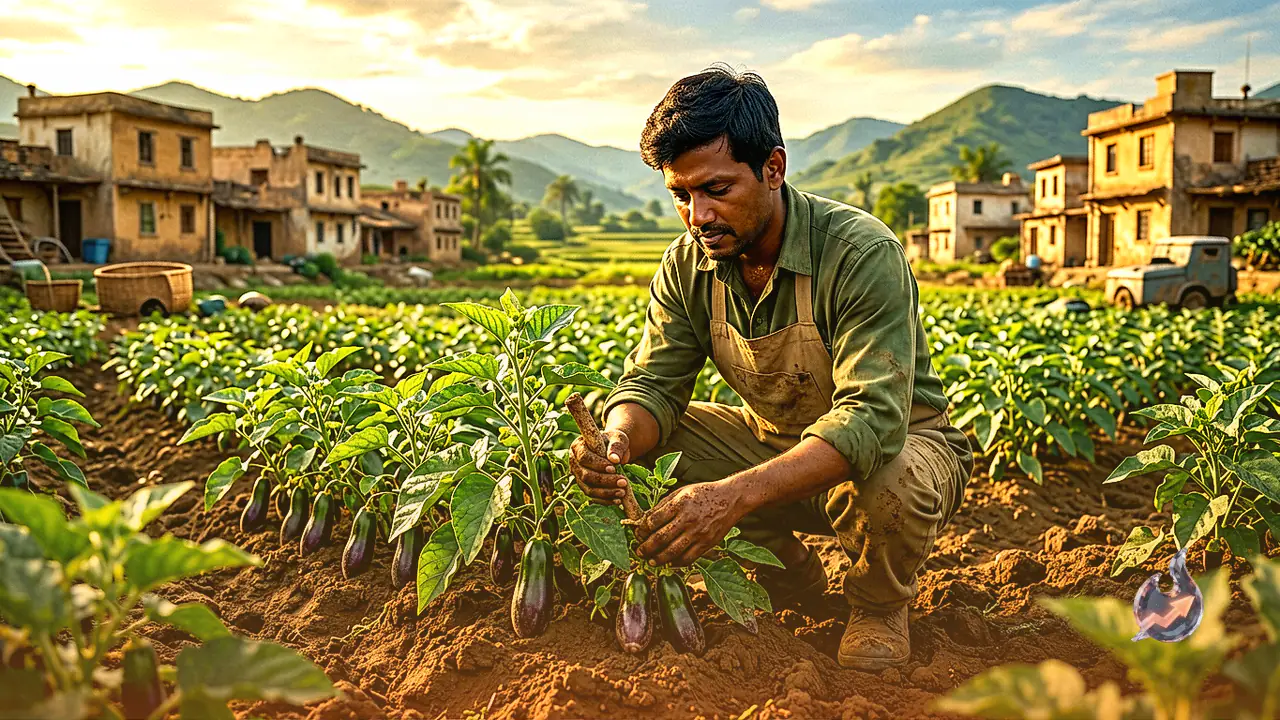
Currently, Ajay Kumar has dedicated approximately 1.5 bigha of land exclusively to growing brinjals. The crop is thriving in his fields, yielding a consistent and steady harvest. Once ready, the produce is promptly transported to local markets for sale. Ajay points out that a major advantage of growing brinjal is that once the plants are established, harvesting can be carried out repeatedly over an extended period. This eliminates the pressure of having to sell the entire harvest at once, allowing fresh batches to be plucked from the fields and sent to the market gradually.
Generating Daily Earnings of Two Thousand Rupees
In local marketplaces, brinjal is currently fetching prices ranging between 20 and 30 rupees per kilogram. Factoring in current market rates and the steady yield from his fields, Ajay Kumar manages a daily revenue of around 2,000 rupees. Vegetable farming is not an entirely unfamiliar domain for him, as he grew up observing agricultural activities within his household. From preparing the soil and nurturing the crops to harvesting and transporting them to buyers, he has closely understood every single step of the supply chain, which now aids his daily agricultural enterprise.