























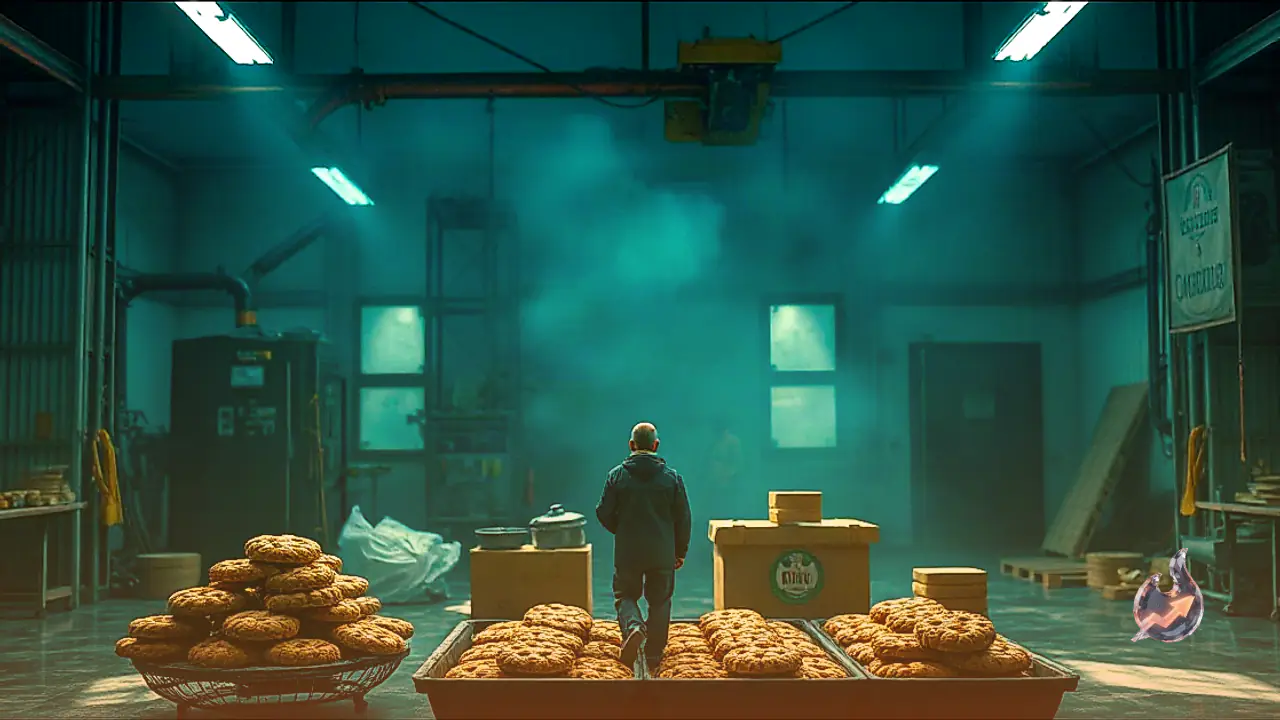

Entrepreneurs looking to enter the food processing sector can find strong potential in baked goods. Individuals with a capital of two lakh rupees who are seeking a practical commercial venture can consider setting up a small-scale biscuit manufacturing unit. The entire operation can be started within residential premises or by utilizing just two rooms. Launching with this initial capital allows owners to generate solid earnings and eventually create employment opportunities for others in their community.
Required Machinery and Initial Setup Costs
Operating a biscuit production unit requires two primary machines. The first unit is responsible for mixing and kneading the raw ingredients, while the second unit roasts and bakes the biscuits. According to Dheeraj Kumar Maurya, who operates a biscuit plant through a Farmer Producer Organisation (FPO) in Mirzapur district, the dough kneading machine costs approximately 20 thousand rupees. The specialized roasting machine accounts for roughly one lakh 70 thousand rupees.
Procuring both machines involves a total equipment investment of around two lakh rupees. In addition to the equipment cost, installing the setup requires a modest supplementary expenditure of around five to 10 thousand rupees. These manufacturing tools are readily available in markets across Mumbai as well as Noida. Aspiring business owners can locate suppliers through Google searches or direct trade channels to place orders directly with vendors.
Raw Materials and Production Process
The type of flour selected forms the foundation of the end product. Producers can opt for refined wheat flour to manufacture traditional biscuits. Alternatively, those targeting healthy dietary trends can utilize coarse grains such as sorghum, corn, pearl millet, and barley. In this approach, whole grains are purchased directly from local markets and finely milled prior to production.
During the manufacturing workflow, the dough mixing machine blends the flour with other ingredients to produce the base batter. Once the dough reaches the right consistency, it is shaped into uniform pieces. These formed pieces are then transferred to the roasting machine for thorough baking. After the baking cycle finishes, the finished biscuits are prepared for cooling, packaging, and commercial retail.
Registrations, Licensing, and Distribution Channels
Establishing a compliant production unit requires obtaining essential business documentation. Founders should secure an Udyam registration for their enterprise. Along with GST registration, acquiring an operational food license from the food department is mandatory. If the unit operates under a recognized self-help group or an FPO, obtaining only the mandatory food license is sufficient to commence business activities.
Packaging can initially be managed manually at home without complex industrial infrastructure. Dheeraj Kumar Maurya originally began his biscuit manufacturing operation with an investment of roughly two lakh rupees, and over time, his setup expanded into a facility valued at nearly one crore rupees serving robust consumer demand. He noted that while marketing initially required personal groundwork, modern online platforms have simplified wider product distribution. New operators can leverage digital sales channels to market their packaged biscuits to a broader audience.