
When Bekker began planning her trip, she had very little familiarity with the massive Chinese manufacturing hub of Foshan or how to navigate its sprawling commercial districts. Driven by the desire to furnish her new apartment in East London without spending a small fortune, she decided that making an international journey to buy directly from the source would still be far more economical. Armed with a substantial social media following, she later documented her entire experience, detailing every find and the exact financial breakdown of her purchases.
Her decision came after weeks of scrolling through home renovation clips on TikTok while trying to budget for her one-bedroom property. Confronted with skyrocketing prices for standard sofas and household items, her digital feeds increasingly pushed content highlighting direct factory manufacturing in China. Videos boasted about mass-produced tables and seating arrangements at a fraction of Western retail costs, making the distant manufacturing capital appear as a viable destination for her home furnishing project.
The phenomenon is part of a broader shift where consumers bypass traditional retail channels, opting instead to source custom pieces directly through messaging apps, online marketplaces, and factory visits. While design replicas were once confined to apparel and accessories, the demand for high-end furniture knockoffs has surged significantly. Buyers are increasingly willing to overlook traditional brand prestige and international shipping hurdles to secure items that promise comparable aesthetic appeal at drastically lower prices.
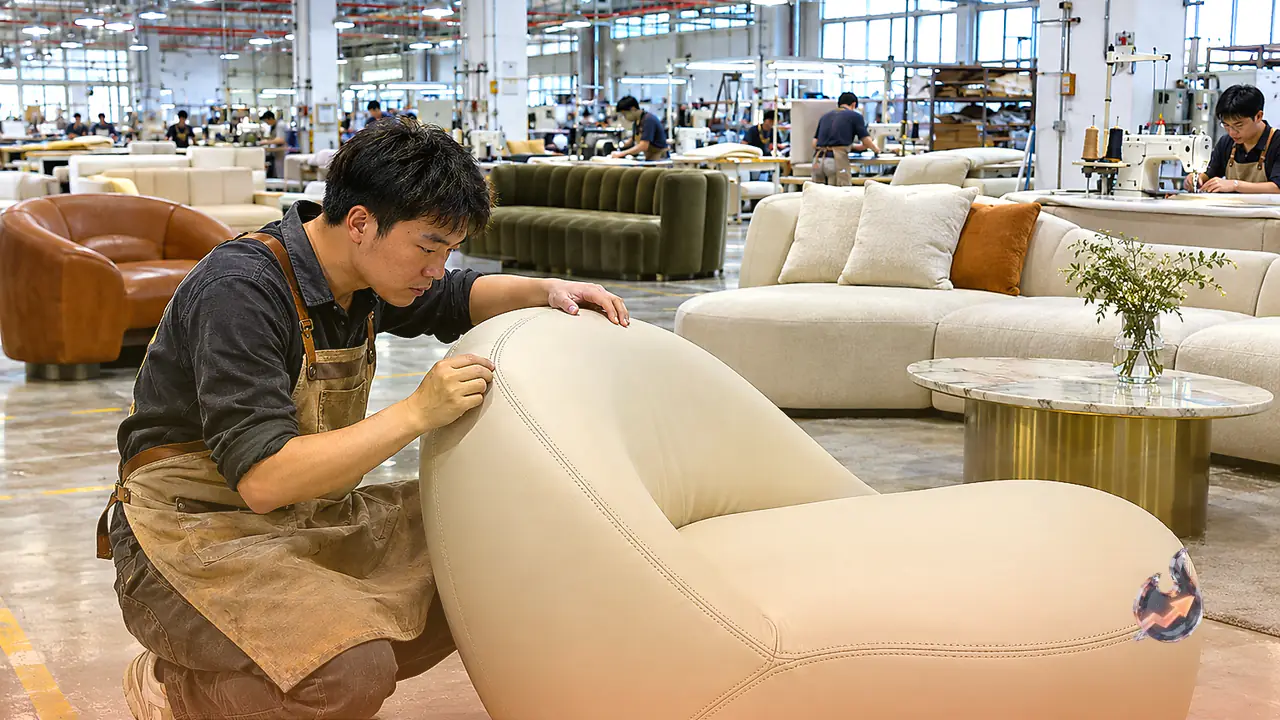
At the center of this commerce stands the Louvre, an immense exhibition and retail complex in Foshan spanning millions of square feet and attracting millions of international visitors annually. Housing thousands of domestic and foreign brands, the sprawling facility offers everything from minimalist aesthetics to classical European styles under one roof. However, the true manufacturing engine lies further out in areas like Longjiang, where miles of specialized workshops and suppliers handle the actual production of timber, hardware, and upholstery.
Local sourcing agencies have streamlined the entire process for foreign travelers, offering packaged trips that include transportation, accommodation, and guided factory visits tailored to specific budgets. These services have successfully attracted clients from diverse regions including North America, the Middle East, and Europe, transforming a traditional business-to-business manufacturing sector into a destination for individual shoppers looking to bypass markup-heavy retail markets.
The rapid rise of Foshan's furniture industry mirrors China's broader manufacturing boom over recent decades. Local producers frequently study high-end designs showcased at international exhibitions in Europe, purchasing authentic pieces to dismantle and examine their internal construction. While legal experts point out the complexities surrounding intellectual property and design patents, manufacturers continue to refine their replication techniques, leveraging lower labor costs to sustain a booming global market for alternative luxury goods.