





















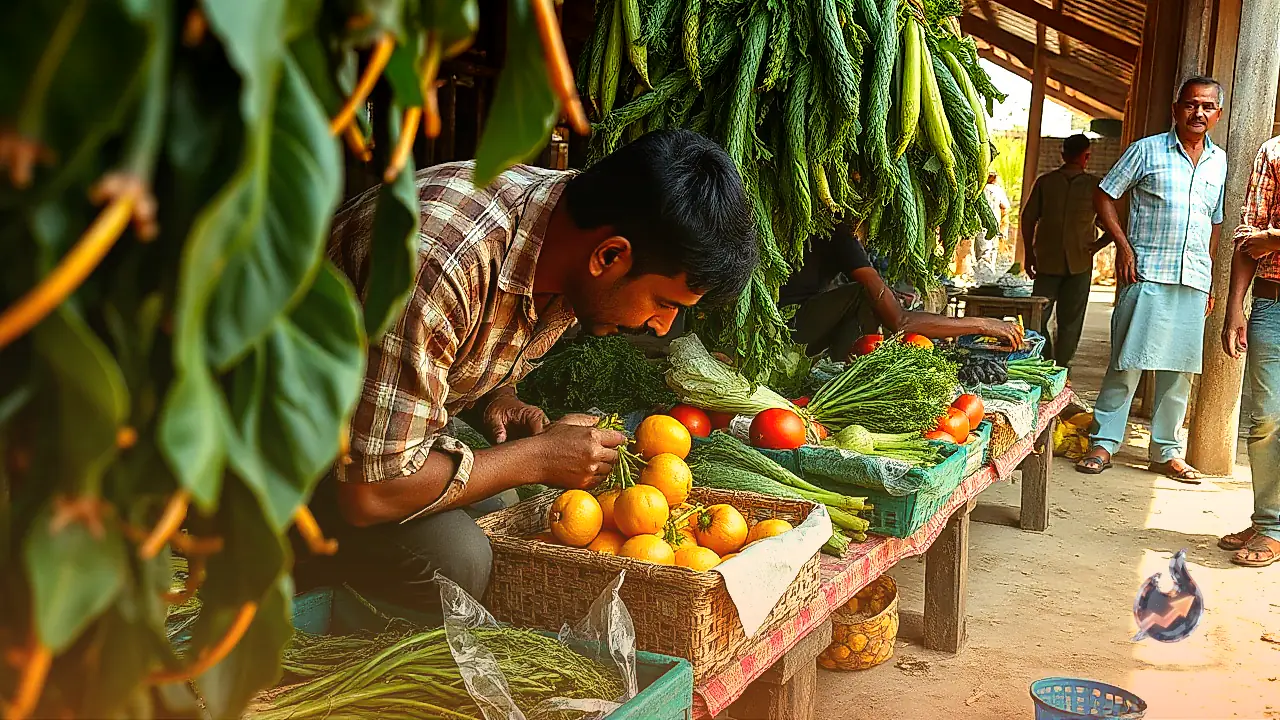

A significant initiative has been launched to elevate the agricultural sector of Mirzapur district in Uttar Pradesh to the international stage and enhance the financial prosperity of local farmers. A new regional office of the Agricultural and Processed Food Products Export Development Authority (APEDA) has been established in the Chunar area of Mirzapur. The primary objective of this center is to connect farmers directly with global markets, enabling them to export their fresh agricultural produce and vegetables overseas and substantially increase their incomes. Currently, due to a lack of awareness regarding export regulations, many farmers are unable to sell their high-quality crops internationally, a gap this specialized center aims to bridge.
APEDA Chunar Center: Driving Self-Reliance and Economic Growth
Formed under an Act of the Parliament of India, the Agricultural and Processed Food Products Export Development Authority (APEDA) has completed the setup of its new project center in Chunar, with an official inauguration scheduled shortly. According to APEDA official Dev Anand Tripathi, this facility is set to transform the agricultural landscape of Mirzapur district. The center's core vision is to empower farmers toward self-reliance and strengthen their sustainable livelihoods. By offering practical guidance on international trade compliance, packaging standards, and export logistics, the center will help farmers make their traditional crops competitive in overseas markets.
Single-Window Setup for Commerce Ministry Agencies
To streamline the export process for farmers and trade entities, the Chunar center is designed as an integrated service hub. Representatives from several prominent statutory and export bodies operating under the Union Ministry of Commerce and Industry will soon be stationed at the APEDA Chunar facility. These include the Indian Institute of Packaging (IIP), the Export Inspection Council (EIC), the Marine Products Export Development Authority (MPEDA), and the Spices Board. Having officials from all these organizations under one roof eliminates the need for farmers to visit multiple government offices, offering them end-to-end support ranging from custom packaging solutions to quality testing and spice export clearances.
Forming FPOs: The Simplest Gateway to International Trade
To navigate foreign trade efficiently, farmers are advised to organize themselves into structured commercial entities. Dev Anand Tripathi highlighted that forming a Farmer Producer Organization (FPO) is the most practical and accessible pathway compared to individual market entry. Under the Government of India's flagship program to establish 10,000 FPOs across the country, agricultural communities gain structured access to foreign trade. A successful example exists in neighboring Banaras (Varanasi), where active FPOs export fresh vegetables daily to Gulf markets. Mirzapur farmers can replicate this proven model to build their own export operations.
Essential Registrations, Import-Export Codes, and RCMC Certification
Entering the international trade domain requires strict compliance with statutory documentation and registration protocols. Farmers in Mirzapur must first incorporate their business entity or FPO and secure an Import-Export Code (IEC) from the Ministry of Commerce. Following this, they must acquire a Registration-Cum-Membership Certificate (RCMC) from APEDA. If the export focus includes spices such as chili or turmeric, a specialized RCMC from the Spices Board is required. Registering under the appropriate product categories enables farmers to legally ship their commodities to overseas buyers.
Mandatory NPOP Certification for Organic Agricultural Exports
While global demand for organic food items remains exceptionally high, exporting organic produce requires strict adherence to stringent quality norms. Any organic food product exported from India mandates official certification under the National Programme for Organic Production (NPOP). NPOP serves as India's official certification framework, without which organic exports are strictly prohibited. APEDA functions as the primary nodal authority for NPOP certification. In Uttar Pradesh, authorized certification agencies such as UP-SOCA (Uttar Pradesh State Organic Certification Agency) oversee inspection and certification based on a defined tariff structure. Under this framework, individual farmers, grower groups, food processors, and agricultural traders can obtain organic certification and access lucrative foreign markets.