






















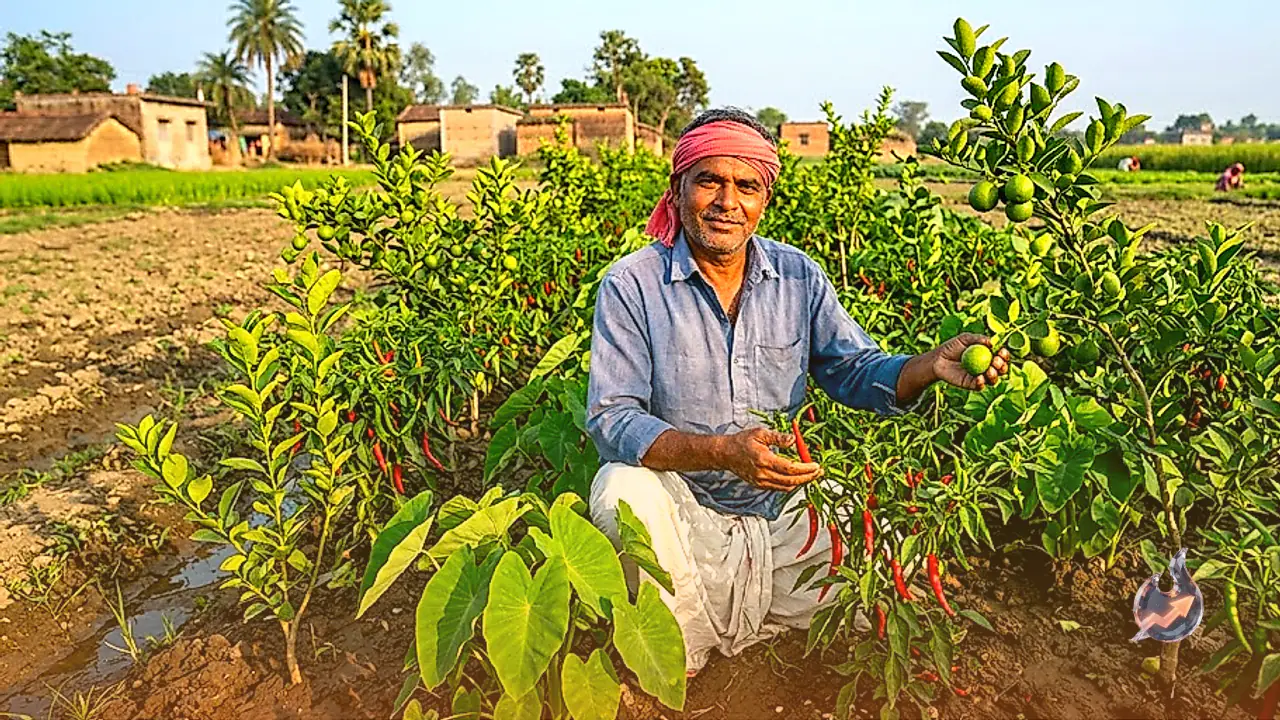

In the East Champaran district of Bihar, a silent agricultural revolution is taking place as farmers shift from traditional methods to modern, experimental techniques. The goal is to maximize profits while minimizing input costs and land usage. A prime example of this innovation comes from Vijay Yadav, an experienced farmer based in the Amwa village of the Turkauliya block. He has successfully harvested three distinct crops on the same plot of land, a method he refers to as 'triple cross farming.'
Optimizing Every Inch of Land
Vijay Yadav implemented this unique farming model on his five-kattha plot. He decided to intercrop lemon, yam (ol), and chili plants simultaneously. The primary objective was to cultivate a lemon orchard. He planted 100 lemon saplings, maintaining a spacing of 10x8 feet between each. Recognizing that the space between these saplings would otherwise remain vacant for an extended period, he utilized the empty gaps to plant yam and chili.
The Economics of Triple Cropping
He specifically chose the 'Banarasi Kagzi' variety of lemon for his orchard. While the lemon trees require approximately 18 months to mature and yield fruit, Yadav ensures his income does not stall. According to his operational plan, the yam will be harvested and sent to the market by November, followed by the harvesting of chili peppers, which is scheduled for completion by January. This strategy allows him to generate substantial revenue from these secondary crops while waiting for the lemon orchard to become productive.
Prerequisites for Triple Cross Farming
According to Vijay Yadav, the triple cross farming model is highly advantageous for small-scale farmers, provided certain conditions are met. He emphasizes that light, sandy loam soil is best suited for such intensive multi-cropping. Furthermore, the land should be situated on a slightly elevated terrain to prevent waterlogging, which could damage the crops. Yadav advocates strongly for the use of organic fertilizers rather than chemical alternatives. Having been involved in vegetable cultivation since 2005, he consistently applies vermicompost and neem cake to his soil. His successful implementation of this model has attracted local farmers who are visiting his farm to learn from his methods.