






















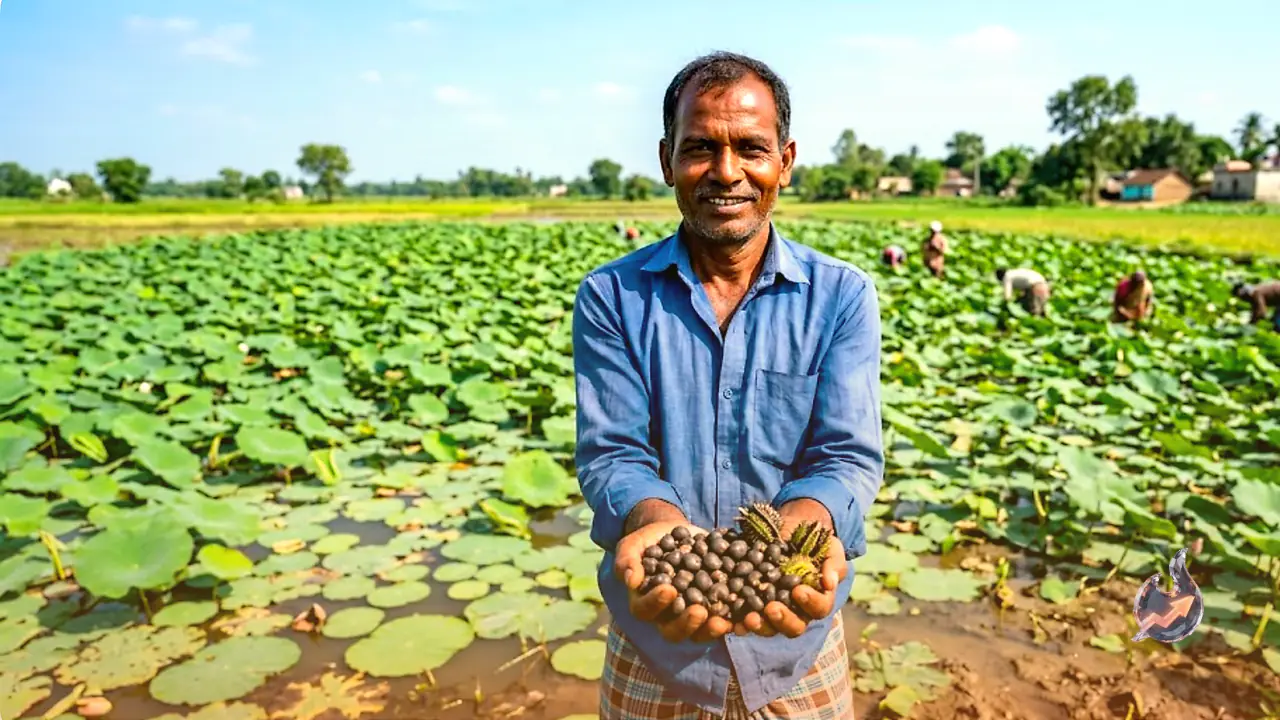

Farming has changed dramatically in the Jagatpur area, where more than 50 acres of land is now growing makhana, on land that was once considered useless because it stayed waterlogged for most of the year. Farmers are now earning handsomely from that very same land.
What farmers used to grow
Local farmers say that earlier they grew a small amount of vegetables in this area, while most farmers depended on banana cultivation. Profits were limited because the land in this belt remained waterlogged for much of the year, and traditional crops could not really survive here.
Sabour Agricultural University showed the way
This part of Jagatpur stays under water for more than 7 months of the year, which is exactly why conventional farming never turned into a profitable option here. That is when experts from Sabour Agricultural University visited the area and explained makhana cultivation to the farmers. They pointed out that this very waterlogged land was in fact best suited for growing makhana.
Good profit on the first attempt, but early troubles too
When farmers cultivated makhana for the first time, it turned a solid profit. However, several problems cropped up in the beginning, since the method was completely new to them and they had no prior experience with it. Those early problems have now been sorted out, and farmers are confident that they will be able to grow makhana on a much larger scale in the coming days.
Farmers now turning to horticulture too, income doubling
Encouraged by the success of makhana, farmers in the area are giving up their old crops and shifting to new ones. As a result, their income is doubling. Horticulture of fruits such as apples, oranges, pineapples, apple ber and guava has also begun here, giving farmers even higher profits than before.
A changing picture for the region
Overall, both the farming pattern and the financial condition of farmers in Jagatpur have changed significantly. Land that was once known only for staying waterlogged has now become a source of income for farmers through makhana and horticultural crops. Things are expected to improve even further in the time ahead.