
















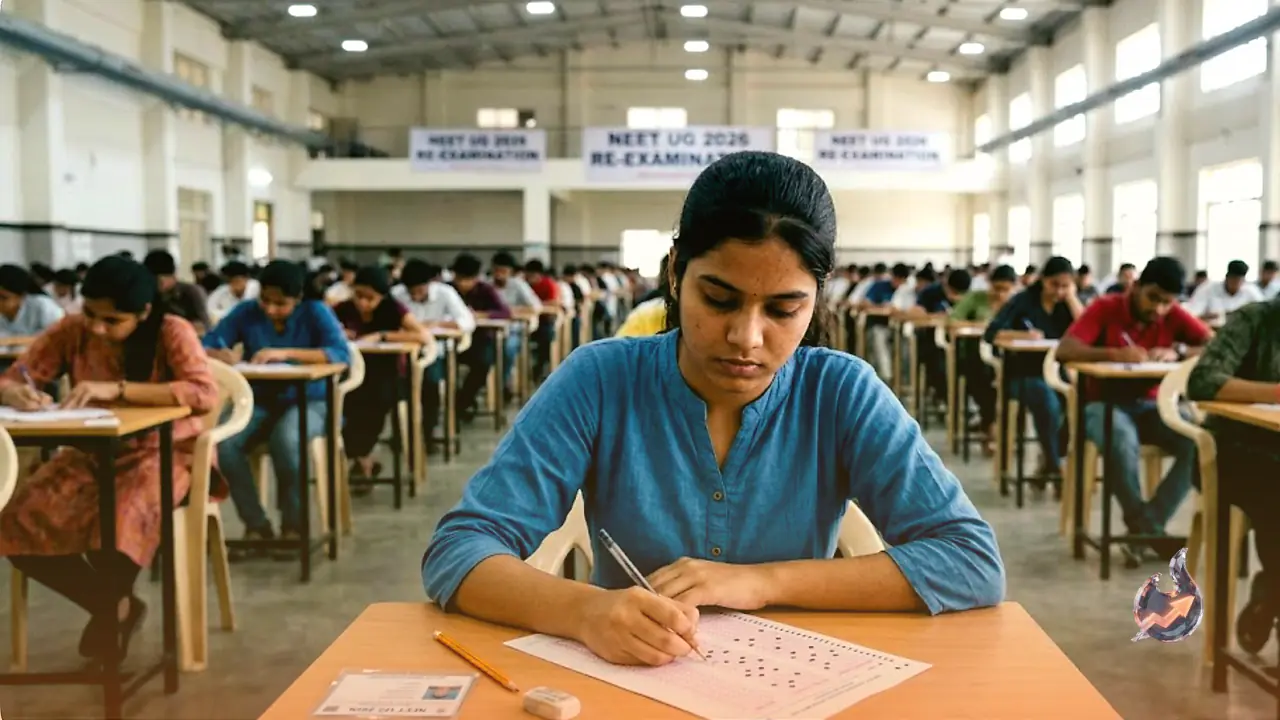

The NEET UG 2026 re-examination is underway across the country today, with 22,79,743 registered candidates sitting the pen-and-paper test on OMR sheets at centers in hundreds of cities. Every one of them is chasing a seat in a medical college, but the path is particularly narrow for those aiming at government institutions.
India's 450 government medical colleges together hold 63,160 MBBS seats. Measured against the total number of registered candidates, that works out to an average of 36 applicants competing for each government seat. That single figure captures how coveted a low-fee government medical college seat really is.
Total MBBS Seats: The Complete Picture
Candidates who do not secure a government seat have the option of 373 private and deemed universities, which collectively offer 66,443 seats. Adding both categories, India's 824 medical colleges provide a combined total of 1,29,603 MBBS seats. Against the full registration count, this gives an average of 18 students per seat across all institutions. Even so, the competition for government seats is twice as intense because their fees are far lower than those of private colleges.
Girls Account for 58 Percent of All Registrants
This year's registration data carries a striking trend. Of the 22,79,743 total registered candidates, 13,32,928 are girls, making up 58 percent of the applicant pool. Boys number 9,46,815 and represent the remaining 42 percent. The figures reflect growing female participation in medical career aspirations. In the previous NEET UG examination, attendance was strong, with 96.72 percent of candidates, approximately 22,05,035 students, actually turning up at examination halls.
565 Cities, 6,669 Centers Spanning India and Abroad
The examination is not confined to Indian soil. Centers have been established in 551 cities within India and 14 cities overseas, bringing the total to 565 cities and 6,669 examination centers. Administering an examination at this scale, across both domestic and international venues simultaneously, is itself a massive logistical undertaking that reflects the exam's national importance.
Mock Drills the Day Before: Nothing Left to Chance
The National Testing Agency (NTA) and local police authorities conducted wide-ranging mock drills at centers across the country on Saturday, the day immediately before the examination, stress-testing every element of the security setup. Each center operates a double-layer frisking protocol, requiring every candidate to be checked twice before entering the examination hall. Live CCTV surveillance covers every section of every center, and high-power jammers have been installed to prevent any digital or electronic device from functioning inside.
Armed Guards and Flying Squads on Full Alert
Armed security forces have been deployed at all examination centers to preserve the confidentiality of the offline test. Flying squad teams are conducting unannounced inspections throughout the day, with standing orders to respond immediately to any suspicious activity or irregularity. Police personnel stationed across all 6,669 centers in 565 cities have received firm instructions to enforce every examination rule without exception.