




















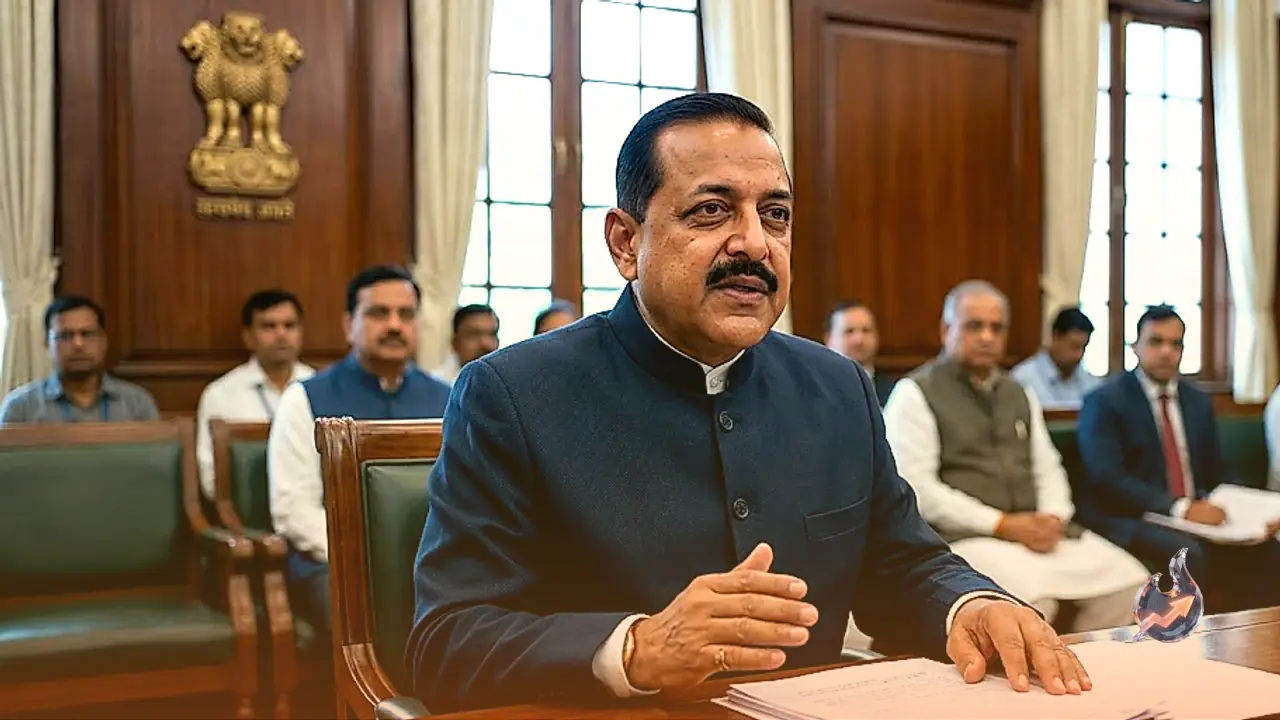

Millions of young job seekers who have spent years waiting for a single government appointment finally have some good news. The process, from filling out an application form to appearing for the exam, waiting for results and finally getting a joining letter, often used to stretch beyond two years. This reform brings particular relief to candidates who lose valuable years and opportunities each cycle simply waiting for the recruitment process to finish. Minister of State for Personnel Dr. Jitendra Singh informed Parliament that the Union Public Service Commission (UPSC) and the Staff Selection Commission (SSC) have overhauled their working systems in ways that will directly benefit job aspirants.
SSC recruitment to wrap up in just 6 to 8 months
Until now, the SSC recruitment process typically took anywhere between 15 and 18 months to complete. Under the new reforms, this timeline will shrink to just 6 to 8 months. To achieve this, the SSC has shifted all of its examinations entirely to Computer-Based Test (CBT) mode, which also speeds up how quickly results can be compiled and the next stage of the process can begin. Several stages of the process that had lost their practical purpose have also been removed. To cut down the time spent on paperwork, a new system called the 'e-Dossier' has been rolled out, under which verification of candidates' certificates and documents will now be carried out digitally. This means files will no longer sit gathering dust in offices for months, and verification will move noticeably faster.
No more wasted vacancies, thanks to the 'sliding mechanism'
A recurring problem in the recruitment process was that a single high-performing candidate would often get selected for multiple posts at once, but would ultimately accept only one, leaving the remaining posts vacant. Filling such empty seats used to require running a separate recruitment round altogether, wasting further time. To fix this, the SSC has introduced a new framework called the 'sliding mechanism'. Under this system, candidates lower down the merit list can be upgraded to fill these vacated seats, ensuring that no vacancy goes to waste and more candidates get a genuine shot at a government job.
UPSC brings in AI-based verification and face authentication
The UPSC has also cut its own recruitment cycle from 15 months down to 13 months. To curb irregularities and fraud linked to its exams, the commission has adopted several high-tech measures. In the Civil Services Examination (CSE), an AI-based verification system has now been put in place to maintain an accurate record of each candidate's attempts. In addition, face authentication has been made mandatory inside exam halls to stop impersonators, commonly referred to as 'Munnabhais', from sitting exams on behalf of genuine candidates.
Provisional joining and a 6-month verification deadline
To eliminate delays caused in the name of verification, the government has added an important new provision. Candidates can now be issued a provisional joining letter on the basis of self-attestation. Departments have been given a maximum of 6 months to complete verification of character and caste certificates. Even if the verification report does not arrive within this time, it will not affect the candidate's service, meaning their appointment will not be held up.
More relief for candidates: lower challenge fees and choice of exam centre
In a move aimed at boosting transparency, the UPSC has also reduced the fee charged for raising objections after the release of the answer key. Persons with disabilities (PwD) have been guaranteed the right to choose their preferred exam centre. The government says these steps will not only make the recruitment process faster and more transparent but will also curb fraud through a technology-driven system. Together, these changes are expected to bring relief to lakhs of young people across the country who have long had to wait years just for the final result of a single government job.