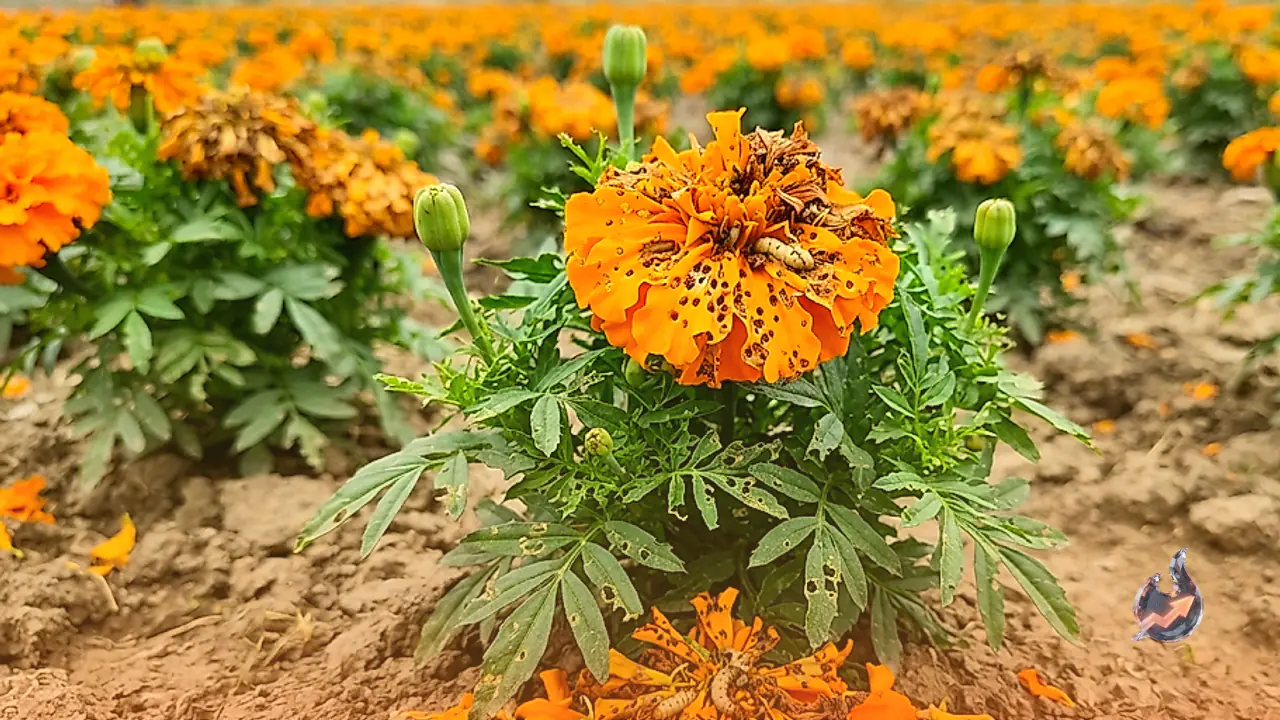

Farmers engaged in marigold cultivation across the Balod district of Chhattisgarh are facing a worrying challenge as a dangerous pest threatens their hard work. Hopes of achieving a bountiful harvest and lucrative returns have been clouded by the sudden appearance of borer caterpillars attacking the marigold blooms. This infestation is causing the flower petals to wither at the edges, gradually ruining the entire crop if prompt action is not taken.
The pest targets the structural integrity of the flowers, leading to premature petal drop and a sharp decline in overall crop quality. Without timely identification and intervention, local cultivators stare at substantial financial losses. Agricultural authorities emphasize that continuous vigilance is now critical to safeguard the season's yield.
How the borer pest damages marigolds
Dr. Baldev Agrawal, a subject matter expert at Krishi Vigyan Kendra Balod, explained that this destructive pest behaves similarly to the fruit and shoot borer commonly found in brinjal crops. The caterpillar typically hides deep inside the flower where the inner petals remain tightly bound together. Its feeding habits cause the outer edges of the flowers to dry up and shed, compromising both the appearance and market value of the produce.
Identifying the infestation in your fields
Growers must adopt a routine of inspecting their fields closely to catch the early signs of damage. According to Dr. Baldev Agrawal, farmers should keep a sharp eye out for any unusual drying or shedding of petal edges. When such symptoms appear, the affected flower should be plucked and inspected from the inside. Discovering a caterpillar nestled within confirms a borer infestation, signaling an immediate need for control measures.
Recommended steps for containment and safety
Once the presence of the pest is confirmed, swift action is required to prevent it from spreading across the field. Agricultural guidelines recommend plucking all visibly infested flowers, gathering them in one place, and burying them deep underground. This containment step stops the caterpillars from migrating to healthy plants.
To combat the surviving pests, experts have suggested using specific contact pesticides. Dr. Agrawal highlighted chemical options such as Caldan, Marshall, Chlorpyrifos, and Cypermethrin as effective measures to bring the infestation under control. However, farmers are strictly advised to apply these chemicals only after consulting agricultural experts, following the product labels precisely, and adhering to recommended dosages. Regular monitoring and early detection remain the absolute best defense for protecting marigold crops from heavy damage.