






















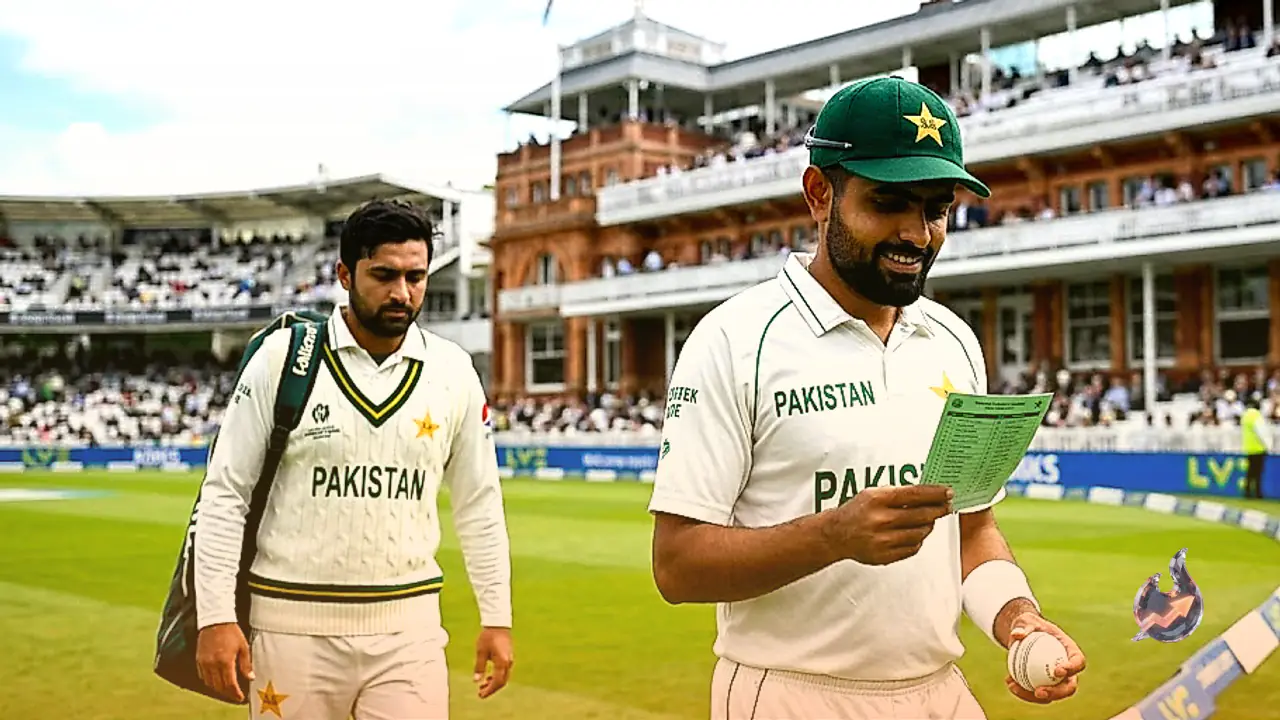

The second Test match of the three-game series between Pakistan and England at the historic Lord's Cricket Ground commenced with notable squad dynamics and tactical adjustments. Pakistan's regular captain Babar Azam made his return to the playing XI after successfully recovering from a right-hand injury that had sidelined him from the series opener at Headingley. Stepping back into his leadership role at Lord's, Babar Azam won the toss and elected to field first under overcast skies. However, the centerpiece of discussion surrounding the lineup was the sole selection change made by the team management. All-rounder Salman Ali Agha, who had captained the national side at Headingley in Babar's absence, was dropped from the playing XI, while the remaining ten players retained their places despite the heavy loss in the previous fixture.
Toss Strategy and the Solitary Selection Decision
Inspecting the playing surface and atmospheric conditions ahead of the toss at Lord's, Babar Azam opted to bowl first without hesitation. Analyzing the pitch, the Pakistani skipper noted a visible layer of live grass on the track alongside dense cloud cover overhead. Capitalizing on these favorable seam-bowling conditions formed the core of Pakistan's strategy, as the team management sought to utilize the early moisture and movement to put pressure on the opposition batting lineup right from the opening overs.
The tactical restructuring of the lineup centered around the omission of Salman Ali Agha to facilitate Babar Azam's inclusion. Having led the team as captain just days earlier, Salman Ali Agha found himself relegated to the bench as the single casualty of the team selection. The decision generated significant interest across the cricket community, particularly because every other member of the squad that featured in the Headingley defeat was given another opportunity in the playing XI.
Reflecting on the Headingley Defeat and Rectifying Batting Errors
Pakistan entered the Lord's Test aiming to recover from a humiliating setback in the series opener at Headingley, where England secured a commanding victory by an innings within three days. The primary catalyst behind that defeat was a complete breakdown of Pakistan's batting order across both innings, as the top and middle-order batters failed to build substantial partnerships or counter the disciplined English bowling attack.
Addressing the press at the toss, Babar Azam acknowledged that the team's batting performance at Headingley fell well below expectations. He shared that the squad had conducted comprehensive internal discussions to identify specific technical mistakes and tactical oversights. Emphasizing the prestige of the venue, Babar Azam stated, "Playing at Lord's is always an honour, and as a captain, it is special for me." He expressed confidence that the players had processed the lessons from the first Test and were fully prepared to deliver a resilient performance at Lord's.
Mohammad Abbas and Mohammad Ali Deliver Early Breakthroughs
Pakistani pacers swiftly validated their captain's decision to bowl first by mounting a relentless assault on the English top order during the opening session of the match. Harnessing the assistance offered by the Lord's pitch and weather, the bowling attack destabilized England early by removing both opening batsmen in quick succession, forcing the hosts into a defensive battle.
By the conclusion of the first session, Pakistan had taken firm control of the match, reducing England to 80 for 4. Veteran fast bowler Mohammad Abbas emerged as the primary destroyer, utilizing immaculate accuracy and movement to dismantle the top order and pick up three vital wickets. Operating from the other end, Mohammad Ali provided effective support, claiming one wicket. Capturing four top-order wickets before lunch placed Pakistan in a commanding position on the opening day of the Lord's Test.