





















In Indian cricket, some players' stories are not just about numbers on a scorecard, they become an example of grit, struggle and sheer defiance. Harbhajan Singh, ranked among the greatest off-spin bowlers the game has seen, is one such name. Known to fans as the Turbanator and Bhajji, he made some of the finest batsmen in the world dance to his spin, but the road to that stature ran through being dropped from the side, losing his father, and coming within a decision of quitting cricket to drive trucks abroad.
Early Days and an International Debut
Born on July 3, 1980, in Jalandhar, Punjab, Harbhajan Singh was obsessed with bowling from childhood. After dazzling in domestic cricket with his spin, he earned a national call-up early. In March 1998, at just 17, he made his Test debut against Australia, stepping onto the international stage for the first time. He showed flashes of his talent in those early games, but the road ahead in international cricket was nowhere near as smooth as he had hoped.
Dropped From the Side, His Father's Death, and a Decision to Drive Trucks
About a year and a half into his career, poor form saw Harbhajan dropped from the Indian team. Anil Kumble was then the backbone of India's spin attack, and even when Kumble was injured, selectors turned to other bowlers instead of Bhajji. That neglect cut deep into the young cricketer. Then, in 2000, his father passed away, and the responsibility of the entire family, his mother and five sisters, suddenly fell on his young shoulders. Between the pain of being out of the side and the family's worsening financial situation, the twin crises broke him down so completely that he decided to leave cricket behind altogether and go to America to become a truck driver, just to support his family.
His Sisters' Faith Changed His Fate
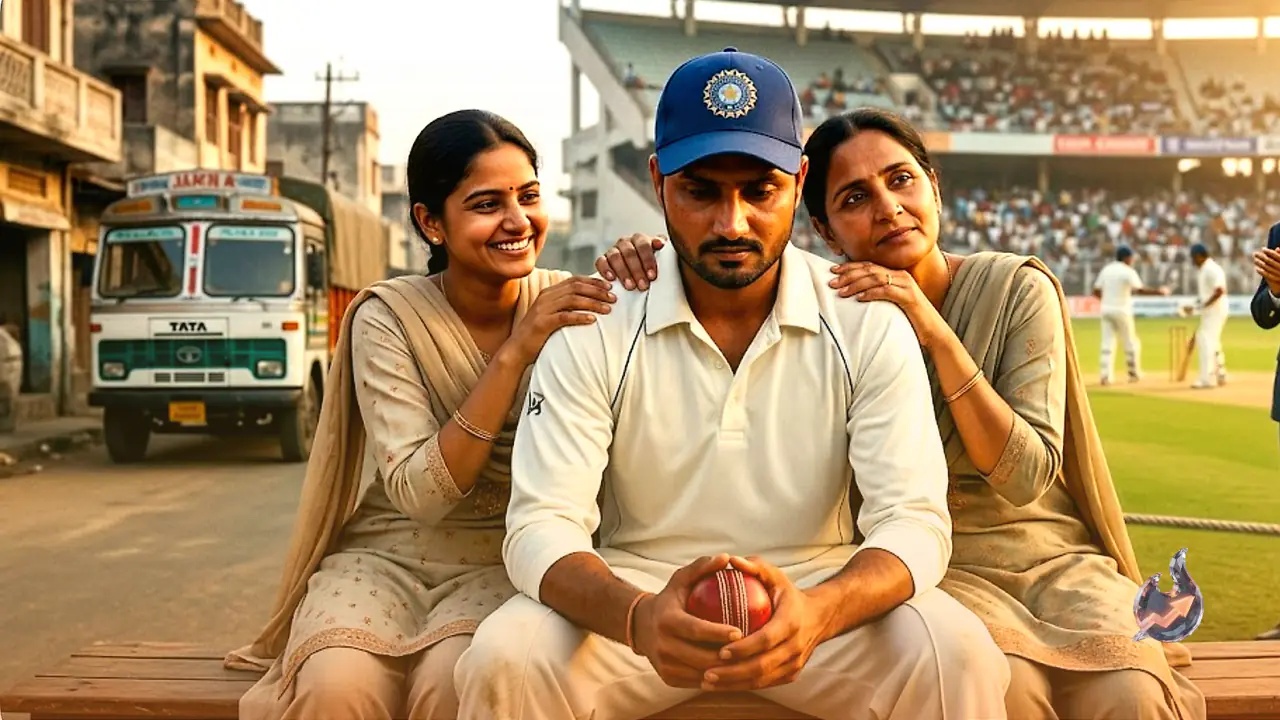
In that difficult phase, it was his sisters who refused to let the cricketer in him die. They stood by him and pushed him to get back on the field. Backed by his sisters' unwavering belief, Harbhajan returned to the Ranji Trophy and had a stellar season, picking up 28 wickets. That comeback would go on to change the entire direction of his career.
Ganguly's Insistence and a Historic Hat-trick
2001 brought a new dawn for Indian cricket. A strong Australian side was touring India, and Anil Kumble was out injured. Then captain Sourav Ganguly backed Harbhajan's talent and insisted on including him in the side, a decision that would go on to change the course of Indian cricket. Across that historic three-match Test series, Harbhajan Singh ran through the Australian batting line-up, picking up 32 wickets in all. In the Kolkata Test at Eden Gardens during that same series, he took a hat-trick, the first ever by an Indian bowler in Test cricket. The series didn't just revive Bhajji's career, it turned him into Team India's most trusted weapon.
The Magic of the Doosra and Two World Cup Triumphs
Harbhajan Singh's biggest strengths were his aggression, his never-say-die attitude, and his mystery delivery, the doosra. Despite being an off-spinner, his ability to turn the ball away from the batsman left even the world's best batting line-ups confused. Bhajji wasn't just a Test specialist, he was a master of limited-overs cricket too. He was a key member of two of India's biggest triumphs, the 2007 T20 World Cup and the 2011 ODI World Cup winning squads. He was also known for smashing quick runs down the order whenever the team needed them. With more than 400 Test wickets to his name, he became the first Indian off-spinner to reach that historic milestone. His journey, from the brink of becoming a truck driver to being one of Team India's most trusted match-winners, remains a lesson for every struggling athlete even today.