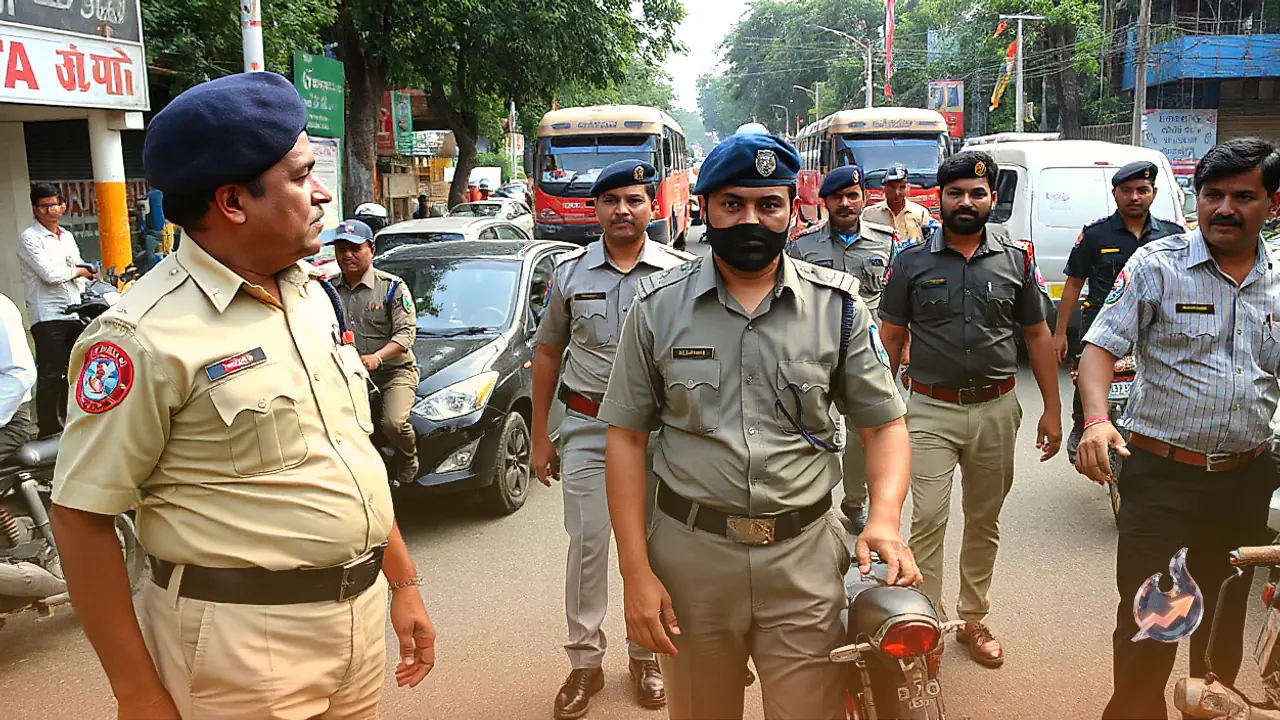

The Supreme Court has pulled up a judicial officer from Bihar with severe strictures, directing them to stop behaving like a local strongman or bahubali. The controversy centers around an incident where the judicial officer penalized and held a Superintendent of Police guilty for failing to comply with a court directive. The apex court expressed deep astonishment regarding the officer's comprehension of the law and the aggressive manner in which judicial powers were exercised, prompting a broader discussion on the limits of judicial authority.
Deliberations on Jurisdiction and Legal Scope
During the proceedings, the bench analyzed the scope of Section 384 of the Bharatiya Nagarik Suraksha Sanhita (BNSS) and Section 345 of the Code of Criminal Procedure (CrPC). The court clarified that if an individual slaps someone, uses abusive language, or refuses to leave the courtroom despite clear instructions, it constitutes an offense committed in the view of the court. However, failing to comply with a judicial direction to register an FIR does not fall under the same category. The bench remarked that the officer's understanding of basic legal principles was alarming, noting how the official summoned the superintendent and convicted him on the very same day.
Recommendation for National Judicial Academy Training
Emphasizing the need for restraint, the Supreme Court suggested that the judicial officer should be sent to the National Judicial Academy for specialized training. The bench noted that those wielding judicial authority must remain within proper boundaries and exercise their powers judiciously rather than resorting to aggressive confrontation. This hearing arose from a petition challenging the Patna High Court order which had previously stayed the punitive action taken against the police official.
Background of the Rohtas Contempt Matter
The roots of this legal battle trace back to Sasaram in Rohtas, where the fourth Additional District and Sessions Judge had on September 29, 2026, held the then Superintendent of Police of Rohtas guilty of deliberately flouting court orders. The judge had imposed a token fine of one rupee and instructed the Director General of Police of Bihar to record these observations in the official service book of the officer. Furthermore, the court had urged the Union Ministry of Personnel and Training to overhaul the training modules for IAS and IPS officers to make them more aligned with democratic structures. The Patna High Court had earlier stayed the penalty, leading to the current proceedings before the Supreme Court.