























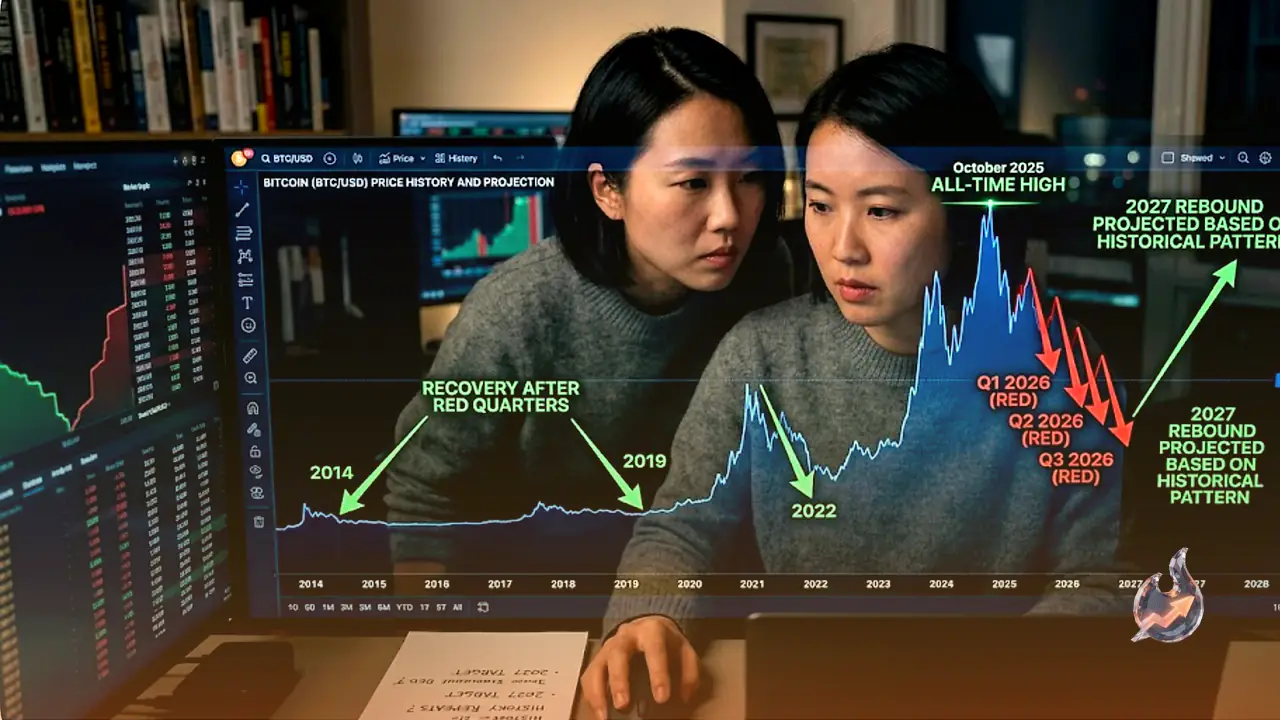

Bitcoin (BTC) is heading into a third consecutive quarter of price losses, building on a 22.2% decline in Q1 and an 11.91% drop in Q2, with further corrections running through Q3. What gives this stretch particular significance is that the same three-quarter losing sequence has appeared exactly three times before in Bitcoin's history, in 2014, 2019, and 2022, and it has followed a consistent trajectory each time.
A Pattern That Has Repeated Three Times Before
In every previous instance when BTC recorded three straight quarters of declines, it found its bottom within one to two quarters afterward and then shifted into a new bullish run. This pattern also fits neatly within Bitcoin's broader four-year market cycle, lending it additional structural credibility.
Applying those historical signals to the present moment, Bitcoin could begin building upward momentum as early as 2027. The asset hit its last all-time high of $126,080 in October 2025. If the cycle follows its familiar course, a fresh peak could materialise around 2029.
Why a Faster Recovery Faces High Hurdles
The cryptocurrency market is currently going through one of its most severe bearish stretches. A combination of macroeconomic uncertainty and persistent global geopolitical tensions has driven investors away from digital assets on a large scale. Risk appetite has fallen sharply across the board. Bitcoin itself has shed more than 50% of its value from the October 2025 all-time high.
Adding to the downside pressure, the Federal Reserve is expected to raise interest rates twice before year's end. Higher rates historically redirect capital toward safer, yield-bearing instruments and away from speculative assets like Bitcoin. A re-escalation of the US-Iran conflict introduces yet another headwind, with the prospect of surging inflation and a fresh energy crisis keeping global markets on edge. The conditions simply are not in place for Bitcoin to stage a meaningful recovery right now.
A sustained rebound for BTC is most plausible once the geopolitical situation calms and central bank rates start moving lower. Until those circumstances change, the asset faces pressure from multiple fronts with few catalysts on the immediate horizon.