
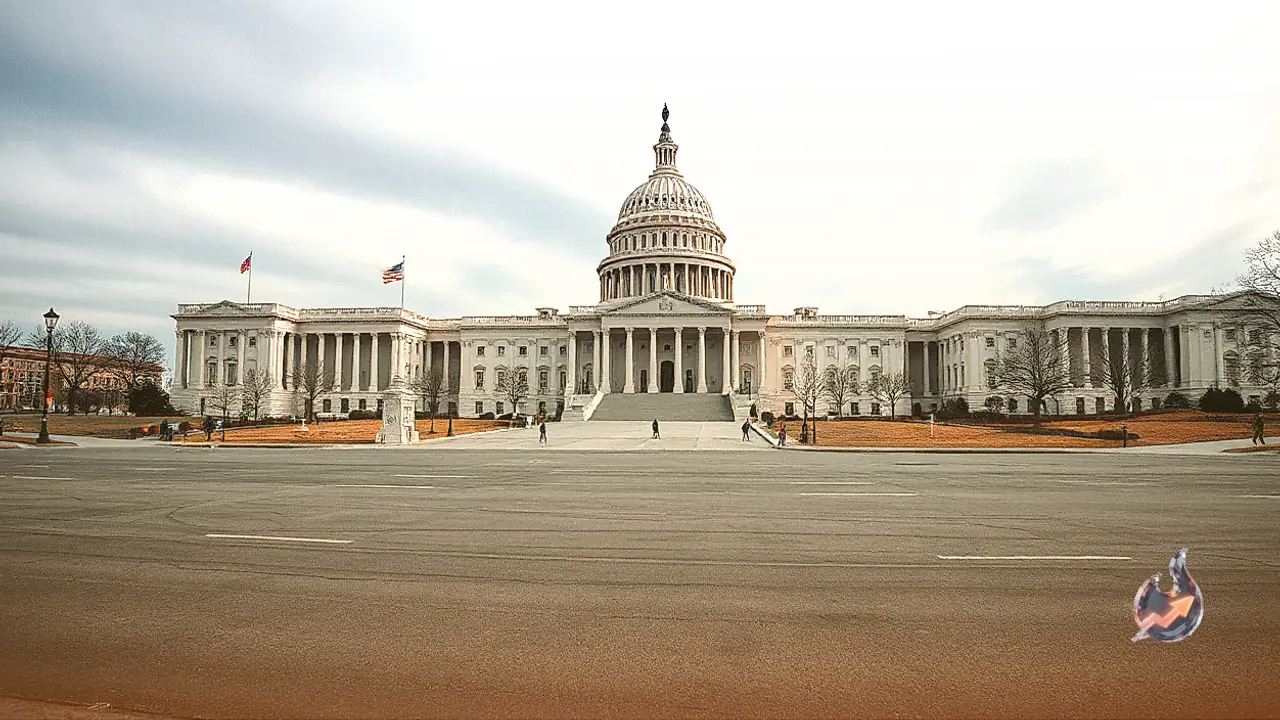
























A decisive shift in congressional power is set to redefine the legislative trajectory of digital asset governance in the United States. Following sweeping victories across both chambers in the midterm elections, House Democrats are actively preparing a broad crypto market structure bill intended for introduction when the new Congress convenes. At the foundation of these discussions is the potential revival of Representative Maxine Waters' Crypto Investor and Consumer Bill of Rights, incorporating regulatory priorities that previously struggled to cross the finish line.
Regulatory Rebalancing and Direct Ethics Restrictions
Legislative discussions among Democratic staff and industry participants indicate that the new proposal will merge unadopted House Democratic measures with provisions previously negotiated in the Senate. The core architecture of this emerging package seeks to significantly expand the regulatory authority of the Securities and Exchange Commission (SEC) over digital asset markets, deliberately reining in the supervisory jurisdiction of the Commodity Futures Trading Commission (CFTC).
Equally central to the proposal are comprehensive federal ethics provisions. These restrictions aim directly at curbing conflicts of interest by prohibiting President Donald Trump and other federal officials from participating in commercial cryptocurrency enterprises while holding public office. The intention is to eliminate overlaps between state governance and private financial exposure across the executive branch.
Republican Pushback and Competing Legislative Frameworks
Republican lawmakers have characterized the Democratic initiative as a messaging bill, contending that the draft serves to stake out ideological boundaries rather than forge near-term bipartisan compromise. However, the political reality on Capitol Hill will shift markedly when Democrats assume formal control of both the House and the Senate in January 2027 following their decisive performance in the November 3 midterm elections.
Over recent sessions, Republicans held the legislative initiative on digital asset policy. Notably, Republican Senator Bill Hagerty authored the GENIUS Act, establishing a federal regulatory foundation for payment stablecoins, which was enacted into law on July 18. Similarly, Representative French Hill championed the Digital Asset Market Clarity Act (CLARITY), which cleared the House in July 2025 with unanimous backing from all 216 voting Republicans alongside 78 Democratic votes.
The Stalling of the Clarity Act and Unresolved Battles
Although the CLARITY Act cleared the House with bipartisan support to delineate asset classes and balance power between the SEC and CFTC, it became mired in protracted Senate negotiations. Disagreements escalated over decentralized finance (DeFi), investor safeguards, consumer protection standards, and potential systemic risks to traditional banking institutions.
Banking trade associations cautioned that reward-generating cryptocurrency products could systematically siphon deposits away from conventional lenders. Concurrently, Democrats contended that the bill offered inadequate defenses against ethical conflicts concerning Donald Trump and senior government appointees. To bridge the divide, Republicans published an amended text in September featuring 126 substantive modifications sought by Democrats, encompassing developer legal protections, revised ethics language, and stablecoin deposit risk mitigations. Negotiations, however, failed to produce a final floor vote.
Market Reaction and Macro Technical Positioning
With Democrats preparing to steer both legislative chambers toward heightened SEC scrutiny and investor mandates in January 2027, digital asset markets have nonetheless maintained resilient price behavior. Live market data places Bitcoin trading at $80,402, reflecting a 3.95 percent increase against its prior close of $77,345. Trading volume currently tracks at 1.48 times its 20-day average within an annual 52-week band of $57,748 to $87,364.
From a technical standpoint, Bitcoin registers a 14-period Relative Strength Index (RSI) of 51, holding in neutral territory. The asset maintains a long-term golden cross formation, with its 20-day Exponential Moving Average (EMA) at $79,831, 50-day EMA at $80,063, and 200-day EMA at $76,320. Bollinger Bands span from $76,153 to $84,254 with a midpoint of $80,203. Key operational levels include a central pivot of $80,478, immediate resistance points at $80,718 (R1) and $81,035 (R2), and baseline support zones at $80,161 (S1) and $79,921 (S2).
In adjacent markets, Ethereum preserved ground above $2,300, while Ripple traded above $1.28 following multi-session gains. In contrast, Pi Network exhibited downward pressure near $0.0755, confronting downside targets toward its $0.0704 floor as derivatives open interest retreated to approximately $7.50 million. The impending power transfer in Washington ensures that structural regulation, regulatory boundaries, and public integrity rules will dominate the crypto landscape leading into 2027.