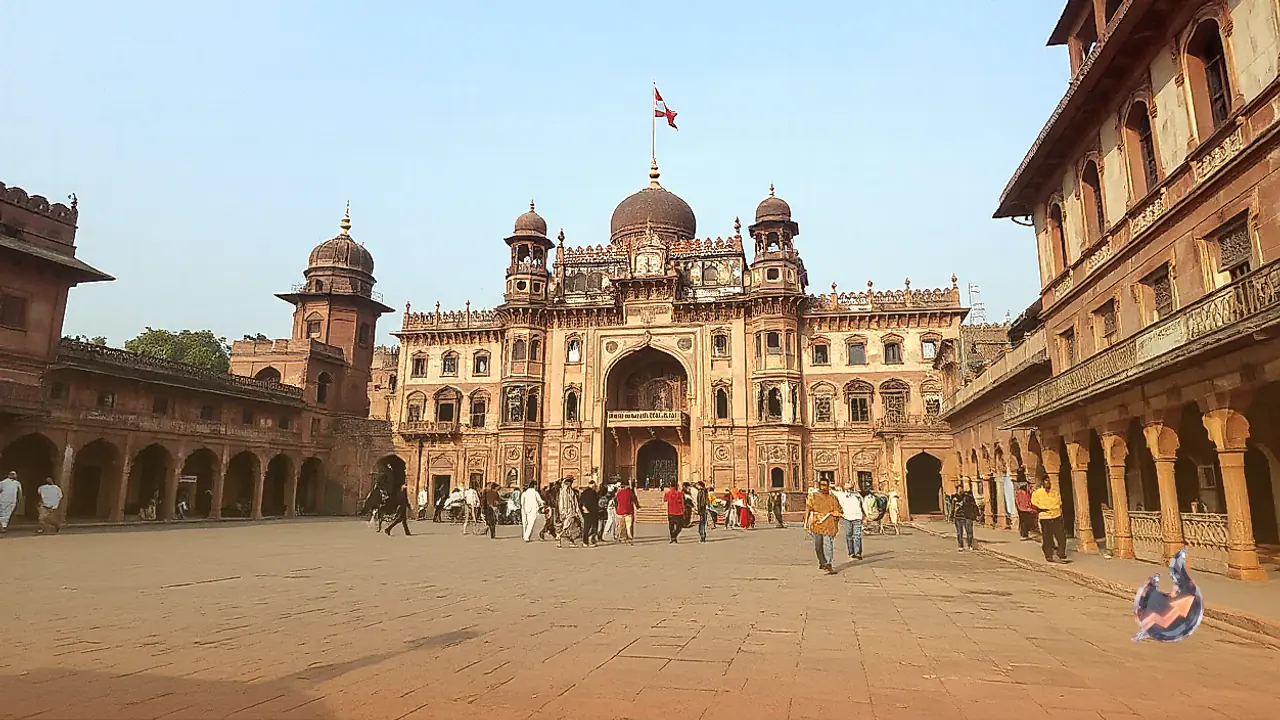

Over the past few weeks, the historic Town Hall located in Delhi's bustling Chandni Chowk market has drawn significant attention. The spotlight intensified after a portion of the aging structure collapsed following heavy rainfall, sending ripples of concern through the local merchant community. Although the incident did not result in any injuries, it triggered immediate cleanup operations and prompted urgent discussions regarding the structural integrity and preservation of the landmark. Authorities have since mobilized to restore the historic building using its original components while preparing it for a major cultural transformation.
The History and Origins of the Town Hall
The foundation for the Town Hall was laid during the British colonial period in 1860, and construction wrapped up roughly three years later in 1863. Records from the National Mission on Monuments and Antiquities list its establishment year as 1864. Erected in Old Delhi shortly after the historic uprising of 1857, it remains one of the earliest British-era civic buildings established in the area. Initially, the complex was designated as the Lawrence Institute.
Historical accounts indicate that the plot where the Town Hall stands was previously occupied by a caravanserai and a garden commissioned by Jahanara Begum, the daughter of Mughal Emperor Shah Jahan. Following the 1857 conflict, that earlier Mughal-era site was demolished, clearing the way for the new colonial administrative building. Documentation notes that the project was executed under the supervision of architect E.J. Martin.
From Lawrence Institute to Civic Headquarters
In its initial years, the facility functioned as the Lawrence Institute, housing a grand durbar hall, a library, a reading room, and a museum. Built distinctively in a European architectural style, it quickly became a frequent gathering spot for members of the local European community. By 1866, the municipal administration of Delhi acquired the property for 1.35 lakh rupees and officially renamed it the Town Hall.
The building subsequently served as the headquarters for the Municipal Corporation of Delhi (MCD), a function it retained for decades. A large clock was installed above the main entrance to keep time for visitors and city officials. Following India's independence in 1947, a municipal council chamber was established inside, featuring an inscribed quote by Mahatma Gandhi on its outer wall, which was unveiled by Sardar Patel in 1950. The structure has proven remarkably resilient, withstanding severe earthquakes in 1905 and 1952 without sustaining major damage. Its archival rooms continue to house administrative documents dating back to 1880.
Architectural Features and the Recent Collapse
The two-story edifice is characterized by its distinctive yellow and white paint scheme, large triangular pediments resting on towering columns, arched courtyards, north-south porches, and the prominent clock over the main entryway. However, after the MCD headquarters relocated around 2011 to 2012, the complex largely remained vacant, though onlookers continued to admire its ornate exterior.
On October 31, 2026, following two days of torrential rain, the roof of the entrance porch, two massive iron beams, and the front facade collapsed. The incident damaged the first floor and the iconic entrance clock. According to municipal officials, specialists listed with the Archaeological Survey of India (ASI) have completed a thorough mapping of the damaged sections. Within three months, the structure will be reconstructed to match its original archival design using authentic materials. Three surviving historic iron beams from the porch will be salvaged and reinstalled, and the clock will be fully restored to its original working condition.
Upcoming Transformation Into a Global Heritage Center
In a major shift for the property, the Delhi administration plans to convert the Town Hall into a global heritage center featuring a dedicated museum and various cultural activities. To formalize this vision, an agreement was signed on September 20 between the MCD and the Delhi Tourism and Transportation Development Corporation (DTTDC). Work on this ambitious preservation and adaptation project has already commenced.