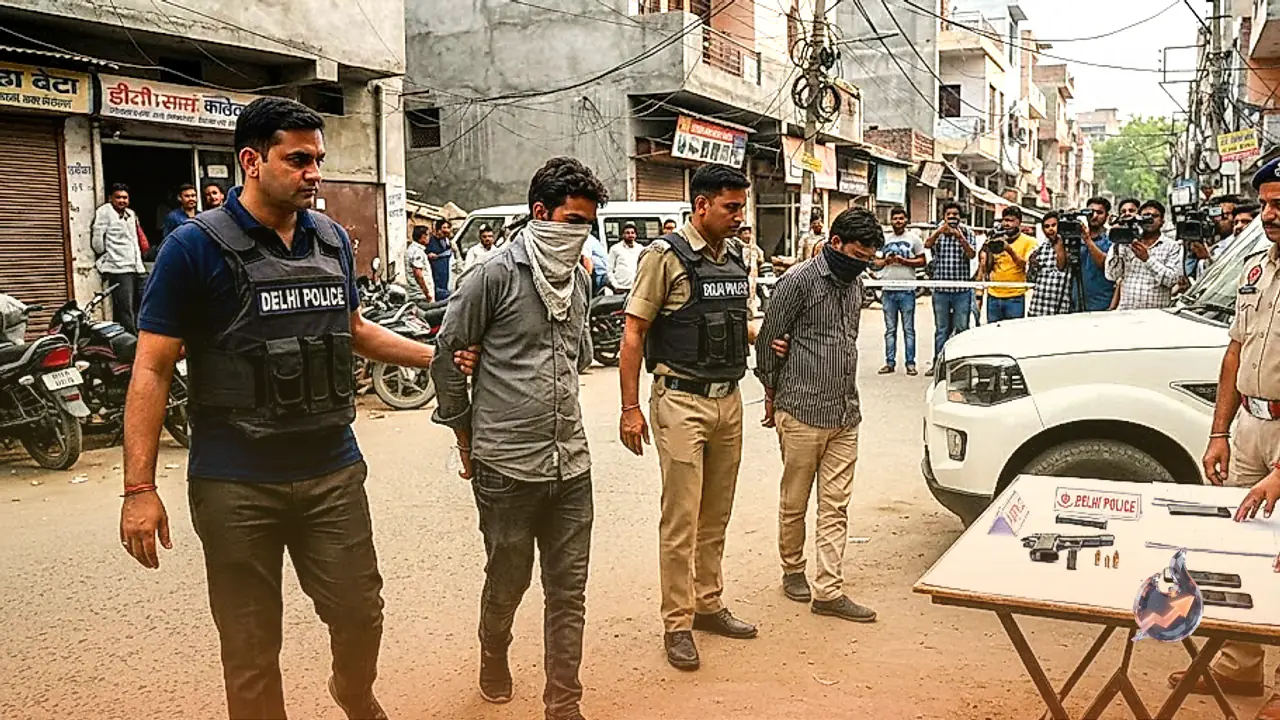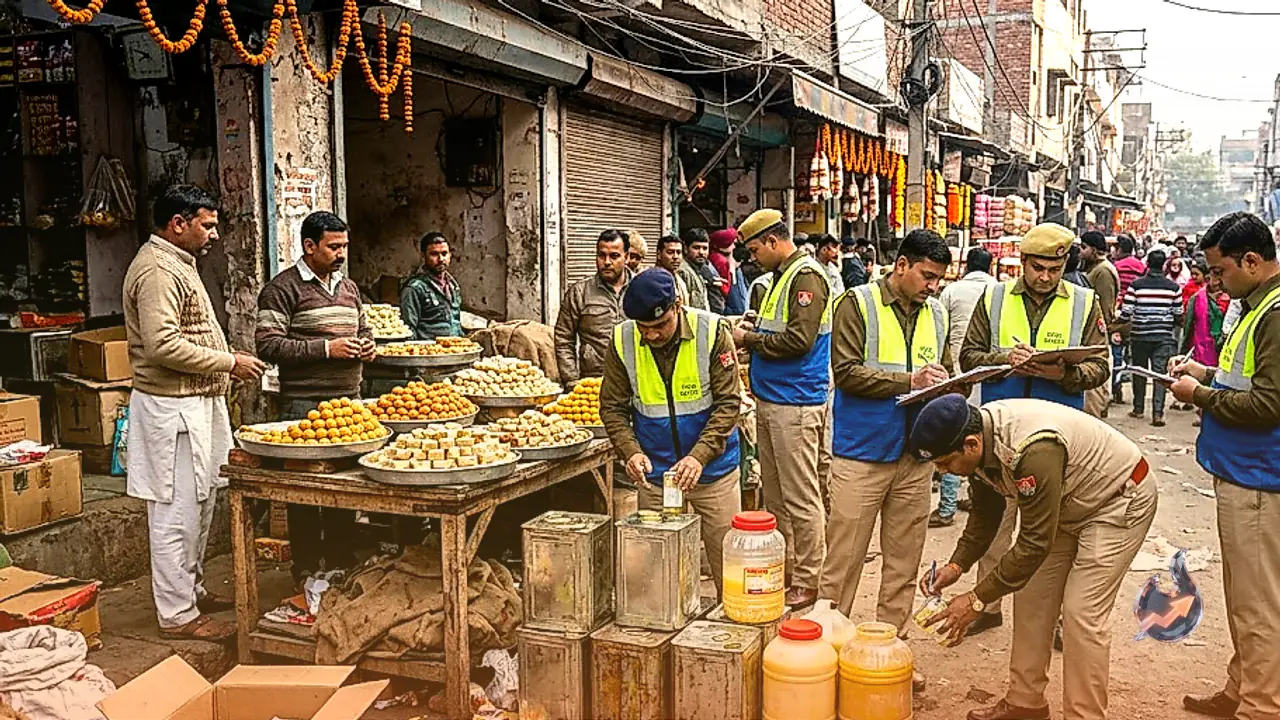






















A massive pan-India enforcement drive has struck a decisive blow against organized cybercrime networks operating across the country. Executed across October 28 and 29, Operation Cyhawk 6.0 led to the arrest of 944 suspects, while 788 individuals were formally bound down under statutory provisions. Additionally, legal notices were served to 2,081 persons associated with questionable transactions. The coordinated enforcement covered 1,032 separate criminal cases, effectively resolving 4,002 cyber fraud complaints registered across multiple jurisdictions. The financial magnitude of the cases cracked during this single operation stands at approximately Rs 479.14 crore.
Interstate Deployment and Interrogation Scope
The strategic operation was spearheaded by the Special Cell's Intelligence Fusion and Strategic Operations (IFSO) unit alongside personnel from all 15 police districts of the capital and the Crime Branch. According to Chinmoy Biswal, Joint Commissioner of Police (IFSO), field units examined and interrogated 4,979 suspects within Delhi during the operation. To apprehend key syndicate operatives operating from remote hideouts, 283 specialized police teams were deployed across 17 states and 5 Union Territories.
Rather than merely targeting lower-level tele-callers, law enforcement pivoted toward neutralizing the logistical architecture supporting cybercrime. The sweep cracked down on suppliers of mule bank accounts, individuals incorporating shell companies to secure current accounts, corrupt banking personnel, rogue telecom distributors activating SIM cards on forged identities, and operators of unauthorized call centers.
Laundering Stolen Capital into Gold and Cryptocurrency
Investigators uncovered sophisticated layering techniques utilized by syndicates to move stolen funds out of the formal banking system. Siphoned money was rapidly withdrawn through ATM networks or converted into physical gold and cryptocurrencies such as Tether (USDT). The fraudsters systematically acquired bank accounts and cellular connections opened under the credentials of unrelated third parties to run their deceptive campaigns.
Search operations yielded an extensive cache of hardware and financial instruments. Seizures included 1,037 mobile phones, 1,301 SIM cards, 106 laptops and desktop computers, 397 active ATM cards, 325 Aadhaar identity cards, and over 244 banking welcome kits and passbooks. Law enforcement also confiscated 6 SIM boxes, 11 cars, 10 two-wheelers, and Rs 37.67 lakh in unaccounted cash, alongside quantities of gold and USDT cryptocurrency balances.
Raids Across Major Indian States and Syndicates
Coordinated raids were executed across Jharkhand, Uttar Pradesh, Maharashtra, Rajasthan, Punjab, Gujarat, West Bengal, Odisha, Karnataka, and Tamil Nadu. The crackdown systematically disrupted distinct regional fraud operations. In Dhanbad, operatives linked to the infamous Jamtara credit card fraud network were intercepted. In the Durg-Bhilai belt of Chhattisgarh, police busted an extortion ring operating through matrimonial platforms.
In Uttar Pradesh, networks providing illicit banking infrastructure were dismantled across Kanpur and Greater Noida. Intermediaries operating out of Mumbai, Lucknow, Rajasthan, and Punjab were apprehended for supplying ready-to-use bank accounts to cyber syndicates on a commission basis. In many instances, the stolen capital was routed through cascades of shell entity accounts before being diverted to the final beneficiaries.
Insider Complicity and Predatory Loan Platforms
The enforcement net widened to capture professionals abusing their trusted positions to facilitate fraud. In Delhi's North-West district, bank officials were arrested for deliberately bypassing verification protocols to help fraudsters open operational bank accounts. In the South district, employees of an authorized customer service agency faced legal action for unauthorized access and misuse of private client data. Concurrently, an Outer-North district operation dismantled a syndicate procuring cellular connections via fraudulent documentation.
The cases resolved during the two-day blitz encompass an array of modern digital deceptions. These include fraudulent KYC verification alerts, bogus mobile banking utilities, credential-harvesting phishing campaigns, fake e-commerce storefronts, and deceptive high-yield investment schemes. The operation also targeted matrimonial scammers and illegal instant loan applications that harvested borrower contacts and private media to orchestrate aggressive blackmail schemes.
Mobile Call Centers and Digital Forensics
Law enforcement shut down several illegal call centers operating in the Dwarka, South-West, and East districts that targeted individual citizens and corporate entities. In the East district, officers intercepted an illicit call center operating entirely inside a moving vehicle, a tactic employed by perpetrators to prevent geographic triangulation and evade stationary surveillance.
Technical equipment confiscated by the IFSO unit included multiple SIM box setups, devices engineered to route VoIP calls through local telecom towers, enabling perpetrators to place thousands of deceptive automated calls. Authorities also dismantled specialized Telegram communication channels utilized for trading active bank accounts, foreign eSIM profiles, and laundering proceeds via cryptocurrency transactions.
Integration with National Cybercrime Portals
Operational planning relied heavily on cross-platform data analytics coordinated through the Ministry of Home Affairs' Indian Cyber Crime Coordination Centre (I4C). Investigators correlated records from the National Cyber Crime Reporting Portal (NCRP), the Samanvay portal, and the Pratibimb tracking platform. This analytical framework allowed police to link phone numbers, mule accounts, and digital fingerprints across thousands of disconnected police reports nationwide before launching field raids.
Of the 4,002 complaints cleared during the drive, 3,275 cases originated outside the capital across various states and Union Territories. When compared to the preceding Operation Cyhawk 5.0 held in June 2026, the current phase achieved a 24 percent rise in new FIR registrations and a 46 percent increase in resolved cyber complaints. Over the span of all six iterations of Operation Cyhawk, total arrests have crossed 3,300 individuals.
Investigators underscored that durable deterrence demands targeting the foundational enablers of the cybercrime economy, including identity vendors, account procurers, and money mules. Forensic analysis of seized digital infrastructure and financial trails remains ongoing as agencies work to identify offshore coordinators and recover misappropriated funds for victims.