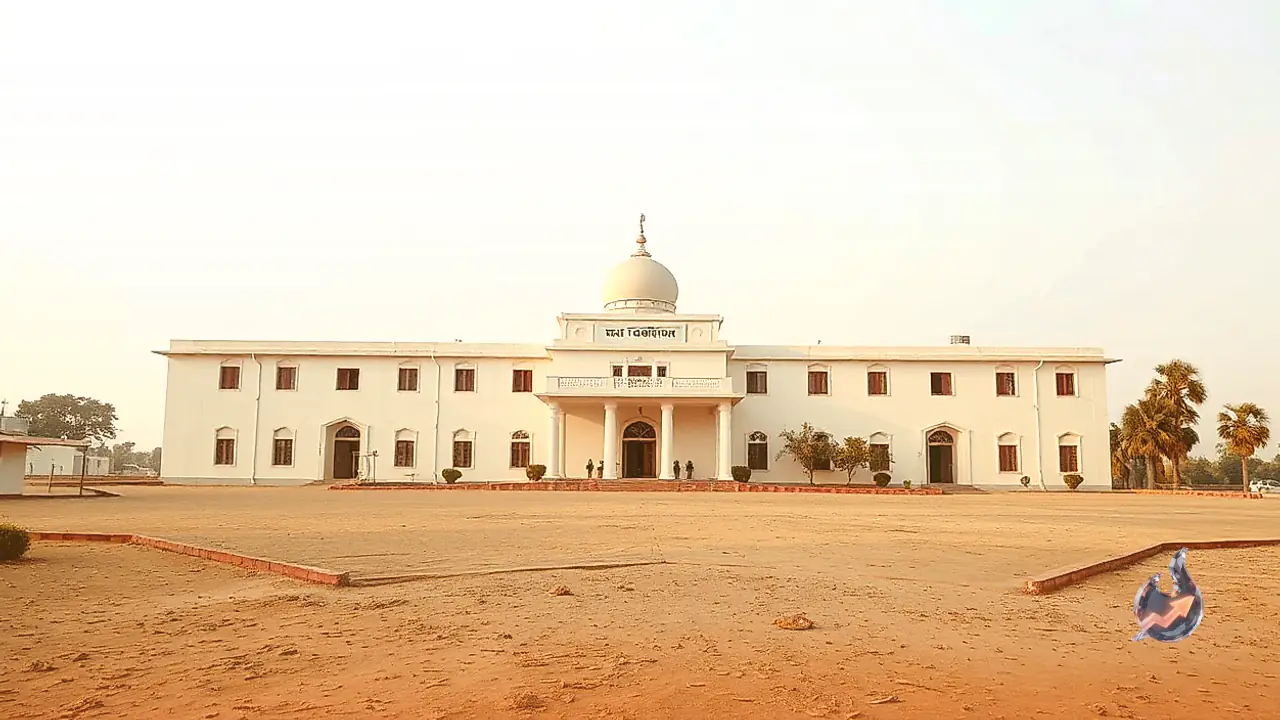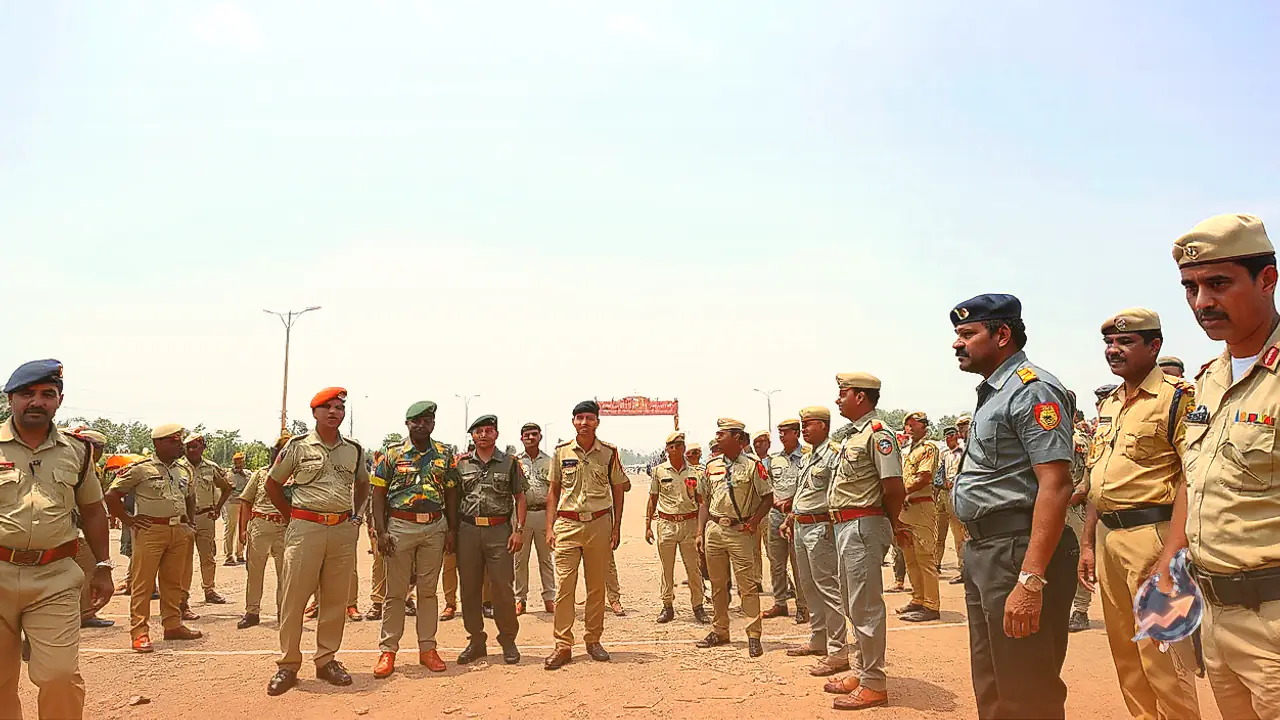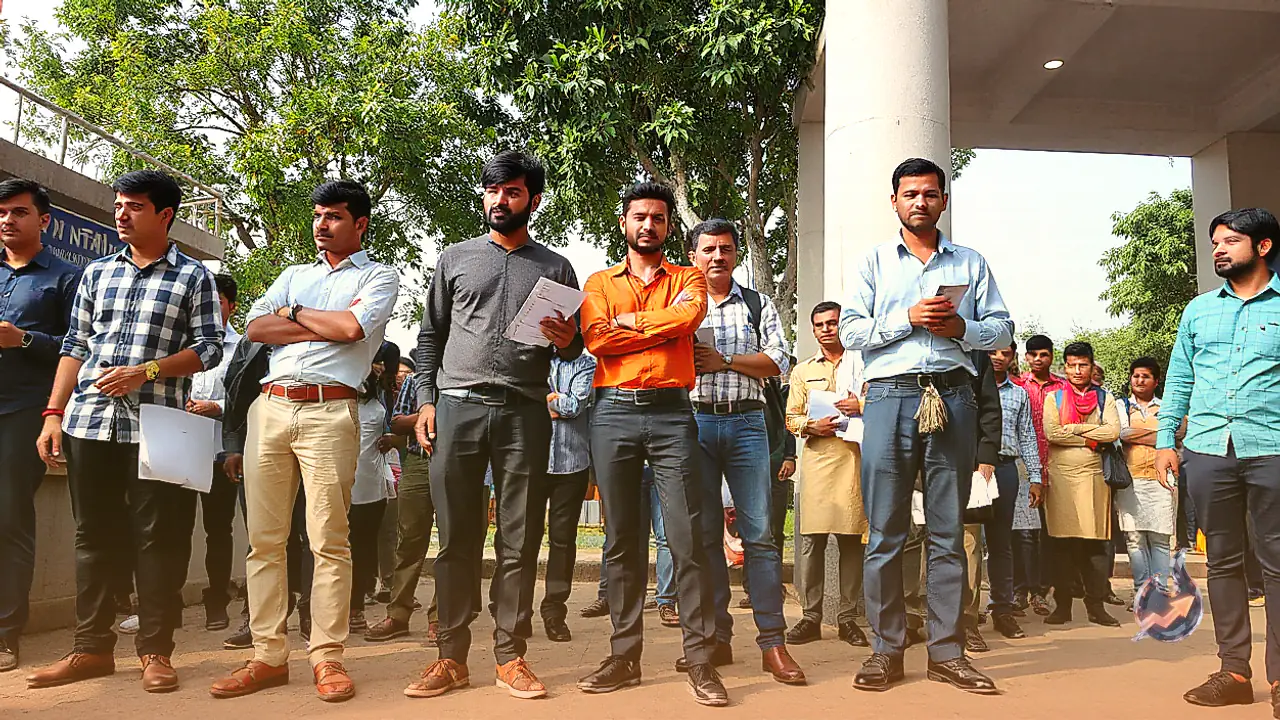


















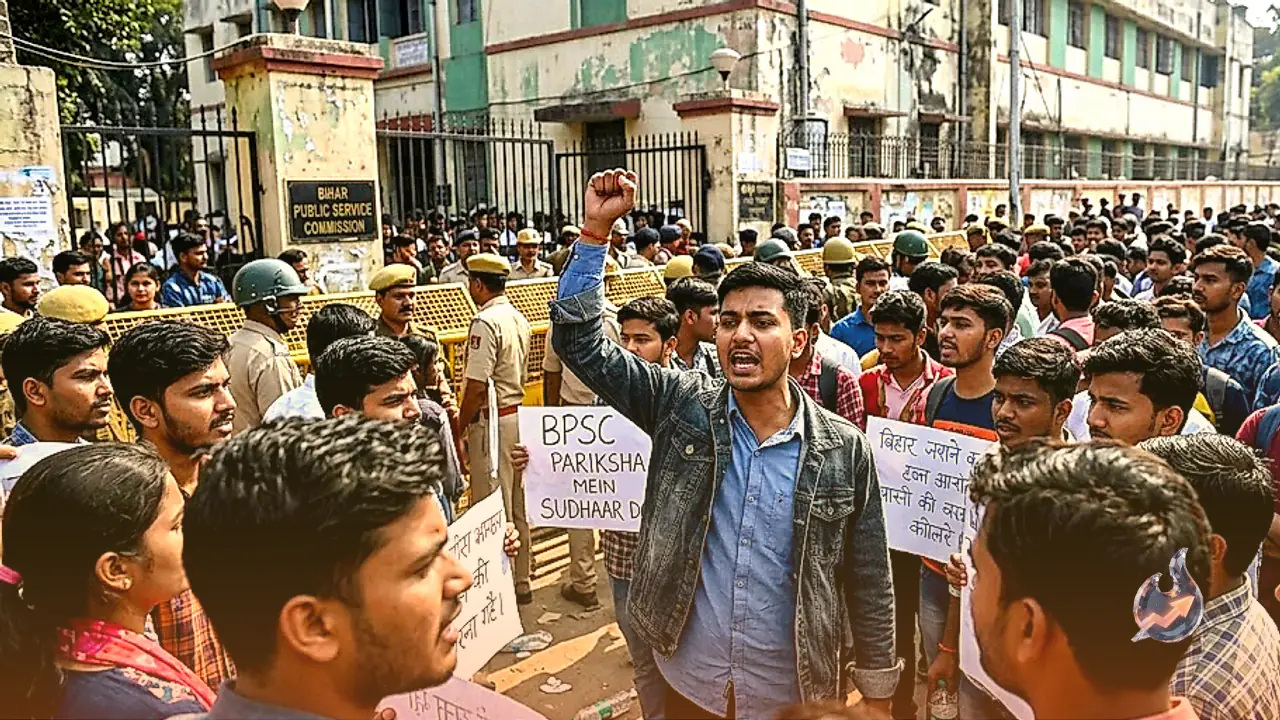

Protests over competitive examination guidelines and recruitment procedures in Patna, the capital city of Bihar, have taken a dramatic turn as demonstrating students attempted to besiege the Chief Minister's residence. Tensions escalated on the streets, resulting in direct confrontations between candidate groups and police units deployed to maintain public order. Exercising notable restraint, law enforcement personnel deployed mild lathi charges and water cannons to disperse the crowd and contain the situation. While no student demonstrator sustained serious injuries during the police action, several police personnel suffered severe head injuries and required medical attention after being hit by stones pelted from within the crowd. The agitating candidates are firmly demanding the total cancellation of the recent Bihar Public Service Commission examination. Furthermore, their primary charter of demands includes conducting teacher recruitment drives through a streamlined single stage examination, completely abolishing the existing two-tier framework comprising preliminary and main examinations, and doing away with negative marking schemes altogether.
BPSC Administrative Stand and the Rationale for Examination Reforms
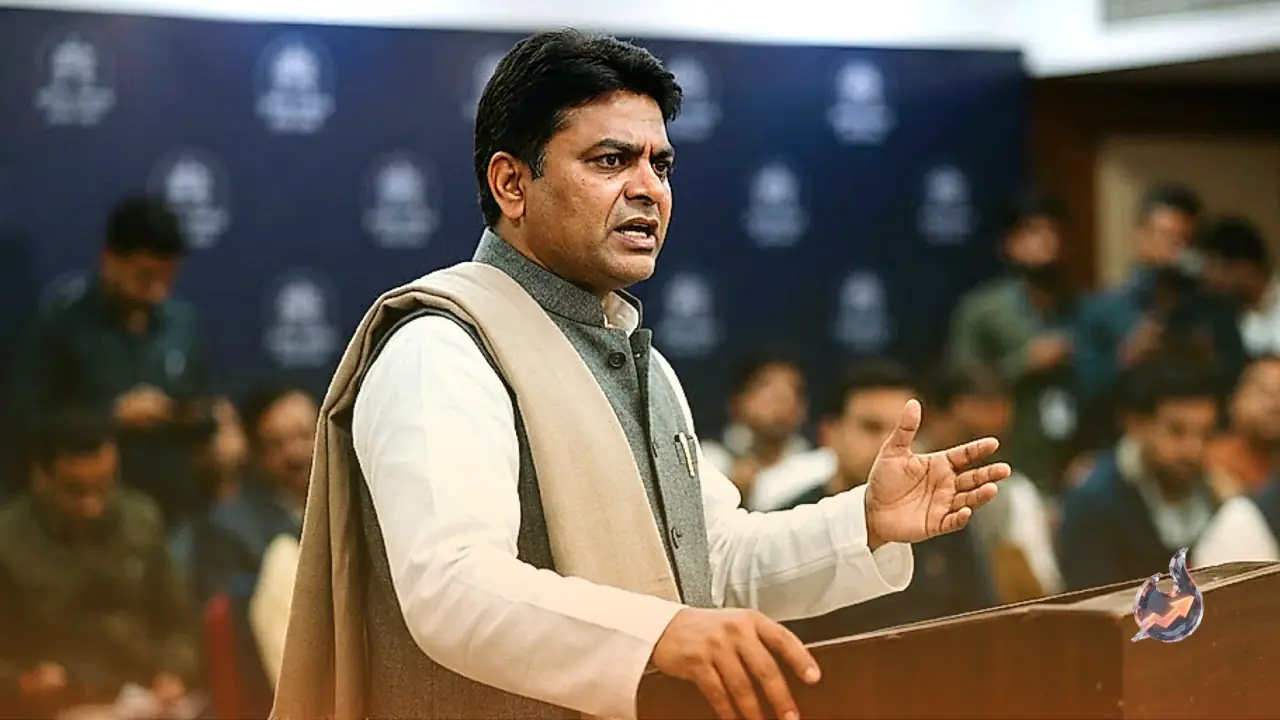
Responding to the mounting pressure from demonstrating candidates, the Bihar Public Service Commission has firmly articulated its administrative posture. Commission officials announced that compromising on foundational examination protocols and transparency benchmarks established to maintain institutional integrity is fundamentally unfeasible. Government representatives clarified that should candidates wish to pursue constructive dialogue, the administration remains fully receptive to conducting formal negotiations. While reasonable and structurally sound grievances could be evaluated sympathetically, attempting to coerce executive policy through street demonstrations and confrontational tactics will not yield concessions. Certain demands highlighted during the Patna demonstrations undoubtedly possess genuine merit, such as expediting long-pending recruitment examinations without administrative delays, enforcing strict time-bound legal prosecution against organized paper leak syndicates, and maintaining absolute operational transparency across all recruitment stages.
However, demanding the removal of safeguards engineered by expert committees to guarantee examination transparency raises serious policy concerns. The two-tier examination model for civil services is by no means an arbitrary arrangement, as the Union Public Service Commission has successfully employed a similar multi-stage evaluation process for decades to select top administrative talent across the country. Negative marking systems were explicitly introduced upon expert committee recommendations to deter wild guessing and eliminate systemic malpractices. If candidates genuinely seek an era free from recruitment fraud and paper leaks, implementing rigorous structural safeguards within examination administration becomes indispensable. A recent incident at the University of Health Sciences in Patna offers a striking case in point. When authorities enforced stringent anti-cheating measures during pharmacy examinations, an overwhelming 90 percent of candidates failed the test. Subsequently, failed candidates took to the streets to protest against the strict monitoring. Agitating against the prevention of cheating or demanding pass results through compromised evaluation standards cannot be justified under any standard of educational reform. Securing examination integrity and ensuring that hardworking, deserving candidates prevail requires eliminating both paper leaks and examination hall cheating with equal firmness, an objective impossible to realize without strict administrative enforcement.
Infrastructure Crisis in Bihar Government Primary Schools
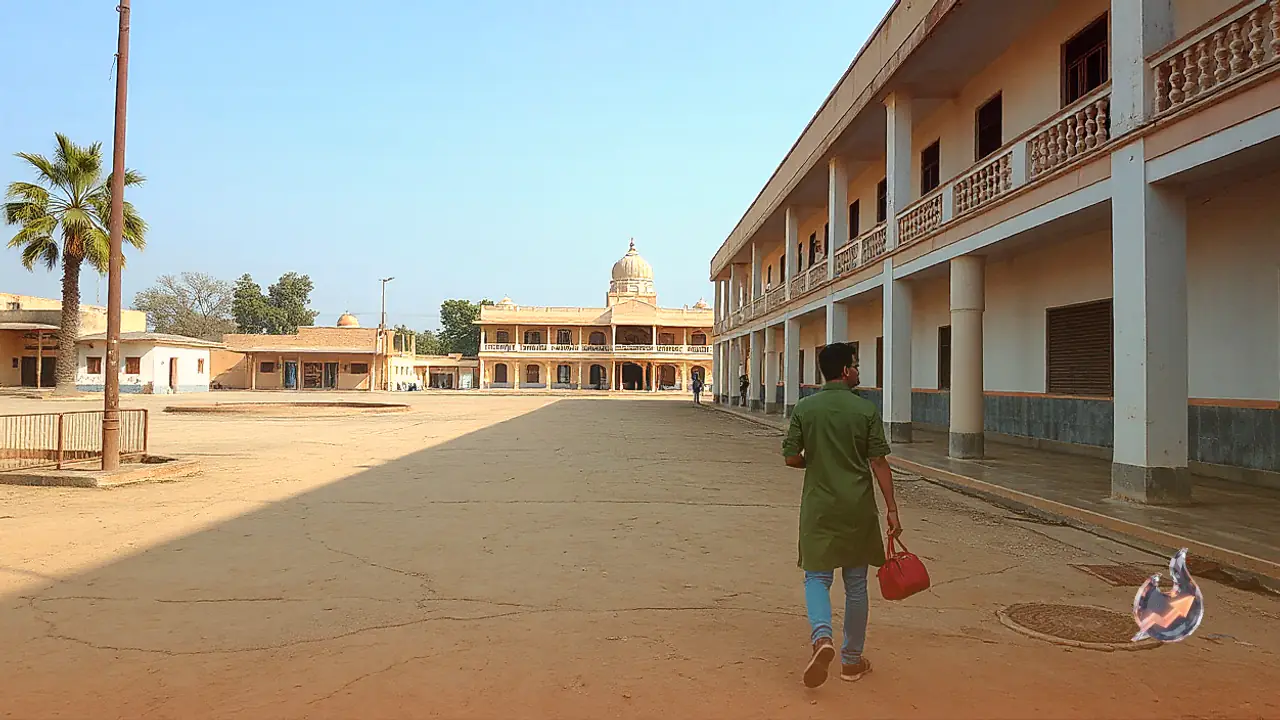
While aspiring candidates demonstrate on urban streets for civil service opportunities, the state's foundational primary education infrastructure faces severe operational distress. The dilapidated condition of government schools across Bihar cannot be remedied simply by logging complaints on administrative web portals or issuing routine show-cause notices to local officials. Resolving these systemic bottlenecks demands urgent, war-footing intervention from the state government and education ministry. Ground realities gathered across rural and municipal sectors reveal a deeply concerning picture of primary educational facilities. A notable instance is observed at the government middle school in Berwa village within Madhepura district. Although 159 students are currently enrolled at the institution, the entire school operates out of merely two functional rooms. Faced with severe space constraints, the teaching staff devised a compromise out of sheer necessity. Students from classes six, seven, and eight are packed together inside a single room, while children belonging to classes three, four, and five share the remaining small room.
Consequently, three teachers simultaneously deliver lessons on three different academic subjects to three separate class groups inside the exact same room. The overlapping voices of three instructors echoing within a confined space creates immense noise, making effective learning virtually impossible for young students. Teachers at the facility noted that the school has functioned under these precise makeshift arrangements since 1992. Although state authorities previously sanctioned dedicated funds for erecting a new school building, administrative failure in allocating suitable land led to the entire grant being returned unspent. Similar infrastructural bottlenecks persist across the state capital Patna and multiple surrounding districts. A special investigative feature broadcast on 15 September 2023 on the renowned news program Aaj Ki Baat highlighted a government school in Patna where five distinct classes were conducted inside a single room. A solitary blackboard was partitioned into five sections, with five teachers instructing five different subjects at the same time. Three years later, the situation remains completely unchanged, with zero additional classrooms added, multi-grade clashing classes continuing unabated, and basic school facilities remaining non-existent.
An even more distressing scenario unfolds in the Chenari region of Rohtas district, where young primary students attend daily classes inside a functional cattle shed. The school premises are actively used to tether domestic cattle, including cows and buffaloes. One classroom space is filled with a mechanical fodder cutting machine, while a second classroom is stacked to the ceiling with dry cattle feed and straw. Consequently, young children are crammed into the remaining two rooms for their daily instruction. When news teams inquired about how an educational institution was turned into a livestock barn, teachers revealed that a influential local individual had forcibly occupied the school property. The individual, identified as Sonu Yadav, asserted that the land upon which the school was built originally belonged to his grandfather and alleged that the government constructed the facility without proper agreement or land acquisition compensation. He maintained that since the property belongs to his family, he freely uses the courtyard to tie his livestock. While the determination of young children who manage to excel in national competitive exams despite studying in cattle sheds is commendable, the administrative failure remains a matter of deep concern for state governance. If executive bodies fail to provide proper classrooms over four decades while livestock occupies school grounds, deploying qualified teachers or updating academic curricula achieves little practical benefit. Should Chief Minister Samrat Choudhary successfully overhaul this broken educational infrastructure, it would mark a transformative achievement for the region.
Governance Reforms and Youth Welfare Initiatives in Uttar Pradesh
In contrast to the educational and recruitment deadlocks in Bihar, neighbouring Uttar Pradesh presents an active administrative drive focused on employment generation and social welfare. Chief Minister Yogi Adityanath has transitioned into an intensive policy enforcement mode, rolling out high-impact initiatives aimed at youth empowerment and female welfare. The Chief Minister announced that his administration will oversee the recruitment of 1 lakh youths into state government services over the next 6 months through transparent selection processes. During a high-profile ceremony held in Lucknow, the Chief Minister personally distributed official appointment letters to 3,446 Agriculture Technical Assistants and 126 Mandi Secretaries. Simultaneously, the Uttar Pradesh Cabinet approved a key welfare measure for senior female citizens. Under the new policy, all women aged 60 years and above are entitled to lifetime free travel aboard state-run Uttar Pradesh State Road Transport Corporation buses upon presenting valid identity verification, such as an Aadhaar card or voter identification card. Executive leadership presented this initiative as a special Raksha Bandhan gift to the women of Uttar Pradesh.
These rapid policy rollouts carry significant political resonance, leaving opposition leaders like Akhilesh Yadav with limited counter-arguments. To enhance digital access among youth, the government is preparing to distribute free laptops to 25 lakh students, supported by a dedicated budgetary allocation of 2,354 crore rupees. Furthermore, addressing foundational infrastructure in primary education, Chief Minister Yogi Adityanath sanctioned 604 crore rupees specifically earmarked for the repair, renovation, and structural overhaul of primary and upper primary schools across the state. This funding aims to convert aging facilities into modern, secure, and well-equipped learning environments for school children. Political analysts observe that the Chief Minister has strategically aligned administrative actions with public expectations and seasonal priorities, setting a strong momentum for state development. These contemporary political and governance developments were also analyzed during the broadcast on 25 August 2026.