



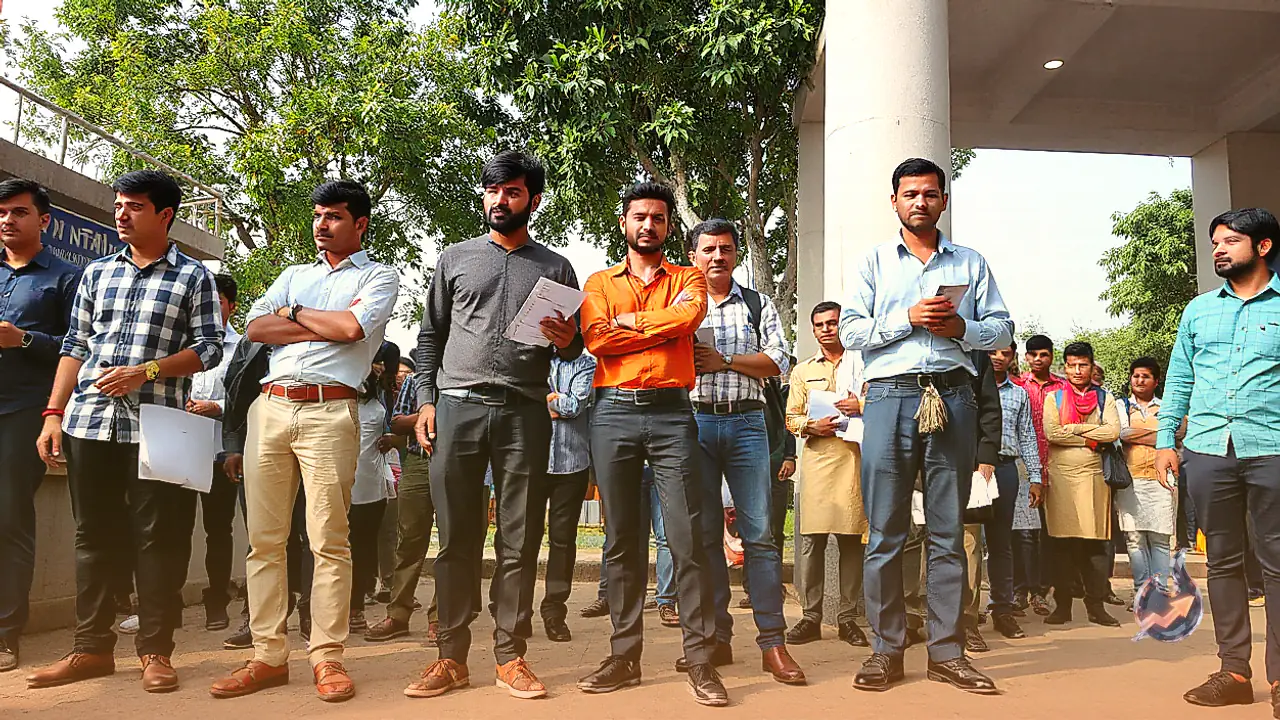

















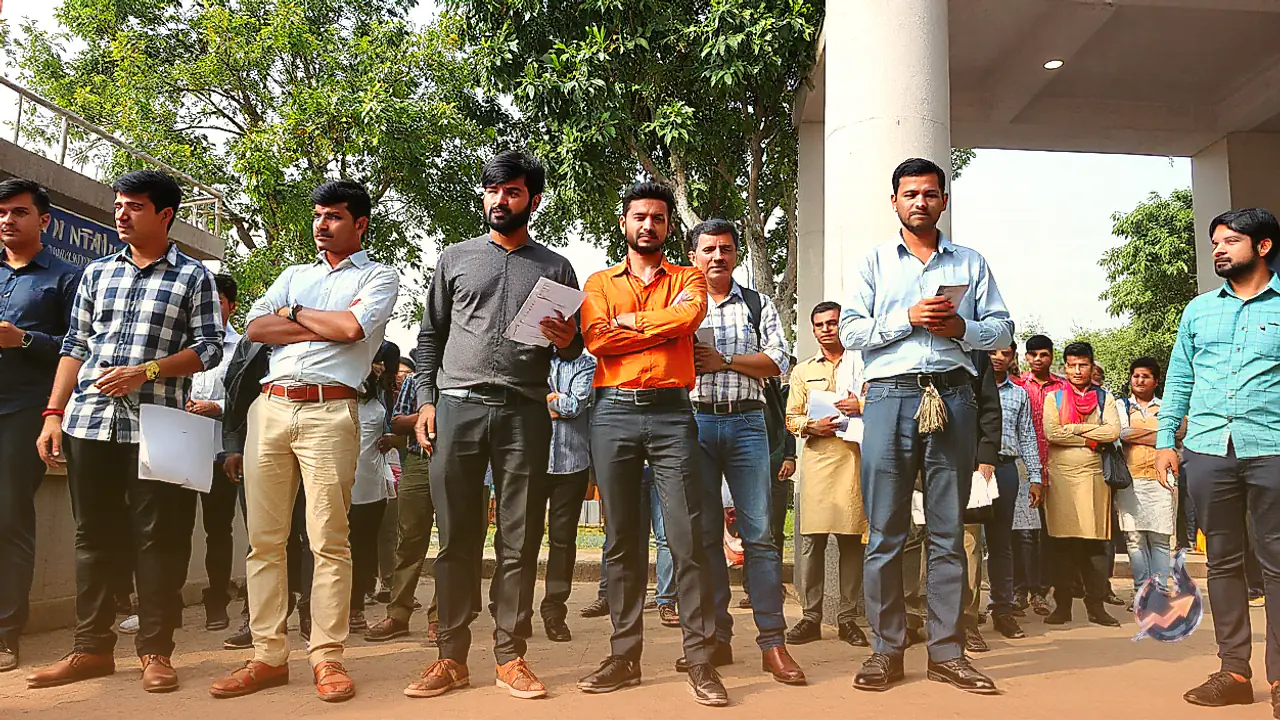

Aspirants working toward undergraduate engineering seats at prestigious national institutions such as the Indian Institutes of Technology (IITs), National Institutes of Technology (NITs), and Indian Institutes of Information Technology (IIITs) have received formal academic direction. The National Testing Agency (NTA) has uploaded the official and complete syllabus for the JEE Main 2027 examination on its web portal. Mastering the authentic syllabus remains the foundational first step for any high-stakes competitive entrance, as preparing without complete structural clarity increases the risk of overlooking core academic units.
The official notification confirms that the examination framework encompasses three distinct papers: Paper 1 for BE and BTech aspirants, Paper 2A for Bachelor of Architecture (BArch), and Paper 2B for Bachelor of Planning (BPlanning). Candidates aiming for undergraduate engineering degrees must build balanced proficiency across Physics, Chemistry, and Mathematics. Thoroughly deconstructing the official JEE Main 2027 syllabus enables students to identify core priorities, determine topic-wise weightage, and allocate their study hours systematically.
Syllabus Structure Retained Across 54 Total Units
Candidates initiating their entrance preparation often rush straight into practice question banks and complex reference material. Educational strategists emphasise that dissecting the unit allocations and structural weighting set by the examining body provides far greater long-term dividends. The NTA has clarified that the curriculum for the 2027 cycle mirrors that of the previous examination year, with zero structural reductions or additions. The entire testing blueprint spans 54 comprehensive units distributed across the three foundational subjects.
Physics Blueprint: High-Scoring Potential Across 20 Units
The testing agency has organized the Physics syllabus into 20 distinct units, requiring candidates to demonstrate an integrated mastery of theoretical principles, mathematical derivations, and laboratory methods. The subject is structured into several vital clusters
- Mechanics and Motion: Foundational domains including Kinematics, the Laws of Motion, Work, Energy and Power, and Rotational Motion regularly contribute substantial numerical problem sets each year.
- Electromagnetism and Optics: High-impact units such as Electrostatics, Current Electricity, Magnetic Effects of Current, and Optics remain critical drivers of overall cutoff scores and percentile benchmarks.
- Thermodynamics and Modern Physics: Sections covering Thermodynamics, Atoms and Nuclei, and Electronic Devices represent high-yield study areas that allow candidates to secure dependable scores in a relatively short testing window.
- Experimental Skills: In addition to theoretical knowledge, practical questions assessing familiarisation with laboratory apparatus, measurement rules, and analytical instrumentation form an integral component of the evaluation.
Chemistry Framework: Balanced Evaluation Across 20 Units
Chemistry maintains its established standing as a major rank-enhancer in the JEE Main examination because many of its questions demand direct, concise, and unambiguous factual responses. Matching Physics in volume, the subject spans 20 units categorized into three core branches
- Physical Chemistry: Core chapters such as Atomic Structure, Thermodynamics, Equilibrium, and Chemical Kinetics require rigorous numerical problem-solving and formula application.
- Inorganic Chemistry: Segments covering Chemical Bonding and Coordination Compounds evaluate a candidate's conceptual clarity alongside the disciplined memorisation of periodic trends and compound properties.
- Organic Chemistry and Biomolecules: Beyond in-depth study of Hydrocarbons and Biomolecules, students must develop a clear functional understanding of laboratory procedures and practical analytical chemistry.
Mathematics Curriculum: Testing Accuracy and Speed Across 14 Units
Mathematics consistently poses the stiffest time-management challenges during the entrance examination. The testing agency has structured this subject into 14 intensive units. Dedicated and methodical problem-solving practice in this section can dramatically elevate a candidate's overall national standing
- Algebra: The cornerstone units comprise Complex Numbers, Matrices and Determinants, Permutations and Combinations, Binomial Theorem, and Sequence and Series.
- Calculus and Coordinate Geometry: Core chapters including Integral Calculus, Differential Equations, Three-Dimensional Geometry, and Vectors routinely generate a high concentration of analytical test questions.
- Foundational Branches: Essential units like Sets, Relations and Functions, Trigonometry, and Statistics establish the core analytical competencies required across the entire syllabus.
Steps to Download the JEE Main 2027 Syllabus Document
Accessing and storing the official curriculum file directly from the examination authority involves a straightforward sequence of steps
- Navigate directly to the official portal hosted by the testing authority at jeemain.nta.nic.in.
- Locate and click the designated notification link for the JEE Main 2027 Syllabus on the primary landing page.
- The integrated PDF document detailing the complete syllabi for Paper 1, Paper 2A, and Paper 2B will open immediately on the screen.
- Download the electronic file to your device and print a physical reference copy to position near your primary study desk.
Preparation Recommendations for JEE Main Aspirants
Aspirants planning their roadmap for the 2027 testing cycle can optimize their preparation by following practical guidelines. First, never underestimate foundational textbooks published by the NCERT, as fundamental conceptual questions, particularly throughout Chemistry and Physics, are frequently drawn directly from their text. Second, after reviewing the full document, systematically highlight recurring high-yield chapters that consistently supply two to three questions every testing cycle. Lastly, rather than deferring testing until the entire curriculum is finished, incorporate regular chapter-level mock examinations into your weekly routine right from the initial preparation phase.