























The Supreme Court has taken a stern view of the recurring incidents of acid attacks across the country, observing that the continued occurrence of such violence demonstrates severe deficiencies in enforcing safety regulations. During proceedings on Tuesday, the court noted that despite existing central directives regulating the retail sale of acid, the substance continues to remain accessible to perpetrators, pointing to a critical gap between paper guidelines and ground reality.
Sympathy and Administrative Circulars Cannot Resolve the Crisis
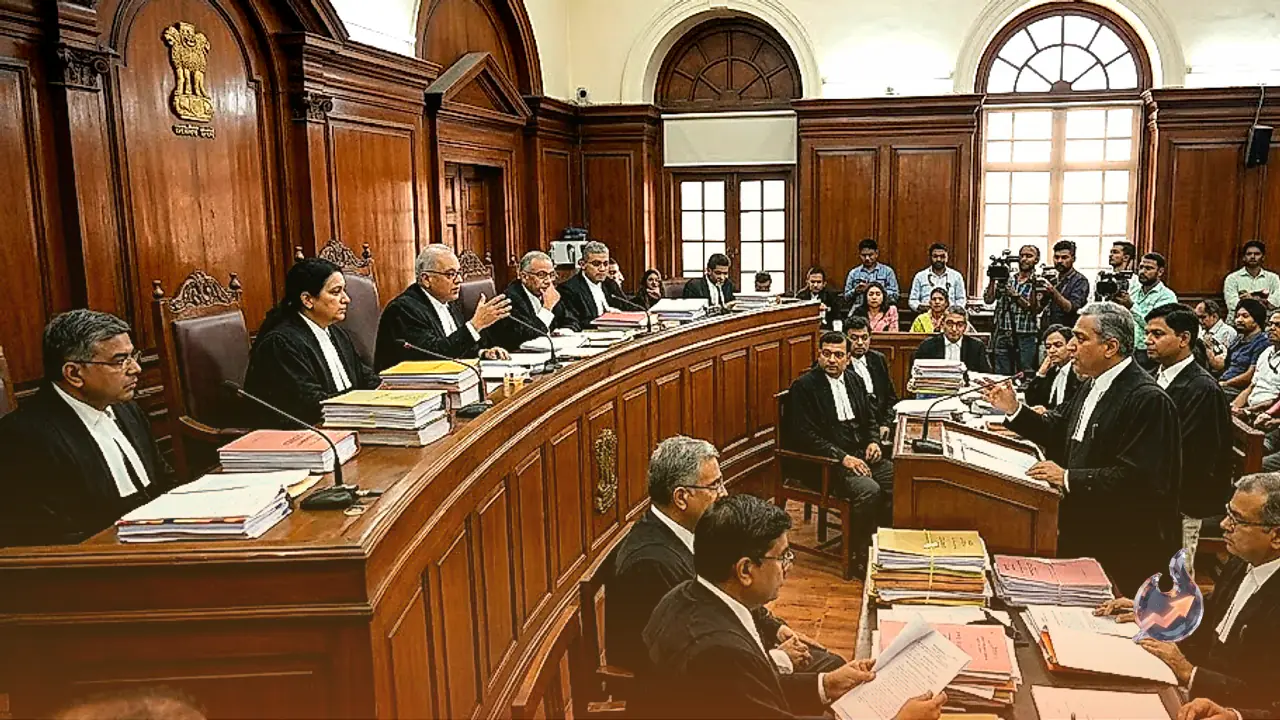
A three-judge bench headed by Chief Justice of India Surya Kant, alongside Justice Joymalya Bagchi and Justice V. Mohana, observed that offering sympathy or issuing periodic administrative circulars on sales restrictions will never solve this persistent crisis. The bench stressed that governments must take affirmative steps to verify that every state strictly complies with the statutory framework designed to curb retail acid sales.
Loopholes in Enforcement Exploited by Perpetrators
Questioning the effectiveness of the current administrative apparatus, the bench asked why violent attacks continue if retail sales guidelines are already in place. The court stated that such occurrences prove individuals are actively exploiting enforcement loopholes. According to the bench, the persistence of these incidents demonstrates that existing policies have fallen short of their intended objective, highlighting the urgent need for central and state governments to cooperate closely and establish strict accountability for defaulting field officers.
Union Acknowledges Ground-Level Gaps, Court Orders Formal Affidavit
Appearing on behalf of the central government, Additional Solicitor General Archana Pathak Dave submitted that comprehensive guidelines prohibiting retail acid sales have already been circulated to all states. She conceded, however, that the implementation of these measures remains noticeably weak on the ground. Taking note of this submission, the Supreme Court directed the Union government to submit an affidavit clearly outlining the concrete steps it intends to execute to prevent the open-market sale and misuse of acid.
Stricter Punishments Proposed as Shaheen Malik Petitions for Welfare Rights
The top court has previously expressed concern regarding rising acid attacks, discussing stronger sentencing measures as well as exploring whether the legal burden of proving innocence should rest upon the accused in such heinous offenses. Tuesday's proceedings arose from a public interest litigation filed by acid attack survivor Shaheen Malik. The petition seeks to categorize acid attack survivors under the disability framework, ensuring they obtain full access to essential government welfare schemes and statutory support. The court's remarks make it abundantly clear that drafting policies is insufficient unless regulatory compliance is actively enforced and administrative lapses are penalized.