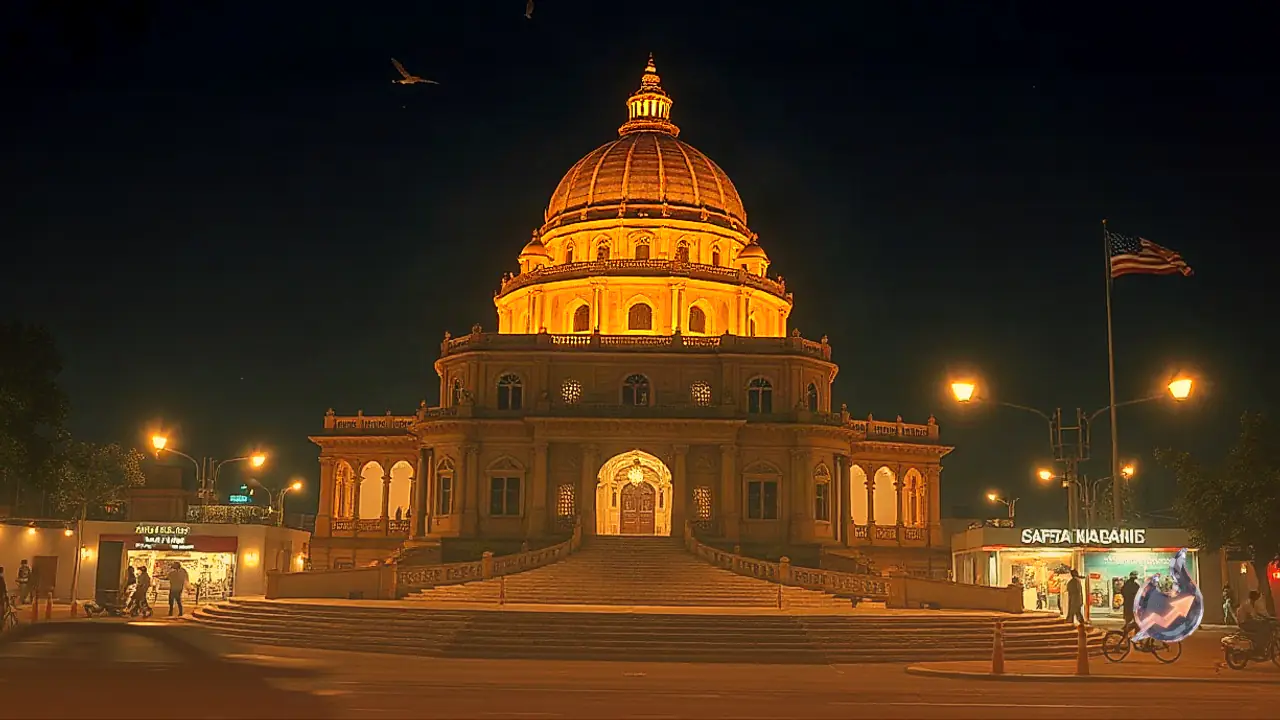



















Union Minister Ashwini Vaishnaw has announced a fresh government initiative aimed at linking the prestigious National Film Awards ceremony directly with India's prominent tourist destinations. Speaking to journalists in Ahmedabad, Gujarat, the minister explained that this strategy draws direct inspiration from Prime Minister Narendra Modi's broader vision of taking landmark national events beyond the conventional confines of the capital city.
Spotlight on Ekta Nagar and the Statue of Unity
Highlighting potential destinations for such events, Ashwini Vaishnaw pointed to Ekta Nagar in Gujarat, home to the colossal memorial honouring Sardar Vallabhbhai Patel. Explaining the rationale, he noted, “Ekta Nagar is famous across India and worldwide. It hosts the world's tallest statue of Sardar Patel and is a scenic, well-known destination. When renowned film personalities and dignitaries from across the nation gather alongside the President at such an iconic site, it will offer numerous people an opportunity to discover this place.” He emphasised that hosting the cinema fraternity and the President at such destinations would generate enormous domestic and global curiosity.
Adopting the G20 Model Across the Nation
To demonstrate the effectiveness of this concept, the Union Minister referenced the extensive rollout of the G20 meetings hosted by India. Under the Prime Minister's leadership, G20 conventions were not restricted to a single metro but were distributed across various states and remote corners of the country. Ashwini Vaishnaw pointed out that this structure ensured that every region felt actively involved in the national milestone, and the government now intends to apply this exact decentralised ethos to premier cultural events such as the National Film Awards.
Emphasis on Family Values and Railway Subsidy Figures
During his address, the minister also touched upon discussions that emerged during the 'Chhatron Ki Goonj' student interaction event. Reflecting on societal foundations, he said, “In Indian culture, family is an extremely vital institution. The significance we accord to our families, relatives, and especially our parents should never be perceived in contrast to our country's foundational values.”
Shifting focus to public transportation infrastructure, Ashwini Vaishnaw shared crucial operational data regarding the national carrier. He highlighted that Indian Railways continues to extend a collective passenger subsidy of 60,000 crore rupees to travelers. The minister underlined that this substantial financial support is intentionally maintained so that rail journeys remain universally affordable, seamless, and accessible for the everyday commuter.