























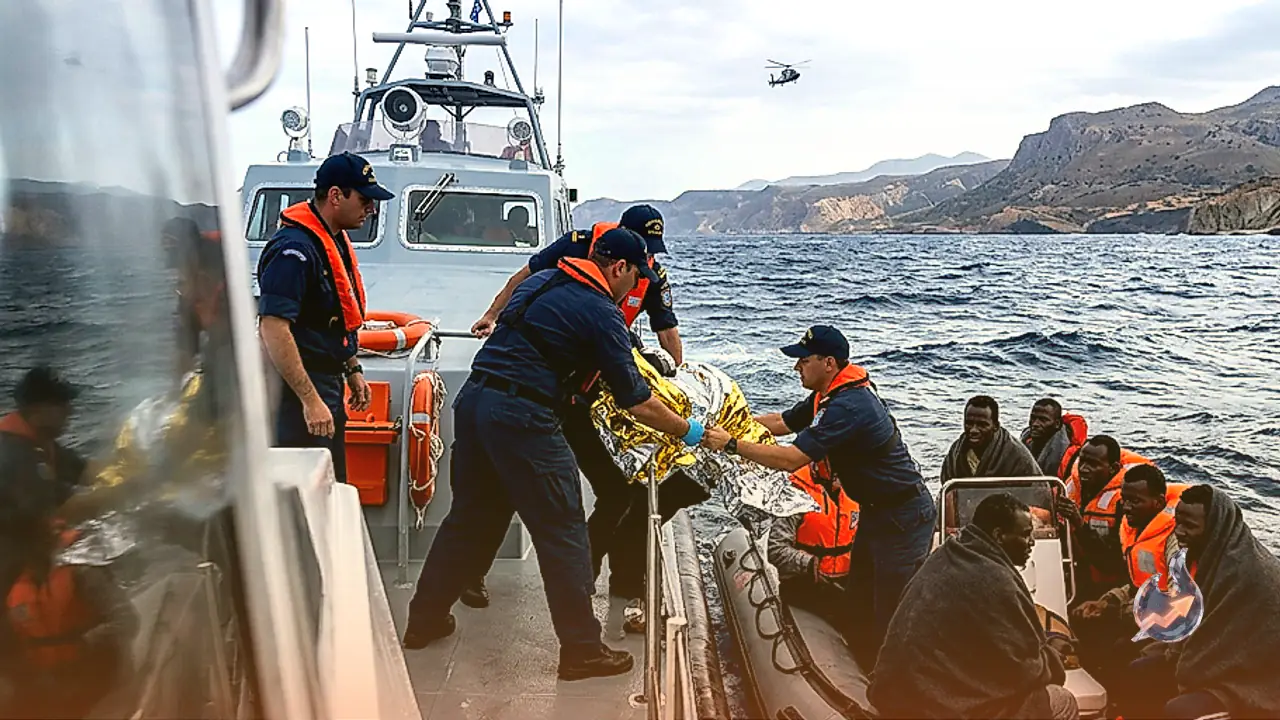

Greek authorities have reported a major maritime tragedy off the coast of the island of Crete, where a boat carrying migrants sank, resulting in the deaths of at least 13 people. The coastguard stated that they successfully rescued 18 individuals from the wreckage, all of whom have been identified as Sudanese nationals. Four of the survivors were immediately transported to a hospital for medical attention, and the group of hospitalized individuals includes a young toddler.
Rescue Operations and Maritime Conditions
officials noted that while the exact catalyst for the fatalities is not yet definitively clear, they believe the vessel had been stranded at sea for multiple days. The boat reportedly struggled significantly to reach the shoreline due to severe, strong winds battering the region. The distressed vessel was initially spotted by a Moroccan-flagged container ship stationed approximately 15 nautical miles, which translates to about 28 kilometers, off the coast of Crete.
Surging Migration Tides in Greece
Crete continues to serve as a primary and critical gateway for migrants attempting the dangerous journey to Europe from regions across the Middle East and North Africa. Out of the 86,400 sea arrivals recorded in the country so far this year, more than 22,000 have landed exclusively on Crete. Furthermore, Greek authorities documented that approximately 1,700 migrants reached the island during just the first three days of November. In a separate series of operations on Monday, the Greek coastguard rescued an additional 187 people across three distinct incidents near the Greek coastline.
National Statistics and Historical Context
Data compiled by the United Nations reveals that more than 37,000 migrants have arrived in Greece over the course of this year, a figure that has already surpassed the total number of arrivals recorded for the entirety of 2025. In response to this continuous influx, the Greek government has unveiled comprehensive plans to manage the situation, which include opening a new temporary housing complex near Heraklion, the capital of Crete. Greece was previously at the epicenter of Europe's severe migration crisis during 2015 and 2016, when nearly a million people arrived on its shores, predominantly originating from Turkey. While border controls later managed to suppress those numbers, crossings originating from Libya have surged dramatically in recent years, driven heavily by individuals fleeing violent conflict in Sudan as well as those seeking better economic prospects from nations such as Bangladesh.