























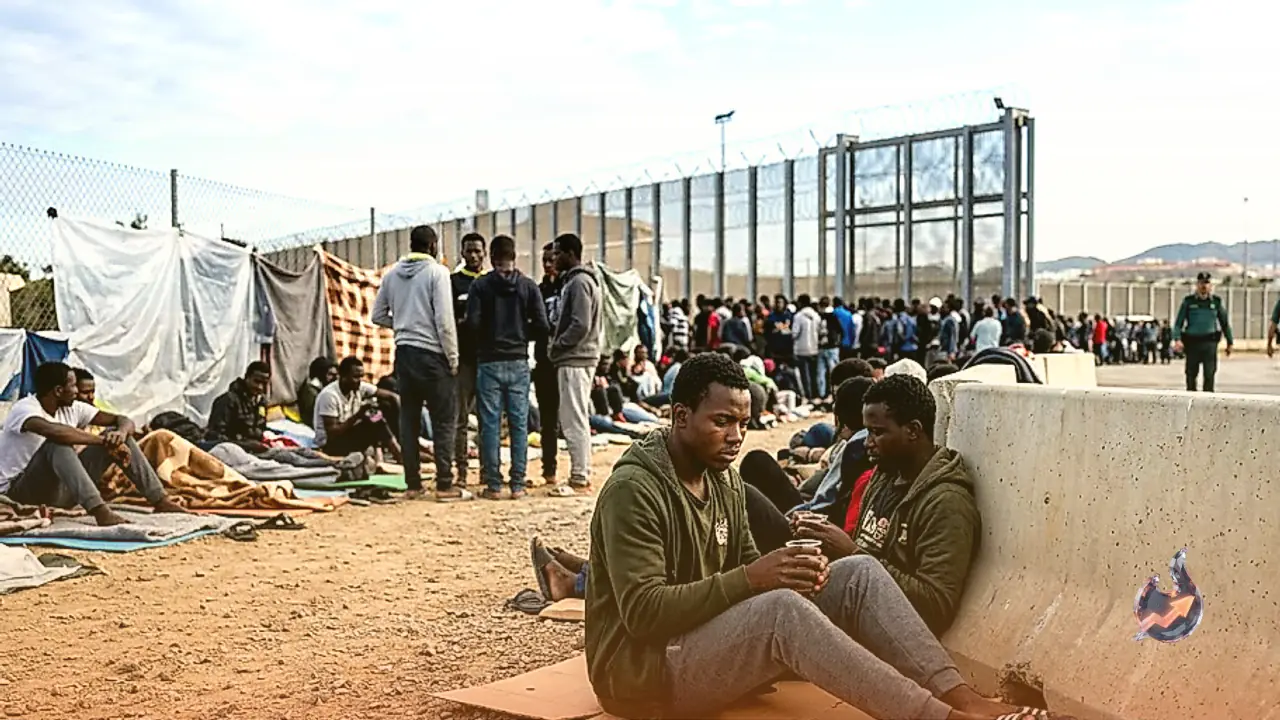

An extraordinary humanitarian and security emergency continues to unfold in Ceuta, the Spanish exclave located on the North African coast. Between 3,000 and 5,000 migrants remain stranded in the territory after an overwhelming surge saw nearly 78,000 individuals attempt to enter by sea within hours last week. The sudden influx resulted in a tragic loss of life, with at least 100 deaths reported, pushing local infrastructure to its breaking point and sparking intense diplomatic friction across Europe.
Local Leadership Calls for European Action
Addressing the European Parliament, Juan Jesús Vivas, the conservative mayor-president of Ceuta, expressed profound grief over what he characterized as an irreparable tragedy. Vivas detailed how roughly 78,000 migrants from neighboring Morocco swam or used small crafts to reach Spanish soil in an extremely short timeframe. While the swift return of nearly 75,000 individuals to Morocco helped relieve the initial pressure, Vivas emphasized that normal life has not resumed. Ceuta remains under a severe humanitarian crisis, accompanied by ongoing public order disruptions that municipal authorities are struggling to contain.
Criticism of Madrid's Emergency Response
During his statement to European lawmakers, Vivas leveled strong criticism against the national administration led by Socialist Prime Minister Pedro Sánchez. Vivas revealed that he had directly informed Prime Minister Sánchez that central government intervention was both delayed and inadequate. He noted that warnings issued by local officials regarding increased sea crossings had been disregarded prior to the crisis. Furthermore, Vivas highlighted that local authorities still lack an exact count of the migrants remaining in the enclave, illustrating the acute shortage of administrative and logistical resources available on the ground.
Child Migrant Crisis and Legal Deadlocks
A central challenge facing the enclave is the high number of unaccompanied minor migrants. Thousands of children are currently being registered by local authorities and charitable organizations. In response, Spain's interior ministry announced an allocation of €25m (£21.4m; $28.8m) aimed at supporting minors in Ceuta. However, non-governmental groups report a much higher burden. Spanish newspaper El Mundo reported that volunteer organizations have registered 4,860 migrant children in Ceuta, double the official state estimates. Local residents have taken many children into their private homes, though volunteers warn that community care is reaching an unsustainable limit.
Resolving the status of these minors is hampered by strict legal prerequisites. Vivas pointed out that returning migrant children to Morocco is virtually impossible without obtaining their explicit consent. Concurrently, reporting by Spanish newspaper El País indicates that right-wing regional authorities on the mainland are unwilling to accept migrant minors into their territories. Although a bilateral agreement between Spain and Morocco governs cooperation regarding the reunification of migrant children with their families, political resistance has stymied relocation efforts. Melilla's conservative leader has called upon mainland administrations to demonstrate solidarity by sharing the humanitarian responsibility.
Factors Behind the Mass Border Crossing
The sudden rush of tens of thousands of people toward Ceuta on Thursday and Friday last week stems from multiple intertwined causes. Magnus Brunner, the EU Migration Commissioner, indicated that organized criminal syndicates used social media platforms to disseminate false information regarding entry conditions, an assessment endorsed by Prime Minister Sánchez.
Additionally, a major legal decision by Spain's Supreme Court altered border enforcement dynamics. The court ruled that migrants intercepted at sea while trying to reach Ceuta or Melilla cannot be summarily turned back to Morocco. Official sources in Morocco suggested that this judicial ruling effectively dismantled the existing deterrent mechanism, arguing that the border system collapsed due to the legal verdict rather than sheer criminal pressure. The exclaves of Ceuta and Melilla have long remained a point of territorial contention, as Morocco does not formally recognize Spanish sovereignty over them.
Fresh Social Media Mobilization
Even as emergency personnel manage the current fallout, Moroccan news outlet Hespress reported that new coordination attempts are surfacing online. Messages circulating across social media platforms encourage users to join private WhatsApp groups, utilizing hashtags related to Spanish migration and employment opportunities. These digital campaigns persist despite explicit warnings from Moroccan law enforcement that individuals facilitating or encouraging irregular border attempts will face criminal prosecution.
Schengen Disputes and Intra-EU Friction
The events in Ceuta have triggered political fallout among European Union member states within the passport-free Schengen zone. Italy announced the suspension of its Schengen border agreement with Spain, a decision backed by Denmark and Finland. Meanwhile, the Czech Republic advocated for the temporary suspension of Spain's Schengen status, despite Prime Minister Sánchez clarifying that Ceuta falls outside the geographic scope of the Schengen agreement.
EU Migration Commissioner Magnus Brunner stated that the European Union stands ready to deploy additional support to Ceuta, though Spain has yet to formally request European border guards. Brunner recommended that the EU leverage its broader diplomatic policy options, including trade agreements and visa regulations, to ensure consistent border cooperation from Morocco. Meanwhile, Spain's interior ministry affirmed it is coordinating with Moroccan officials to prevent future border breaches and complete the return of remaining migrants as quickly as legal frameworks allow.