























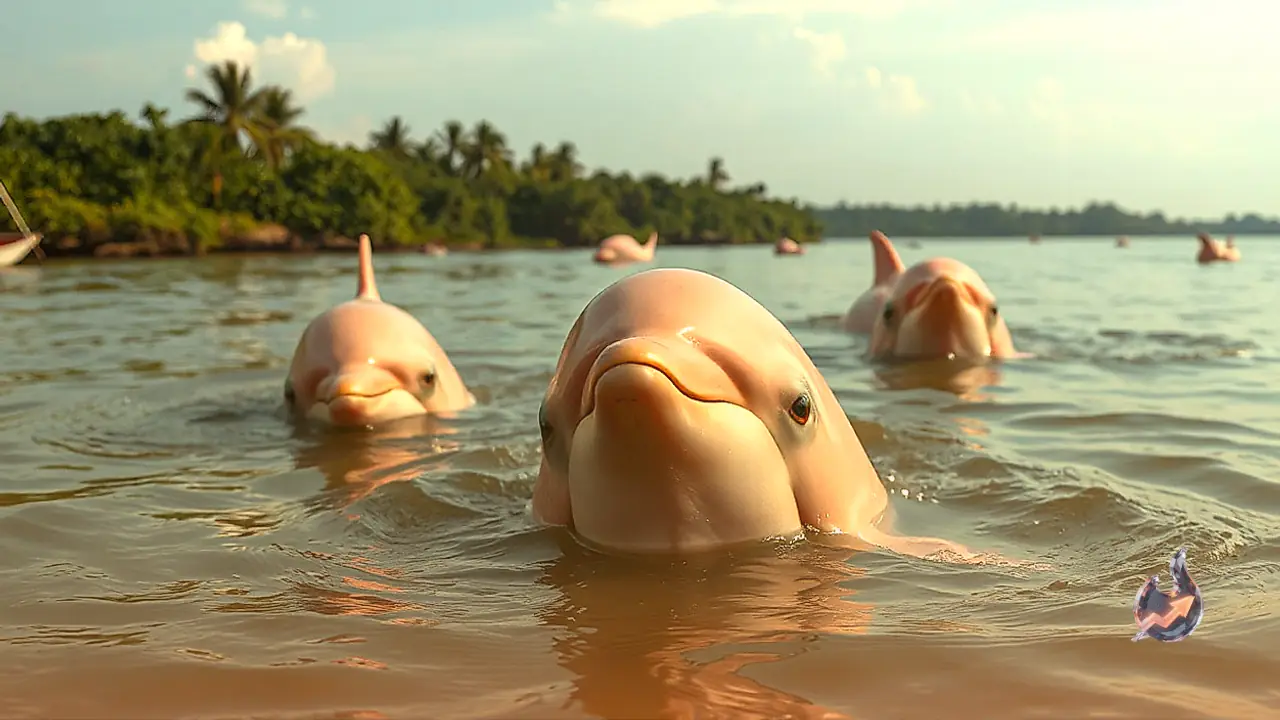

Local communities living near the rivers and forests of the Amazon share fascinating legends regarding the pink river dolphin. A well-known traditional folklore passed down through generations suggests that these aquatic creatures transform into attractive, fair-skinned humans after nightfall. According to local beliefs, they slip into nearby villages under the cover of darkness to lure and kidnap women.
The Largest Freshwater Dolphin Species on Earth
At first glance, these animals resemble artificial plastic toys due to their distinct pink coloration, bulging melon-shaped heads, and long snouts featuring roughly 100 teeth. Despite their playful appearance, they are actually the largest freshwater dolphins in the world. Their length frequently exceeds eight feet, and their maximum weight can reach up to 200 kilograms.
Clever Tactics Used to Steal Fish From Nets
The cunning behavior of these aquatic mammals has recently been documented beneath the surface. National Geographic wildlife photographer Thomas Peschak captured the underwater theft activities of these dolphins on camera. These animals are smart enough to recognize the sound of an approaching boat and instantly understand that food is nearby. They approach fishing nets, tear holes through the fabric, and extract the trapped fish, earning them a reputation as crafty thieves.
Using the Melons on Their Heads to Navigate Turbid Waters
The waters of Amazonian rivers are exceptionally muddy and murky, making visual navigation completely impossible beneath the surface. To overcome this, the bulging structure located on the dolphin's forehead, known as the melon, functions as a sound amplifier. By utilizing echolocation, they create an accurate mental map of their underwater surroundings.
Human Retaliation and Conflict With Local Fishermen
Because these dolphins tear fishing nets and steal daily catches, local fishermen harbor intense resentment toward them. In various regions, fishermen retaliate by attacking the animals using boat propellers and firearms, resulting in the tragic deaths of dozens of dolphins every year.
Severe Threats From Wildfires, Mercury, and Plastics
Beyond human conflict, environmental hazards pose a deadly threat to the survival of these species. Smoke originating from severe wildfires in the Amazon rainforest causes respiratory and lung ailments in the dolphins. Furthermore, toxic mercury used in illegal gold mining operations and accumulating plastic waste are dissolving into their bloodstreams, driving their populations down into vulnerable conservation categories.
Pinger Devices Deployed to Protect Marine Life
Scientists are now collaborating with local fishermen to implement protective measures for the dolphins. Banana-shaped acoustic devices known as pingers are being attached to fishing nets. These devices emit specific sounds that naturally deter dolphins from approaching the nets, successfully preventing damage to fishermen's gear while keeping the animals safe.