



















With the festive calendar underway, traditional handloom textiles are seeing an uptick in consumer interest, led prominently by the heritage weaving sector of Bhagalpur. Renowned internationally as the Silk City, the manufacturing hub continually produces fresh iterations of drape wear that capture seasonal interest. A defining feature of the local textile industry is that weavers themselves conceptualize and craft the motifs, functioning as the principal designers. Because the creators directly control the loom and the styling, the resulting patterns possess a distinctive visual appeal that sets them apart from mass-manufactured garments.
Reinventing Traditional Tussar and Mulberry Weaves
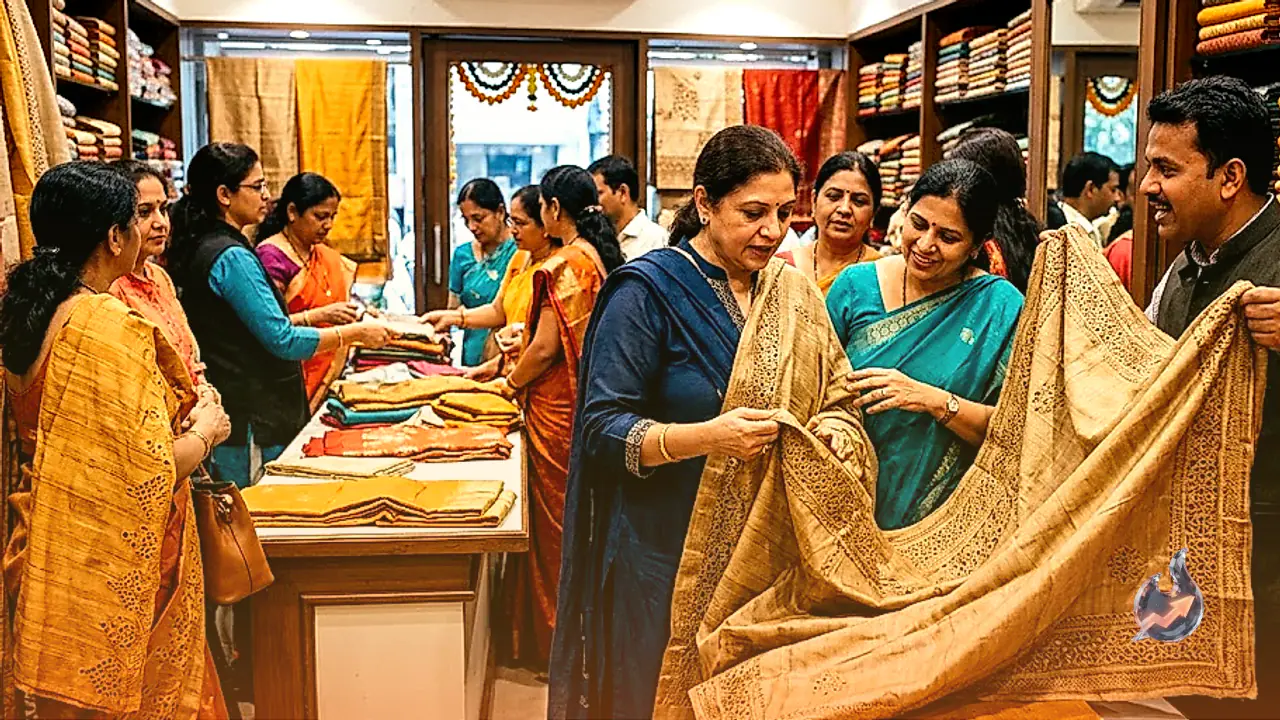
Within the broader silk manufacturing landscape, Tussar and Mulberry varieties consistently generate the highest commercial interest among buyers. While both varieties serve as the foundation for diverse decorative styles, the latest market movement highlights a strong customer preference for Tussar cutwork drapes. Offering insight into the renewed momentum behind this craft, local weaver Hemant Kumar stated, "Here, old designs are brought back in a new version." This approach of blending heritage motifs with present-day presentation has helped regional textiles remain relevant across evolving fashion cycles.
Crafting the Cutwork Border Details
Although Tussar fabrics have long carried a wide array of patterns, the cutwork style has re-emerged as a major fashion preference. This specific design language centers on the borders of the garment, where distinct and elaborate cutout patterns are systematically rendered. The production process involves a hybrid workflow, combining delicate manual detailing with mechanical processing. Dedicated cutwork machines installed across local workshops assist the craftsmen in producing precise border finishes. For women seeking an authentic ethnic presentation during celebrations such as Durga Puja, these garments offer a balanced combination of festive style and traditional craftsmanship.
Pricing Structure and Inter-State Shipments
While genuine silk garments inherently carry higher price tags compared to other everyday fabrics, the Tussar cutwork series remains competitively accessible within the premium ethnic segment. Prices for these pieces start at 4,000 rupees and extend up to 6,000 rupees depending on the intricacy of the execution. Commercial traction has stretched far beyond local markets, with substantial delivery orders originating from South India and Mumbai. Shipments dispatched to Mumbai have already been delivered, reflecting a steady appetite among urban shoppers for regional handloom collections.