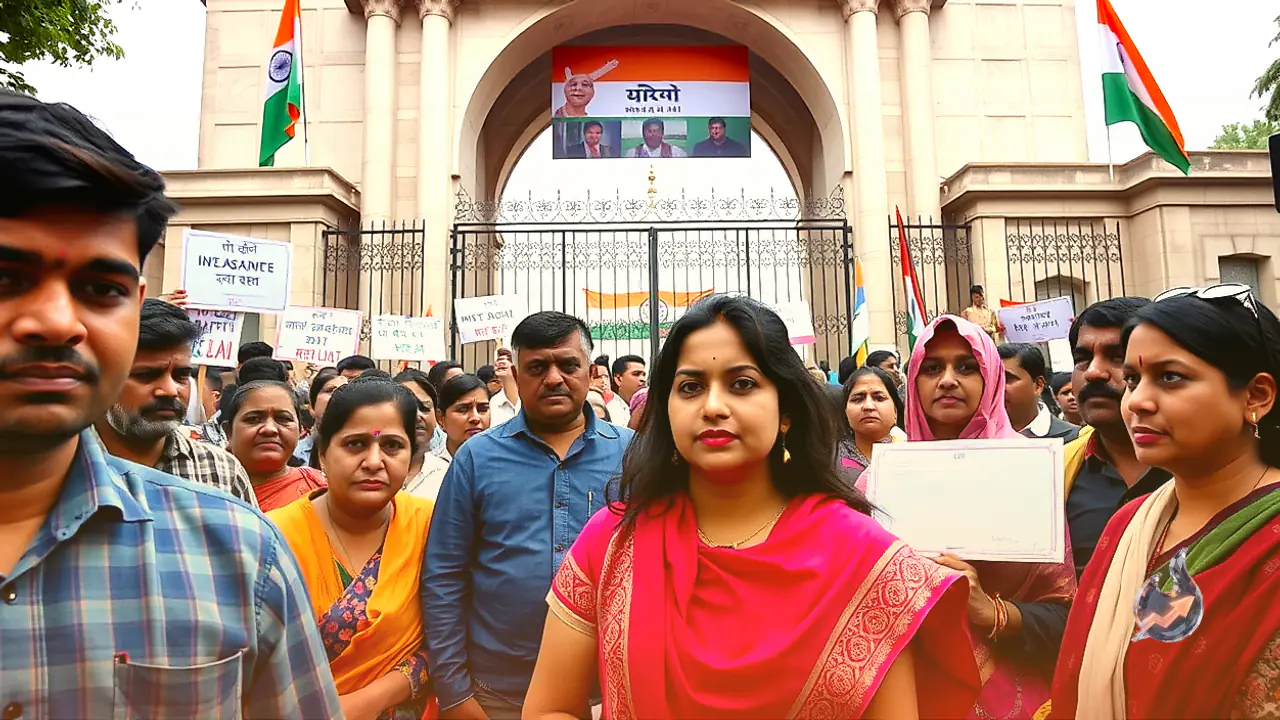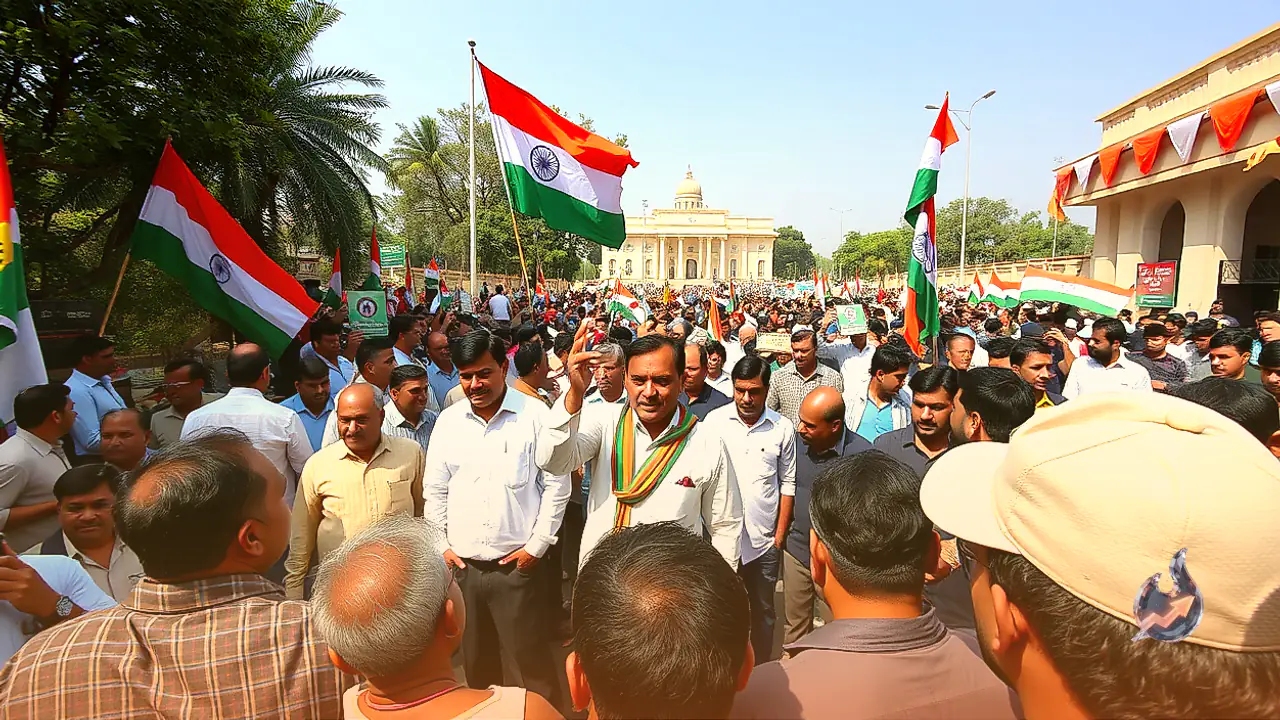


















Political exchanges intensified in the national capital following an ongoing eight-day protest, drawing a direct and comprehensive response from Union Home Minister Amit Shah against issues raised by Rahul Gandhi. Amit Shah cautioned that rather than linking Prime Minister Narendra Modi's sustained public popularity to SIR, the opposition ought to engage in serious introspection regarding its own political standing. Pointing to ground-level realities, the Home Minister noted that the Congress has been unable to secure an electoral victory in Gujarat over the past 41 years. He further asserted that the BJP and the NDA, under the leadership of Narendra Modi, will register a decisive victory in 2029 as well, suggesting that the opposition leadership should prepare for that eventuality.
Local Civic Mandates and Electoral Ground Reality
Examining the outcome of the recent local body elections in Gujarat, political observers noted that the opposition's campaign failed to create a tangible impact on the ground. According to the Home Minister, the ultimate and most credible measure of any political leader or party's acceptance remains election results, regardless of social media trends, narrative building, or the volume of short video reels produced against them. The decisive, one-sided victory secured by the BJP in Gandhinagar, which is Amit Shah's parliamentary constituency, was cited as clear evidence that popular support for Narendra Modi remains firmly intact.
Similar electoral outcomes emerged just a week earlier in Assam and West Bengal. In a democratic framework, actual voting outcomes carry far greater evidentiary weight than internal political assessments or opinion polls. Citing historical track records, Amit Shah listed several states where the Congress has remained out of power and unable to win elections for 30 to 40 years. He emphasized that Gyanesh Kumar was not associated with the electoral process during those earlier decades. The Home Minister added that the clamor generated by a gathering of 8,000 individuals cannot alter political realities established by the broader electorate.
Opposition Stance and the INDIA Bloc's Resolution
Despite the counter-arguments, Rahul Gandhi has remained steadfast in his chosen political course. He convened another formal strategy meeting with leaders of the INDIA bloc to coordinate their joint approach. During these discussions, the coalition resolved to continue its agitation regarding Gyanesh Kumar and the SIR framework. Rahul Gandhi declared that irrespective of the time required, he would persist with his active political front against Narendra Modi, Amit Shah, Gyanesh Kumar, and Mohan Bhagwat, maintaining that systemic questions regarding oversight and neutrality must remain central to their platform.
Piyush Goyal's Counter-Queries and Institutional Precedents
In response to the persistent accusations, Union Minister Piyush Goyal posed 10 specific questions to Rahul Gandhi, recalling administrative precedents from earlier Congress-led dispensations. Piyush Goyal argued that past governments had conferred political and constitutional rewards on former Chief Election Commissioners. Specifically, he pointed out that one former CEC was later appointed as a state Governor, a second CEC was inducted directly into the Union Cabinet as a minister, and a third Chief Election Commissioner was granted an official party ticket to contest elections. He contended that current opposition statements deliberately obscure these past actions.
This intervention marks an observable shift in how the ruling party addresses allegations concerning the electoral machinery. Previously, when Rahul Gandhi criticized the Election Commission to target the ruling party, senior leaders generally maintained silence to avoid appearing as though they were officially advocating on behalf of an autonomous constitutional body. However, over the past three to four days, prominent leaders have adopted a point-by-point rebuttal strategy. Highlighting what he termed double standards, Piyush Goyal cited the specific instances of past Chief Election Commissioners T.N. Seshan, Navin Chawla, and M.S. Gill, each of whom received candidacies, ministerial portfolios, or gubernatorial assignments. He also mentioned past opposition leaders who had themselves previously sought SIR. Piyush Goyal questioned why, if substantiated evidence regarding alleged voting manipulation exists, it has not been submitted before the judiciary. He noted that structured debates within Parliament would have allowed full institutional responses to be placed on the record, but legislative disruptions prevented such deliberations from taking place.