





















Preparing bottle gourd as a routine everyday vegetable often leads to reluctance around the dining table, particularly among children and selective eaters. Transforming this vegetable into a crisp, flaky kachori presents an inventive way to incorporate its nutritional value into family meals without resistance. Made with a wholesome foundation of whole wheat flour, gram flour, and semolina infused with aromatic ground spices, this fried delicacy works wonderfully from early morning breakfast to an evening tea companion. The recipe requires no complicated culinary techniques or hard-to-find ingredients, relying entirely on regular pantry staples.
Ingredients Required for Texture and Balanced Spice
Achieving the right flakiness and structural stability requires carefully measured ingredients. The dough base combines whole wheat flour, gram flour, and semolina to impart strength and crispness. The flavor profile is enhanced with 1 teaspoon of ginger and green chili paste, 1/2 teaspoon of coarsely ground fennel seeds, and 1/2 teaspoon of red chili powder. Ground turmeric, garam masala, asafoetida, carom seeds, and white sesame seeds are incorporated alongside salt to taste and finely chopped fresh coriander leaves. To introduce tenderness to the pastry layers, 2 tablespoons of oil or ghee are set aside for the dough fat shortening, alongside sufficient cooking oil for deep-frying, and freshly grated bottle gourd as the centerpiece ingredient.
Blending Ground Spices and Incorporating the Shortening Fat
Preparation begins by assembling the dry flour mixture in a wide mixing bowl. Combine the whole wheat flour, gram flour, and semolina until uniform. Stir in the carom seeds, coarse fennel seeds, red chili powder, turmeric, garam masala, asafoetida, white sesame seeds, and salt. Once the dry seasoning is evenly dispersed, add 2 tablespoons of cooking oil or melted ghee as shortening. Thoroughly rub the fat into the dry flours using your fingertips until the mixture resembles fine breadcrumbs. This critical step guarantees that the final pastry develops a brittle, crisp exterior rather than turning leathery after cooking.
Managing Vegetable Moisture While Working the Dough
After incorporating the shortening, introduce the grated bottle gourd, ginger and green chili paste, and freshly chopped coriander into the flour mixture. Begin kneading without pouring any water into the bowl. Bottle gourd holds substantial natural moisture, which releases as soon as it interacts with the salted flour. Rely primarily on this extracted vegetable moisture to bind the dry particles into a cohesive mass. If the mixture remains unusually dry and crumbly, add water sparingly, teaspoon by teaspoon. The dough must be kept noticeably stiffer and firmer than regular everyday flatbread dough. Once gathered, cover the bowl and allow the dough to rest for approximately 10 minutes so that the semolina granules absorb ambient moisture and settle properly.
Portioning and Rolling with Controlled Thickness
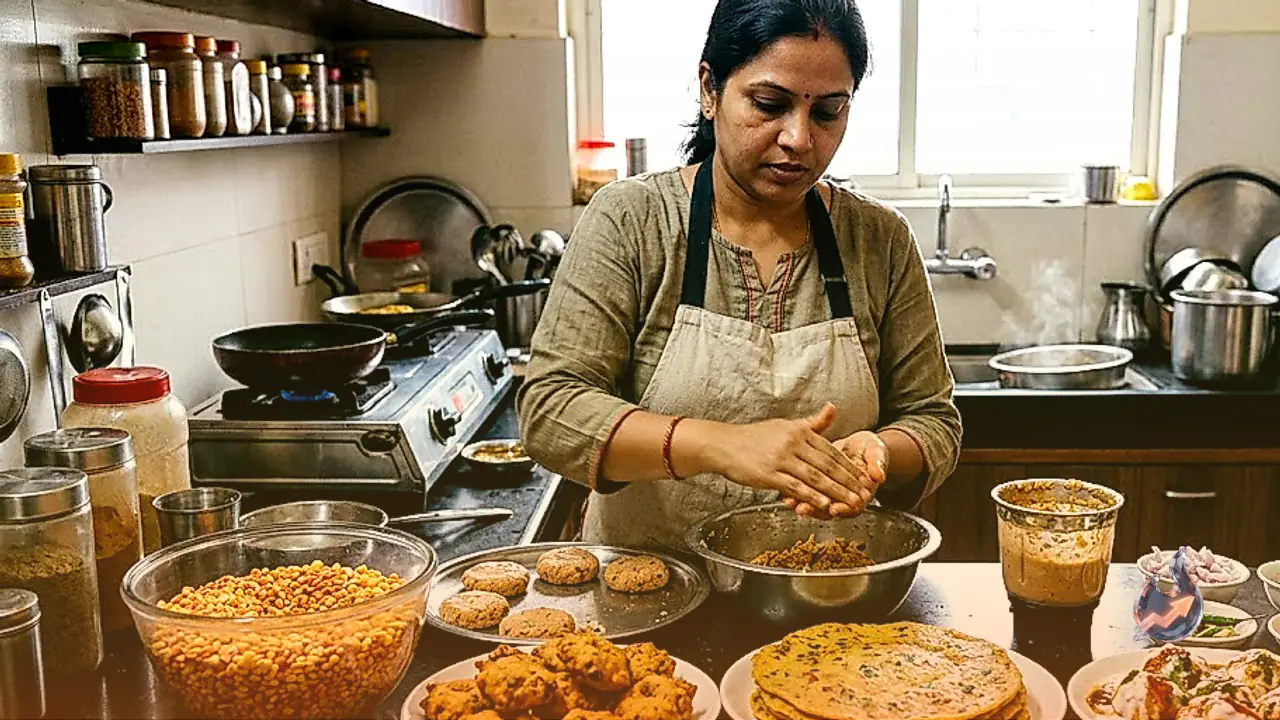
Following the 10-minute resting interval, give the rested dough a brief gentle knead. Divide the mass into small, uniform dough portions and roll them smoothly between your palms into round balls. On a clean rolling board, roll each portion outward using a light hand to create round pastry discs of medium thickness. Avoid rolling the kachori too thin, as excessively thin rounds fail to puff up properly and cannot achieve the characteristic layered crunch. Conversely, rolling them too thick can result in an undercooked core. Should the dough feel tacky while rolling, dust the surface lightly with dry wheat flour to prevent sticking.
Frying Temperatures and Oil Heat Regulation
Pour adequate oil into a deep pan or wok and warm it over medium heat. The oil must reach an optimal medium frying temperature; neither lukewarm nor excessively hot. Gently slip one rolled disc into the heated oil. Maintain a steady medium flame throughout the frying cycle. Use a slotted ladle to gently press down against the floating disc, encouraging it to puff up smoothly and expand evenly. Once the underside turns light golden, flip the kachori over and allow both sides to fry until uniformly crisp and rich golden-brown. Lift the finished kachoris out of the pan and hold them briefly on a perforated ladle to drain away any excess cooking oil before transferring to a plate. Frying on high heat must be strictly avoided, as extreme heat browns the exterior prematurely while leaving the inner layers damp and unbaked.
Critical Tips for Crispness and Serving Recommendations
The single most frequent mistake when attempting this recipe is adding liquid water too early during kneading. Excess hydration produces a limp dough, making rolling cumbersome and causing the pastry to absorb surplus oil while losing its structure during frying. While semolina and gram flour contribute significantly to a crunchy bite, correct dough firmness and disciplined flame management ultimately decide the result. These freshly fried kachoris taste best served piping hot alongside tangy green mint-coriander chutney, sweet tamarind dip, fresh plain yogurt, or spicy potato curry. They also function as a satisfying teatime accompaniment. For young children who generally reject bottle gourd dishes, rolling smaller bite-sized pieces makes the snack more inviting. Spice levels can easily be adapted according to personal family tastes.