























Bananas are one of the most universally popular fruits, loved by people of all ages for both their taste and nutritional value. But they come with a well-known frustration: they spoil faster than almost any other common fruit. The reason is a natural compound called ethylene gas that bananas continuously produce. This gas acts as a ripening trigger, and when multiple bananas are stored together, the combined ethylene from each one dramatically accelerates the process. Summer heat makes things considerably worse, which is why bananas brought home from the market can turn dark and mushy within just two or three days.
Wrap the Stem to Cut Off Ethylene at the Source
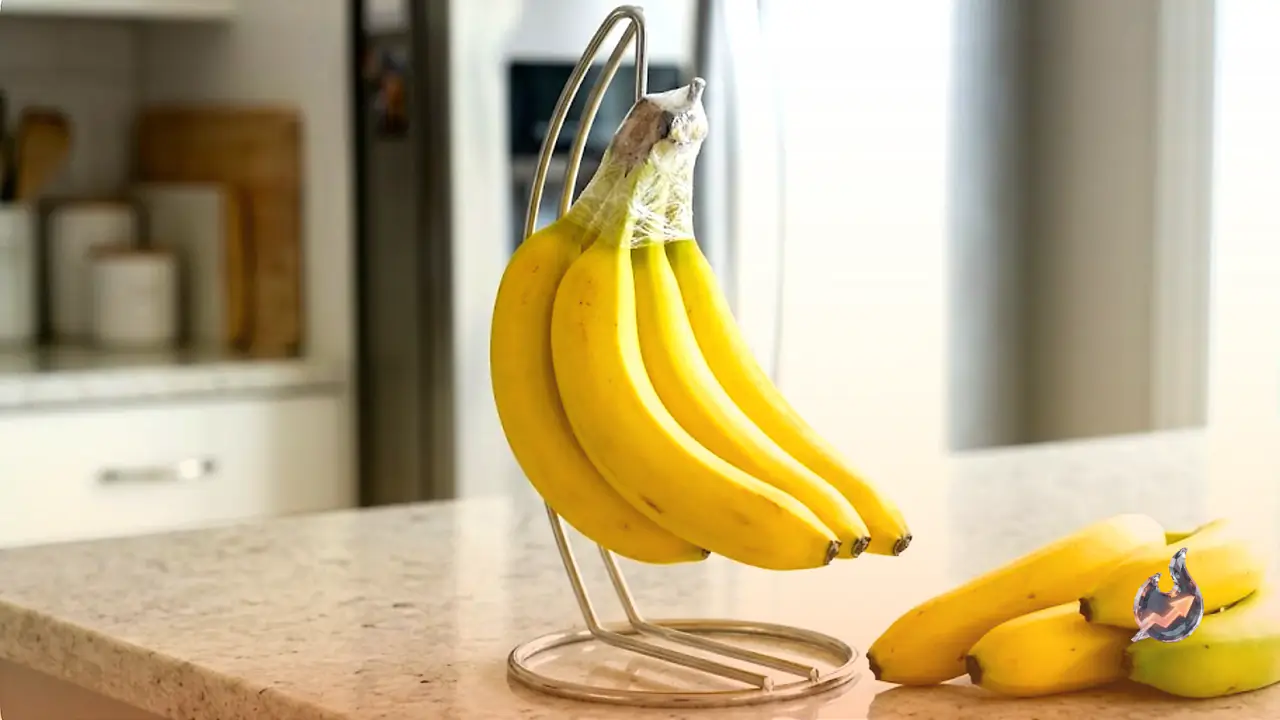
The stem of the banana bunch is the primary point through which ethylene gas escapes into the surrounding air. Wrapping it tightly in plastic wrap or aluminum foil limits how freely the gas can spread, which noticeably slows down the ripening process. This is one of the most recommended banana storage tricks because it directly targets the root cause of rapid spoilage rather than working around it. The method costs nothing extra and takes only a few seconds to apply.
Keep Bananas Away From Other Ripening Fruits
Apples, mangoes, and avocados also release ethylene gas as they ripen. Storing them alongside bananas creates a concentrated ethylene environment that pushes bananas to over-ripen much faster than they would on their own. Placing bananas on a separate stand or basket, away from other ethylene-producing fruits, is a straightforward step that can meaningfully extend how many days they last.
Hang Them in a Dry, Well-Ventilated Spot
Moisture is another major driver of banana spoilage. Keeping them inside closed containers or sealed plastic bags traps humidity around the fruit and speeds up decay significantly. A dry, open and airy space is the right environment for storing bananas. Better still, hanging bananas on a hook removes the pressure that resting on a flat surface puts on the fruit, helping them maintain their condition for more days. A simple banana hook in the kitchen is a small and practical solution.
Time Your Refrigeration Correctly
Many households put bananas straight into the refrigerator as soon as they arrive home, but this is not always the best approach. Placing unripe or partially ripe bananas in the fridge can disrupt the natural ripening process, leaving them under-sweetened and starchy rather than soft and flavourful. The right moment to use the fridge is after bananas have fully ripened. At that stage, the skin may turn dark or even black due to the cold temperature, but the fruit inside remains perfectly edible for a few more days.
Make Smarter Choices When Buying
Good banana storage actually starts at the point of purchase. If keeping bananas fresh for as long as possible is the goal, avoid picking bunches that are already very ripe or heavily yellow. Choosing bananas that are slightly green or just beginning to turn yellow gives them room to ripen gradually at home. This one small decision at the market can be the difference between bananas that last two days and ones that stay fresh for a full week, eliminating the need for repeated shopping trips.