
















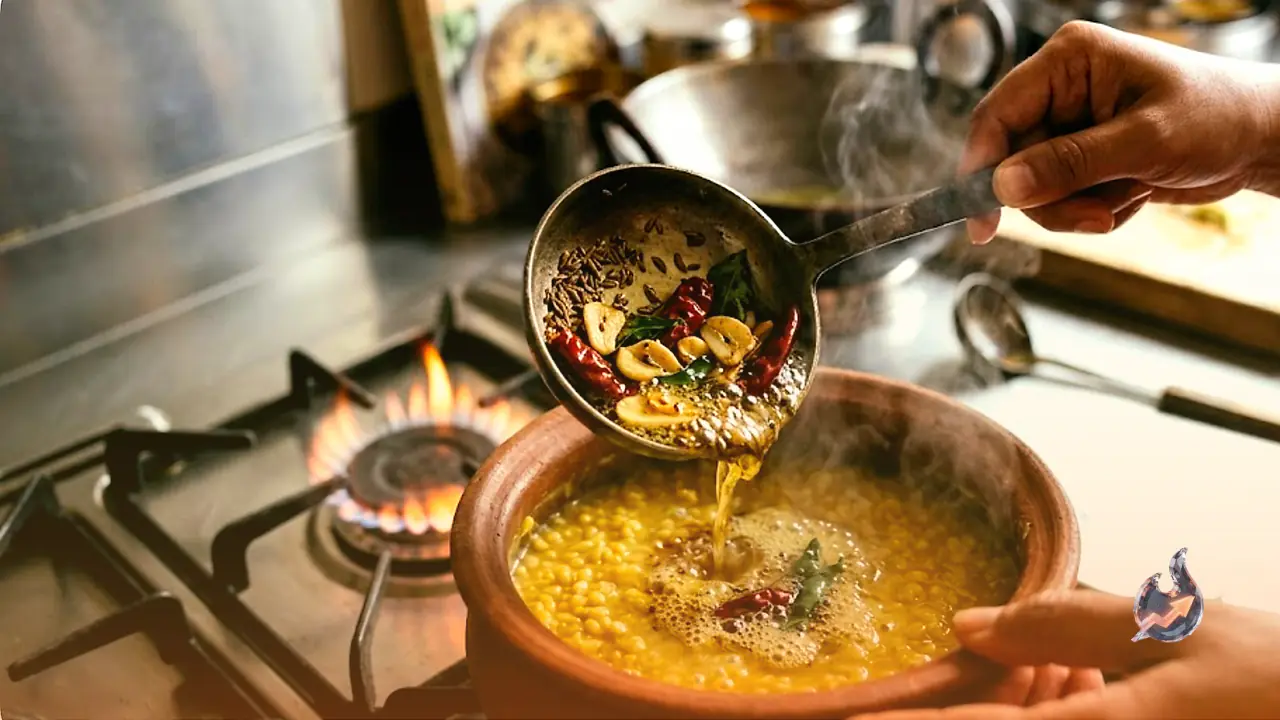

Dal sits on almost every Indian plate, day after day. Arhar, moong, masoor or urad, each variety has its own way of being cooked. But the one thing that truly lifts its flavour is the tadka. When spices are crackled in oil or ghee and then poured into hot dal, the aroma spreads through the whole house and the taste multiplies. The trouble starts when small mistakes creep into the tempering, because that is exactly when the dal turns out either bland or slightly bitter.
The most common slip is overheating the oil or ghee. When the fat gets too hot, the spices burn in seconds. Scorched cumin, charred garlic or blackened red chilli can ruin the entire fragrance of the dal. That is why a medium flame is considered the safest way to prepare a tadka.
Timing the Cumin Just Right
Cumin is treated as the heart of a dal tadka, yet if it goes in at the wrong moment its real flavour never comes through. The trick is simple: once the oil or ghee is hot and the cumin begins to splutter, that is the exact instant to add the rest of the spices. Doing this releases the natural oils locked inside the seeds, and those oils carry the deep aroma.
How Much to Brown the Garlic and Onion
A garlic tadka is a favourite for many, but it must be kept from burning. Garlic browned only to a light golden shade gives the dal an excellent taste. Take it too far and it turns bitter. The same caution applies to red chilli powder. Dropped into very hot oil, it can scorch and lose its colour. For this reason many people add the red chilli only after switching off the flame, so that both its bright colour and flavour stay intact.
Let the Dal Rest After Tempering
Always pour the tadka into hot dal, so the spices blend in properly. After adding it, keep the dal covered for a few minutes so the fragrance of the spices seeps right into it. This is why, in many kitchens, the dal is left to sit on a low heat for a short while after the tempering goes in. Remember, the flavour of dal does not come from salt and spices alone. The quality of the lentils, the way they are cooked and the balance of the tadka matter just as much. A tadka made in ghee gives the dal a richer, fuller taste, while one made in oil lends a lighter, distinct flavour.