























During the monsoon season, traditional kitchens in the Mithilanchal region showcase remarkable culinary creativity by turning overlooked ingredients into rich delicacies. In Madhubani and surrounding areas, the ripe jackfruit season marks the preparation of a popular regional specialty known as nerha curry. While people in many regions discard the internal core or stem after extracting the sweet fruit pods, homemakers in Mithila utilize this very part to create a spicy and savory dish that closely mirrors the texture and flavor of mutton curry.
What Is Nerha and How Is It Prepared?
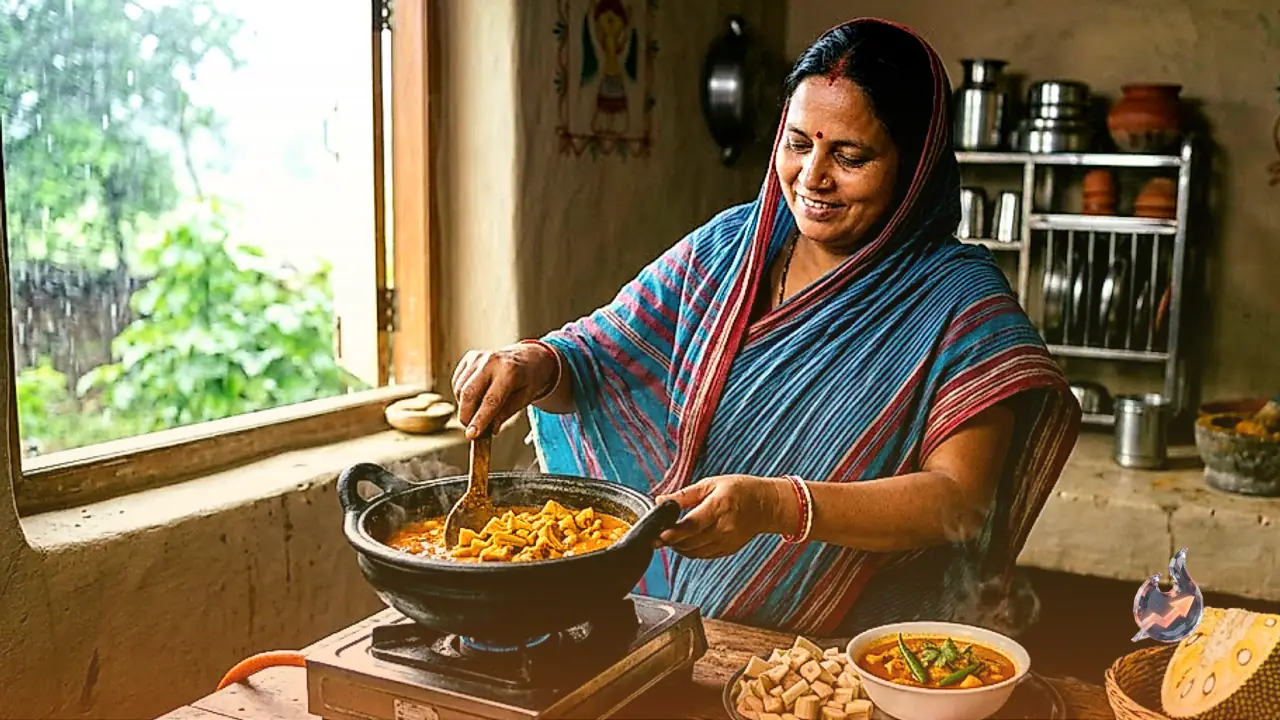
The central fibrous core or stem remaining inside a ripe jackfruit after removing the sweet pods is locally referred to as nerha. According to local homemaker Poonam, achieving the perfect flavor requires meticulous cleaning during the initial step. Once extracted from the fruit, the stem is thoroughly washed under clean water multiple times to remove any remaining fruit sweetness. After eliminating the sweet notes, it is sliced into small uniform pieces so that the spices can penetrate deeply during cooking.
Traditional Cooking Method with Mustard Oil and Spices
The cooking process begins by heating mustard oil in a kadhai. Once the oil is hot, cumin seeds, bay leaves, and dried red chillies are added for tempering. The chopped nerha pieces are then added to the pan and fried thoroughly. To enhance the overall texture and taste, diced potatoes and chopped onions are mixed into the frying stem. For the spice base, either whole spices ground freshly on a silbatta or a mixture of coriander powder, red chilli powder, turmeric, and garam masala are added and roasted well. Finally, a light gravy is created by adding water according to preference, and the dish is left to simmer until fully cooked.
Mutton-Like Flavor Profile and Serving Traditions
Once fully cooked, nerha curry takes on a rich appearance and delivers a bold, spicy, and tangy taste similar to traditional mutton dishes. It is commonly served hot alongside rotis or steamed rice. In Mithilanchal, locals also enjoy pairing this spicy gravy with roasted beaten rice, commonly known as chura or poha. Homemaker Poonam notes an essential tip for best results: the nerha stem must be completely fresh. If it is stored for two to three days, it develops a natural sweetness that spoils the authentic spicy flavor profile. Beyond offering a refreshing change for the palate, this seasonal specialty is also considered nutritious.