
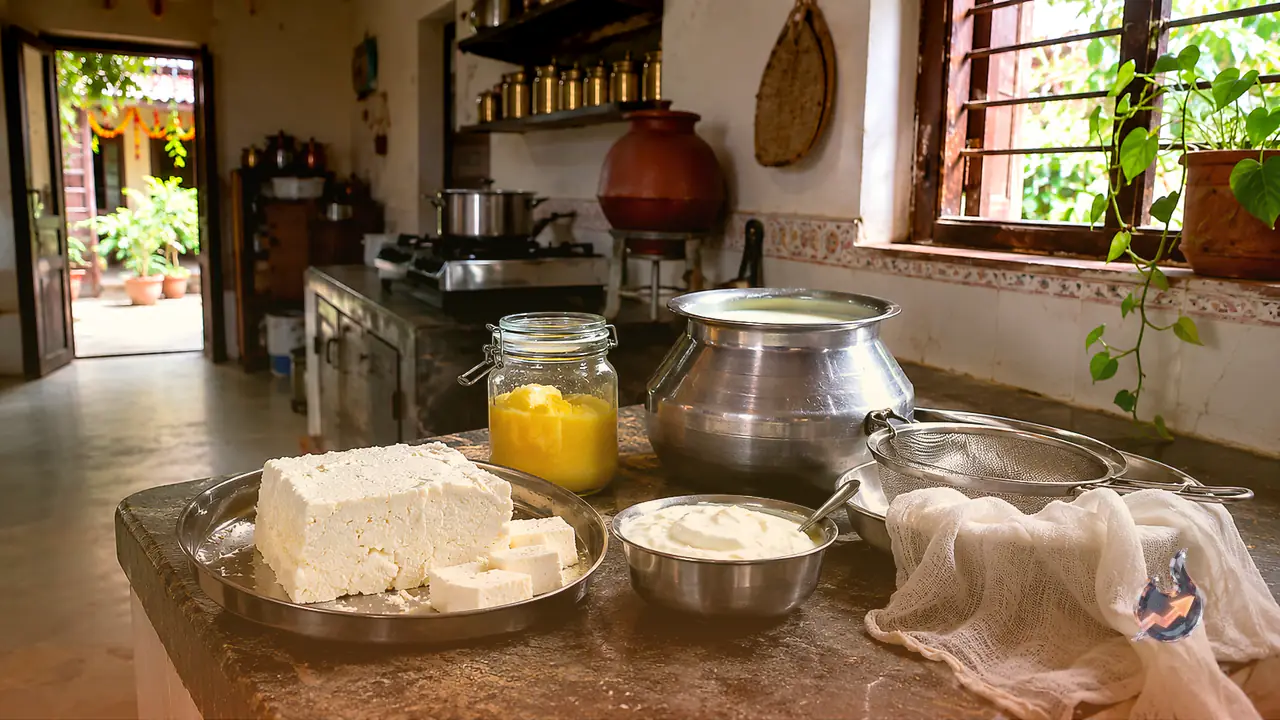

















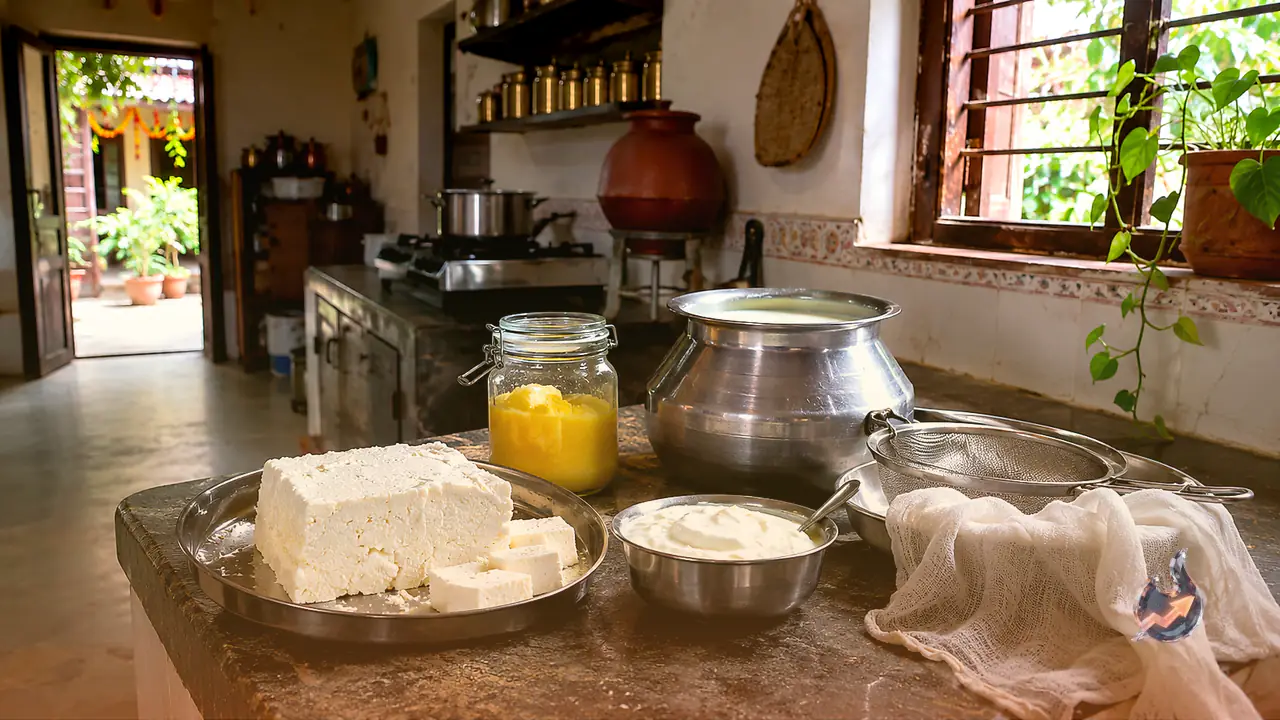

Festival seasons frequently witness a sharp rise in the adulteration of commercial dairy products, driving many households to look for safer alternatives. Homemade preparations guarantee untainted purity while preserving a rich aroma and authentic flavour that packaged store-bought goods rarely match. While most home cooks know how to churn milk cream either into butter and clarified butter or curdle it into fresh cottage cheese, very few realise that both pantry staples can be extracted simultaneously from the very same batch of cream through a simple, zero-waste process.
Proper Collection and Temperature Preparation
The first step in this twin extraction technique involves saving the thick layer of cream, commonly called malai, skimmed from boiled milk across 5 to 6 consecutive days. It is critical to store this collection inside the refrigerator continuously to prevent souring and off-flavours. When preparing to cook, take the stored cream out of the refrigerator roughly 4 to 5 hours ahead of time so it returns completely to room temperature. Transfer the cream into a spacious cooking pot while whisking it gently, making sure not to add any water to the mixture.
Gentle Heating and Controlled Curdling
Place the pot of whisked cream directly onto the stove over a low flame to begin heating. It is essential to stir the mixture steadily throughout the warming process, ensuring the dense solids do not settle or burn against the bottom of the pot, which would ruin the entire batch with an unpleasant scorched smell. To curdle the warm cream, prepare a curdling mixture in a separate small bowl by blending two spoonfuls of vinegar with two spoonfuls of water, or alternatively use an equal measure of fresh lemon juice. Pour this solution into the hot cream to split the curds effectively.
Separating and Pressing the Fresh Paneer
As soon as the acidic solution enters the hot cream, the mixture splits, revealing both cottage cheese and rich golden fat alongside one another. The white paneer curds naturally float to the top while the lipid-heavy liquid collects underneath. Position a colander or fine wire strainer over a deep pan and pour the contents through to capture the solid paneer above while letting the liquid base drain below. Rinse the captured curds thoroughly under plain running water to remove every trace of vinegar or citrus tartness.
Wrap the rinsed curds inside a clean piece of white cotton cloth and press firmly to extract all excess moisture. Squeezing out the water thoroughly is key to helping the paneer hold a firm, neat shape. Do not discard the residual whey pressed from the curds; instead, tip it directly back into the pan holding the separated ghee mixture. Allow the wrapped paneer to rest undisturbed in a cool place for 1 to 1.5 hours. Once fully cooled and set, unwrap the block and slice it into clean cubes.
The Cold-Separation Step for Pure Fat
Attention now shifts to recovering the clarified butter from the remaining liquid in the pan. Take a tumbler filled with water and position it upright in the centre of the pan. Transfer the entire pan, with the submerged glass intact, directly into the refrigerator for 4 to 5 hours. Chilling causes the butterfat to solidify into a distinct top layer, effectively separating it from the underlying water. Once chilled, lift out the tumbler and pour away the separated water, leaving behind the concentrated fat solids in the cooking vessel.
Simmering to Perfection and Adding Natural Aromas
Set the pan back over a low burner to finish cooking the recovered fat. Keep stirring the milk solids, or residue, steadily over gentle heat so they cook evenly without sticking. Maintained on low flame, the mixture clarifies completely into rich, golden ghee in about 10 minutes. For a distinctive, pleasant fragrance, toss a small cinnamon stick or a few fresh lemon leaves into the pan during the final simmering stage. Strain the hot liquid through a sieve to collect the finished clarified butter, wrapping up an efficient kitchen workflow that yields fresh cheese and pure ghee from a single batch.