






















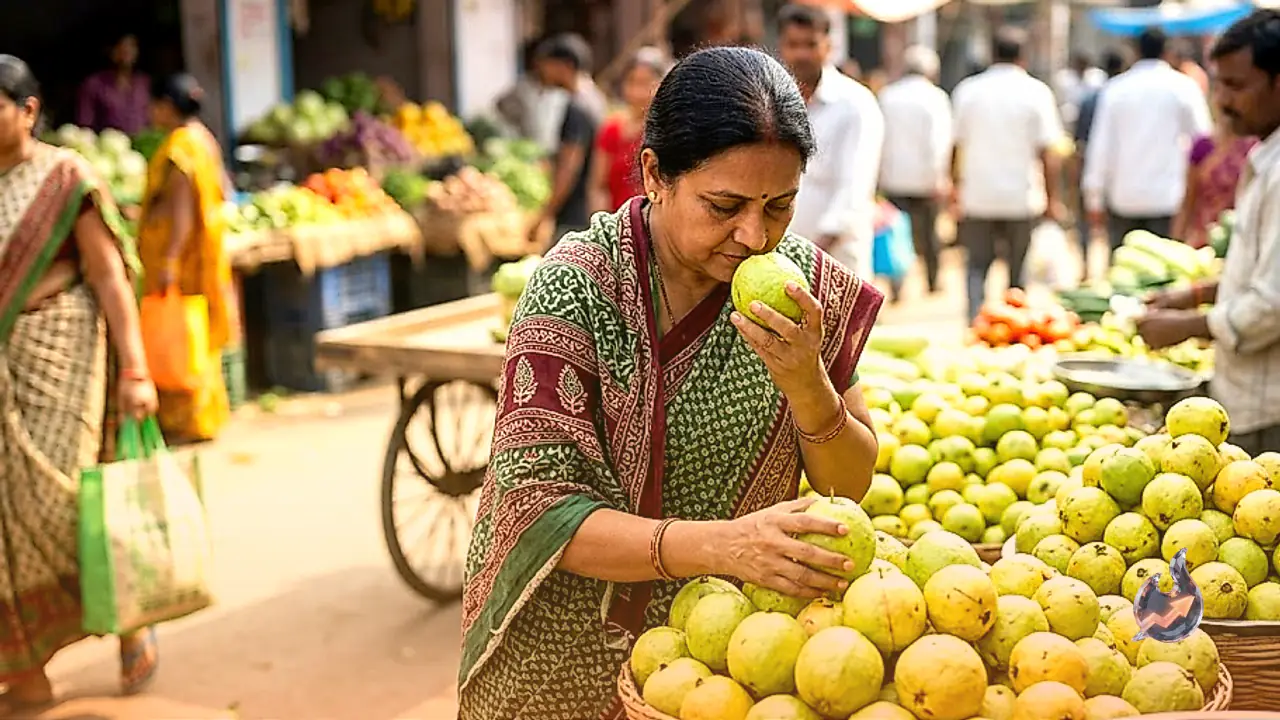

Selecting sweet and juicy guavas at the market can often feel confusing for shoppers. Without knowing the right indicators, people frequently end up purchasing fruit that turns out to be bland, unripe, or excessively overripe. However, by observing key characteristics such as color, surface texture, aroma, weight, and firmness, anyone can consistently pick high-quality guavas. Agriculture and medical experts suggest checking six essential factors before buying to avoid wasting money and to enjoy maximum health benefits.
Color and Skin Condition Indicators
The visual appearance of a guava provides the clearest clue about its sweetness and ripeness. A dark green exterior signifies an unripe guava that lacks sugar content. Conversely, a completely yellow skin often indicates overripeness, which can lead to an undesirable flavor. Experts recommend choosing guavas with a balanced light green or pale yellow color. Additionally, the outer skin should be smooth and clear. Agriculture expert Prof. Ashok Kumar Singh from Ballia explains that while minor natural blemishes are acceptable, guavas covered in heavy black marks, deep wrinkles, or large dark spots usually suffer from internal damage.
Firmness Assessment and Weight Distribution
Evaluating the tactile feel of the fruit helps determine its exact stage of maturity. A ideal sweet guava should yield slightly when pressed gently with fingers. If the fruit feels extremely hard, it remains raw and will taste flat. On the other hand, if it feels overly soft or mushy, it is likely overripe or spoiled. Furthermore, checking the weight relative to size is a reliable test for juiciness. High-quality guavas with plenty of juice feel heavy for their dimensions. Lightweight fruits are typically dry or underdeveloped inside. Choosing a medium-sized guava that feels heavy in the hand offers the best tasting experience.
Aroma Profile and Pulp Quality
Natural fragrance is another powerful indicator of a sweet, fully developed guava. A ripe guava emits a mild and pleasant sweet aroma. If no fragrance can be smelled, the fruit was likely harvested prematurely and requires more time to ripen. However, a sharp, sour, or unusual odor indicates decay, and such fruit should be avoided. In cases where the seller allows slicing the fruit, inspect the flesh carefully. Fresh, healthy pulp appears bright white or soft pink. If the inner flesh has turned brownish or watery, the guava has deteriorated and will deliver a poor taste.
Nutritional Advantages and Consumption Guidelines
Beyond its appealing flavor, guava offers remarkable nutritional value for daily health. Dr. Vandana Tiwari, a Medical Officer with 5 years of experience at Government Ayurvedic Hospital in City Ballia, notes that guava is rich in dietary fiber, Vitamin C, and antioxidants. Regular consumption supports healthy digestion, boosts immune response, regulates blood sugar levels, aids in weight management, and helps maintain balanced blood pressure. Nevertheless, Dr. Vandana Tiwari advises against overeating guava or consuming it late in the evening. She also cautions that individuals managing underlying health conditions should seek medical advice before making it a regular part of their diet.