




















Every summer, Indian markets fill up with dozens of mango varieties. While names like Dashehri and Langra dominate conversations, a far lesser-known variety has been making its way to local markets in western Uttar Pradesh for centuries. It is called the Tamuria mango, and most people outside the region have never heard of it. Grown mainly in the Rataul area of Uttar Pradesh, this variety stands apart not only for its flavour but for the extraordinary history attached to its name.
A Name Rooted in the 15th Century
The Tamuria mango does not owe its name to a farmer, a village, or a local landmark. It carries the name of Timur, the 15th-century Central Asian military conqueror and founder of the Timurid Empire. Historical accounts suggest that when Timur led his army toward Delhi, his route took him through the Rataul region. He is said to have stopped there and tasted this particular variety of mango. Over time, that association gave the fruit its name, with the ruler's name evolving from Taimur into the local designation Tamuria.
What an Agricultural Scientist Says
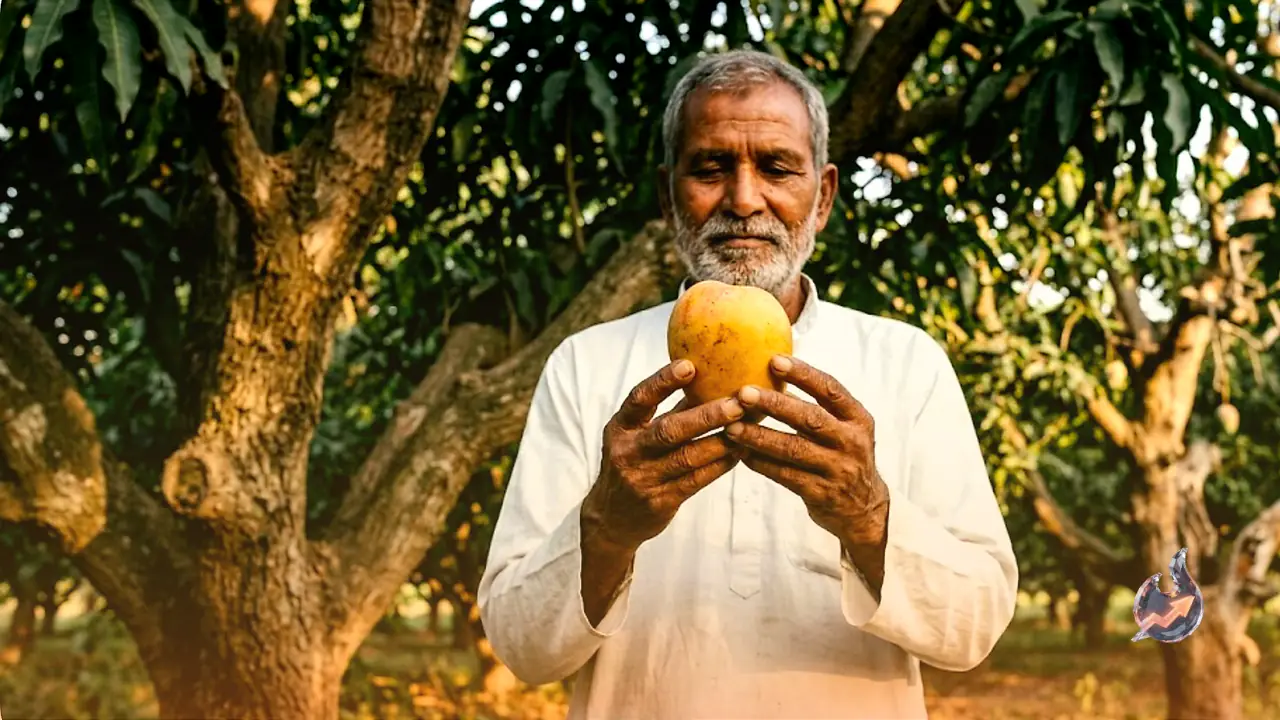
Agricultural scientist Dr. Deepak Mehandiratta describes the Tamuria as one of India's oldest traditional mango varieties. It is not a commercially dominant fruit by any measure, but its historical and cultural significance makes it genuinely interesting. He notes that the mango is slender in shape and carries a deep green colour while still unripe, much like other common varieties. Once it ripens, the skin turns yellow. The taste leans mostly sweet but holds a mild underlying tartness, producing a pleasant sweet-sour combination that sets it apart. Its fragrance, unlike the heady scent of more popular varieties, is subtle and agreeable.
A Narrow Geography and an Even Narrower Future
The Tamuria mango is tied to a very specific geography. The Rataul area near Baghpat is its primary growing zone. Beyond that, it is found only in pockets of Meerut and Saharanpur in western Uttar Pradesh, and nowhere else in the country. More limiting still is the fact that it grows exclusively in old, established orchards that have existed for generations. No new trees of this variety are currently being planted, and production is not growing in any organised or deliberate way.
Old Orchards Keep It Alive
Despite the absence of any conservation effort or fresh planting, the Tamuria mango continues to arrive at local markets each season, sustained entirely by the old orchards that have been around for decades. Those who come across it and taste it tend to develop a strong liking for it quickly. Yet without active intervention, new planting drives, or institutional support for preserving this variety, its presence in the market will remain entirely dependent on aging trees from a past era.