




















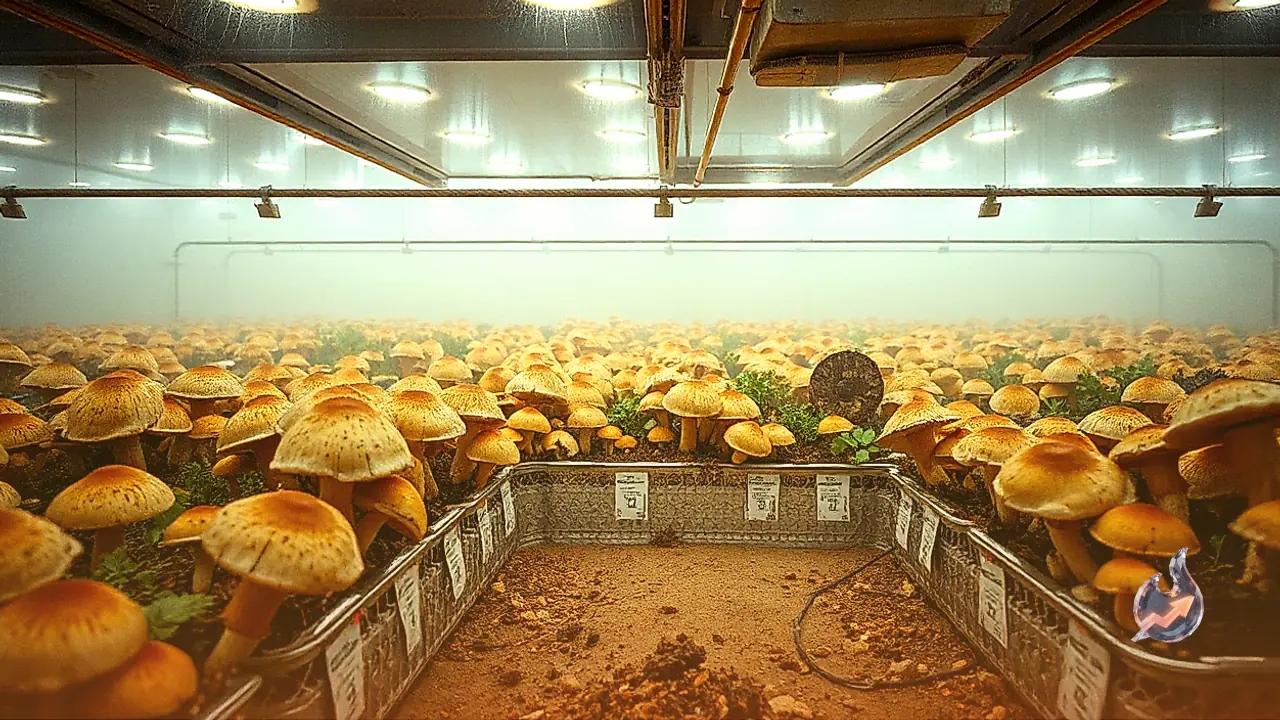

If your online feeds display any interest in home mushroom cultivation, you have likely encountered advertisements for the Lykyn. It resembles a prop straight out of a science fiction film, featuring a clear housing equipped with theatrical lighting, fog effects, and a specimen displayed like an otherworldly artifact.
Setup and Assembly Process
Measuring 13 by 13 by 15 inches and offered in white or black plastic finishes, the unit arrives mostly unassembled. Users must peel away the protective plastic film from both sides of every acrylic panel before sliding them into the base tracks, attaching the corner pillars, and filling the reservoir with distilled water. One of the panels functions as a sliding door, which can prove finicky to install and often requires opening and closing multiple times to loosen, ultimately needing two hands to wrench it open.
Connectivity and Illumination
The device requires a connection to a 2.5-GHz Wi-Fi network and draws power via an included 5-volt USB-C cable, though a power brick is not provided in the box. Illumination is handled by a small LED pad that rests on the top surface and plugs directly into the base unit.
Harvest Quality and Flavor
Both initial growing blocks produced approximately a pound of mushrooms during their first flush, yielding produce that tasted noticeably superior to grocery store alternatives. However, the system is clearly positioned as a hobbyist decor item rather than a high-volume agricultural appliance.
Design Philosophy
Lykyn founder Ibrahim Berber explained that the company deliberately designed the chamber to resemble an aquarium rather than a standard household appliance. He noted that watching the transformation from mycelium to fruit is one of the most visually engaging occurrences possible inside a home environment, deserving of a prominent place on a kitchen counter rather than being tucked away in a closet.
Long-Term Maintenance and Aesthetics
While the manufacturer suggests that most blocks should support two to three flushes, only the shiitake block produced a secondary harvest, arriving roughly three weeks later and offering a smaller yield. This means that for significant periods, the device displays what resembles a moldy, compressed sawdust brick. Despite this maintenance reality, the aesthetic appeal of growing a functional centerpiece that can eventually be harvested and sautéed remains difficult to resist.