






















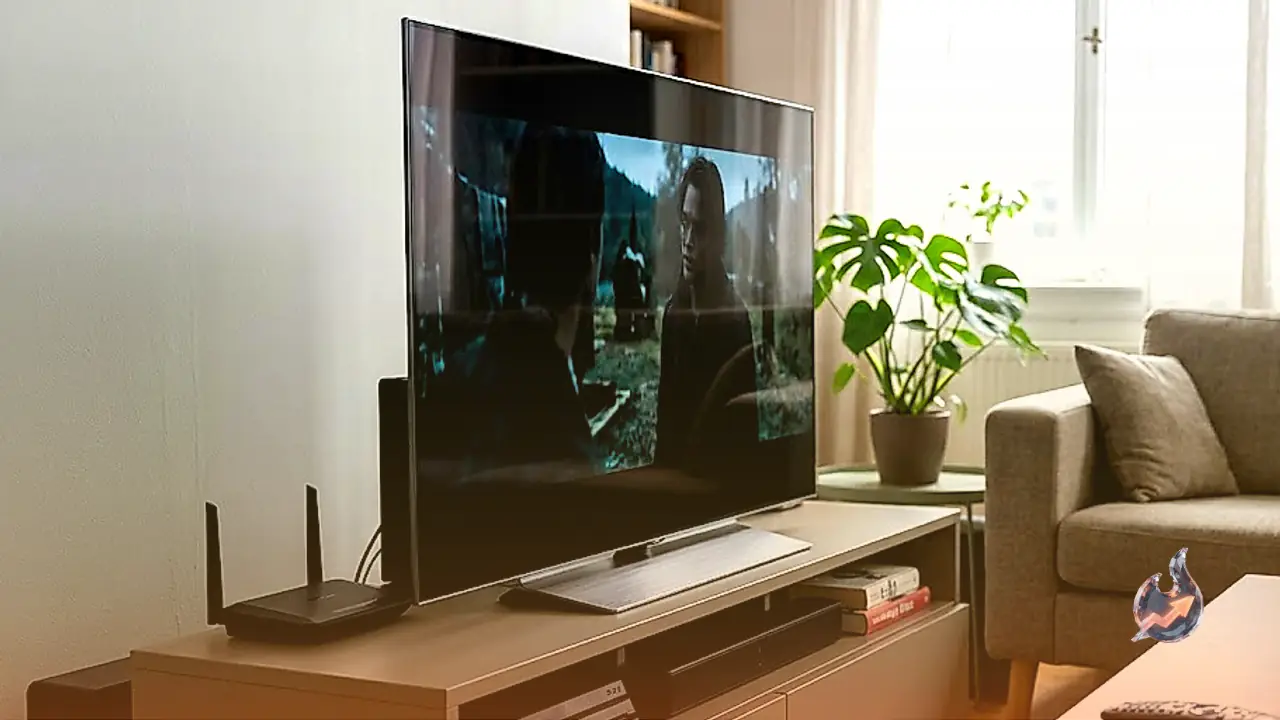

Unboxing the LG B6 immediately reveals a remarkably slim build, measuring just 1.8 inches thick at the base and roughly a quarter-inch across the top and most of the bezels. Because the OLED panel eliminates the need for the backlighting found in typical LED or RGB televisions, the chassis achieves an exceptionally sleek profile. The lower section remains slightly bulkier to accommodate four HDMI ports, all supporting a 120-Hz refresh rate, alongside an optical audio output, two USB 2.0 ports, and a single LAN port. Connectivity maxes out at Wi-Fi 5, meaning the television misses out on the latest wireless standards.
Setup and Interface Experience
Configuration relies entirely on LG proprietary WebOS platform and the ThinQ app rather than built-in Google TV or Fire TV software. Setting up the unit via the LG ThinQ app on an iPhone proved straightforward, allowing the loading of streaming services like Prime Video, Disney+ and Apple TV+ within minutes.
Features and Gaming Capabilities
The television arrives loaded with functionalities, including a dedicated gaming mode designed to reduce input lag and AI picture enhancements that deliver noticeable visual improvements. Additional software additions include an art display mode named LG Gallery+ priced at $5 per month, an alternative music application, audio dialogue synchronization settings, and a desktop mode that mirrors laptop displays while running email clients. Gaming performance benefits significantly from the 120-Hz refresh rate screen, rendering fast-paced motion crisp and responsive during sessions.
Remote Control and Software Drawbacks
User experience with WebOS prompts mixed reactions, particularly regarding the inability to disable the on-screen pointer controlled by the remote, which tends to jump erratically. Operating the remote in dimly lit environments presents challenges because the home button lacks central placement, and shortcut keys for streaming services situated at the bottom are not backlit.
Display Quality and Brightness Levels
Pricing strategy positions this model firmly as an entry-level OLED within the manufacturer lineup, a reality confirmed during media playback testing. Black and gray reproduction stands out as a major strength, preserving shadow detail and clarity in dark sequences where mid-range displays often struggle. While sports broadcasts display rich textures, overall panel brightness and contrast levels fall short of absolute peak performance, leaving room for future refinement.