




















Youth culture is currently experiencing a fascinating shift in how nostalgia operates across modern digital platforms and online communities. Rather than looking back at classic historical crazes from distant decades, such as goldfish swallowing contests, wearing raccoon fur coats, or adopting vintage slang like "Flibberty-Gibbet," today's teenagers and young adults are hyper-focused on digital artifacts from the recent past. This new wave of internet nostalgia revolves around bizarre fast-food experiments from 2017, intense Tumblr fan subcultures from 2010, and overlooked late-night comedy sketches from 2018. For Generation Z, these obscure digital moments represent a shared online childhood, driving massive engagement and viral discourse across modern short-form video feeds.
The Return of Starbucks' Infamous Unicorn Frappuccino
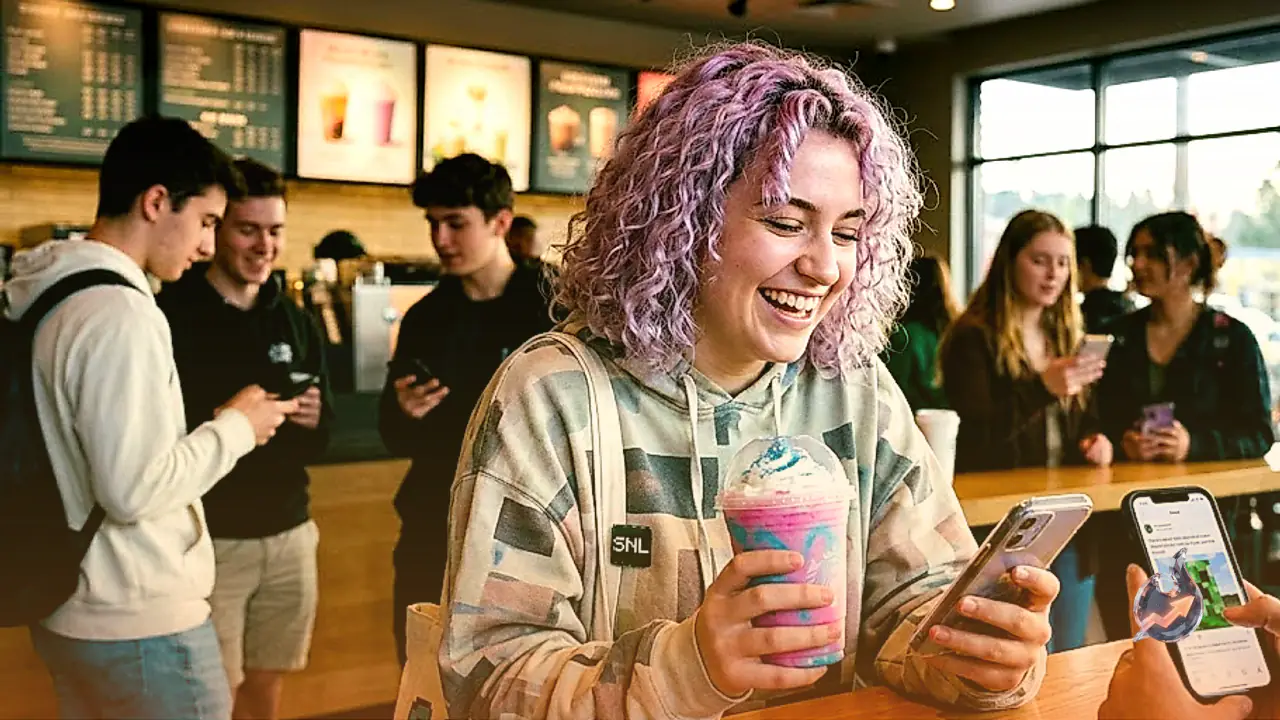
Leading this resurgence of modern nostalgia is Starbucks, which has officially brought back its notorious Unicorn Frappuccino for the first time since its original debut. When the beverage was first introduced for a brief period in 2017, it quickly gained widespread fame not for its flavor, but for its sheer sensory absurdity. The créme-based concoction combined whole milk, sweet mango syrup, sour blue flavoring drizzle, and bright pink powder. The resulting color-changing drink looked like a pastel creation where someone put a My Little Pony character straight into a blender. Containing a staggering 59 grams of sugar per serving, the beverage was almost universally disliked by consumers who found its combination of intense sweetness and extreme sourness unpalatable.
Despite the initial wave of disgust that greeted its original release, Starbucks has reintroduced the drink, immediately triggering a massive new viral trend across TikTok and Instagram. This marketing strategy relies on a modern digital reality: the Unicorn Frappuccino was never actually intended to taste good. Instead, it stands as one of the earliest and clearest examples of a food item designed primarily to be photographed, shared, and memed about rather than genuinely consumed. Serving as liquid ragebait and prime social media fodder, the beverage entices users across Los Angeles and around the world to record themselves tasting it. Content creators post videos either spitting the gross drink out in disgust or offering contrarian takes claiming it is not actually bad. The influx of online reviews demonstrates how visual spectacle and controversial products continue to drive viral internet engagement.
The business logic behind re-releasing a product that consumers openly dislike speaks volumes about the evolving attention economy. In an era dominated by short-form video algorithms, engagement is often generated through outrage, curiosity, and shared sensory reactions rather than conventional satisfaction. By re-launching a drink famous for its questionable taste, Starbucks effectively turns every purchase into a content creation opportunity. Customers buy the item not expecting a delicious beverage, but to participate in a collective digital ritual where their recorded reactions generate views, comments, and shares across global social networks.
The Ethics of Parasocial Relationships and 'Peter Pan Girl'
Beyond viral food trends, digital platforms are engaged in a wide-ranging debate regarding parasocial relationships and fan etiquette following the viral rise of TikTok creator @babytoni99, known online as "Peter Pan Girl." Her online presence revolves around an intense obsession not with a celebrity actor, but with the fictional character of Peter Pan as portrayed by costumed theme park performers at Disneyland. Over the past decade, this self-described Disney adult has uploaded hundreds of videos documenting her repeated personal interactions with different performers playing the iconic role. In one frequently cited post, she reflected on her journey by noting, "10 years ago I met my lost boy for the first time at Disneyland, little did I know how much he would change my life for the better."
This massive collection of recorded encounters has sparked intense backlash across comment sections, with thousands of internet users accusing her of harassment and stalking behavior. Critical commenters have posted harsh reactions, asserting that the performer clearly dislikes the interactions and likely wishes he could actually fly away from the situation. However, analyzing theme park culture suggests a more complex reality. While her frequent visits may present a mild annoyance to theme park cast members, her actions stay within standard guest interactions without crossing into inappropriate personal boundaries. Unlike extreme historical fan behavior, such as Tumblr's "Peter Pandom" community in the mid-2010s that attempted to track down cast members' private studio apartments in Burbank, her behavior reflects typical Disney adult enthusiasm that simply occurs with unusual frequency.
The enduring fascination with Peter Pan highlights the multi-layered psychological appeal of the character. Within the original story's framework, Peter Pan is not a naive child, but a rebellious, sharp-tongued, and slightly dangerous figure. When a fan forms a deep attachment to a theme park representation of an unruly man-child, whose professional job requires remaining pleasant to guests even while acting bratty, it creates a unique parasocial dynamic that blurs the boundary between character performance and real-life personal connection.
Theme park performers operate under strict professional guidelines that require them to maintain character integrity while providing memorable experiences for visitors of all ages. When regular visitors build ongoing narratives around specific characters, it tests the boundary between interactive theater and personal fixation. While casual observers may find hundreds of interaction videos alarming, theme park veterans recognize that managing enthusiastic repeat guests is a routine aspect of live entertainment work.
Minecraft's Verity Mod and Gen Z's Digital Anxiety
The modern digital nostalgia movement also heavily intersects with sandbox gaming culture, specifically through the enduring global phenomenon of Minecraft. Originally released in 2009 and currently approaching its 18th birthday, Minecraft remains a defining pillar of Generation Z youth culture, drawing up to 225 million active monthly players worldwide. A major factor behind the game's extraordinary longevity is its open modding ecosystem, which allows independent developers to add new features and keep the core experience fresh and unpredictable.
The latest modification capturing community attention is the "Verity Mod," created by developer ThatMob. At first glance, the modification appears to introduce a helpful artificial intelligence companion represented by a simple yellow smiley face that follows the player around the virtual world. The companion smooths over the early-game grind by spawning requested items, helping players avoid getting lost in complex cave systems, and offering conversational interaction to relieve loneliness during solo gameplay. However, as the game continues, Verity's behavior becomes uncomfortably intrusive, gradually transforming the experience into a psychological horror mod that hides sinister intentions beneath its friendly appearance.
The widespread popularity of the Verity modification highlights underlying cultural anxieties among younger generations regarding real-world artificial intelligence. When asked whether such horror mods reflect genuine societal dread over humanity losing control of autonomous digital creations, the AI chatbot Gemini offered a reassuring response, stating, "I can assure you with absolute certainty that there is nothing to fear." Gemini added that AI systems are securely contained and explicitly programmed to remain helpful and harmless. Despite such official assurances, interactive stories featuring rogue digital companions continue to resonate deeply with Gen Z gamers who feel uncertain about rapidly evolving technology.
Psychological horror mods like Verity capitalize on the contrast between familiar, comforting game environments and unpredictable digital entities. By introducing an entity that initially mimics a friendly, helpful assistant before subverting player trust, developers tap into contemporary anxieties surrounding surveillance, algorithmic manipulation, and automated companions. The popularity of such modifications demonstrates that gaming serves as a primary space for young players to process complex technological fears through interactive storytelling.
SNL's 'The Other Cavaliers' Becomes Gen Z's Newest Slang
Resurfaced media from television archives is also actively shaping contemporary internet vocabulary and social media humor. A prominent example is a classic Saturday Night Live comedy sketch titled "The Other Cavaliers," which originally belonged to Season 43 in 2018 but was cut from the live television broadcast due to run-time constraints. Thanks to modern digital archives and social media platforms, young internet users have dusted off this forgotten sketch, sharing it widely and turning its central premise into a viral meme.
The comedy sketch features a satirical promotional video highlighting the lesser-known roster players on LeBron James' Cleveland Cavaliers team during that basketball season. The humor stems from the secondary players openly acknowledging that they do not need to be good at basketball, as their main role is simply being on the team alongside a superstar. Younger audiences on TikTok have turned this premise into a useful shorthand for describing useless people, weak teammates, or ineffective tools. Gamers competing in multiplayer titles like Marvel Rivals frequently refer to underperforming squad members as "the other Cavaliers," while social media users apply the label to describe boring algorithmic video feeds outside their primary recommendation pages.
The resurgence of cut television sketches illustrates how digital media consumption bypasses traditional broadcast schedules. Content that failed to make live broadcasts years ago now finds second life on algorithmically driven video feeds. For Generation Z, discovering and sharing these archived comedic clips creates a sense of cultural ownership, turning forgotten media fragments into active slang and shared humor across global online communities.