























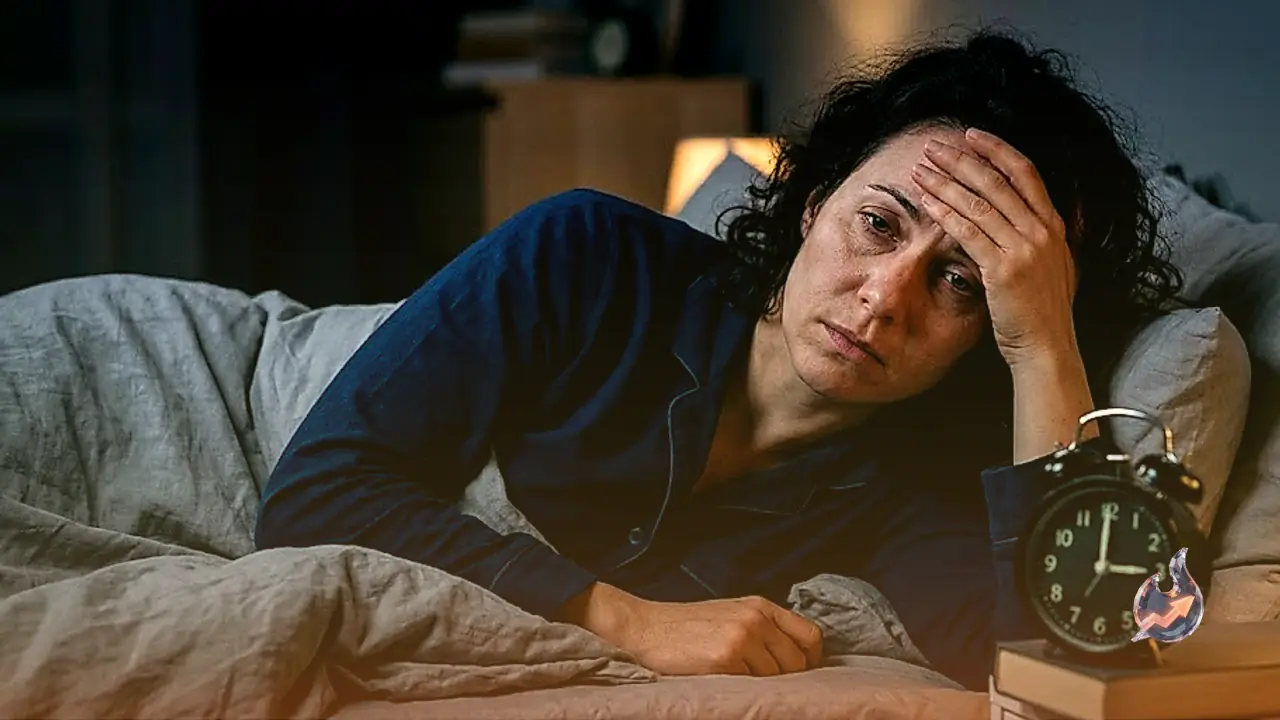

When sleep refuses to come, the clock on your nightstand can feel like it is mocking you. As you settle into bed, you tell yourself, at least I'll get seven hours. But an hour later, still wide awake, the math drops to six hours, and six is not much. If you are still not tired, the number slides below six, until you are simply lying there dwelling on how wrecked you will be come morning.
If any of this sounds familiar, take comfort in knowing it is not just you. Sleep researchers have long recognized a phenomenon they describe as losing sleep over losing sleep, and it is a well-documented contributor to insomnia. It may not be the root cause of your sleep troubles, but it can absolutely make an existing problem worse.
How the vicious cycle takes hold
Picture this: some minor issue is making it harder for you to drift off. You slip into a pattern of stressing over the clock all night, sleeping poorly, and then dragging through the next day exhausted. Before long you start to dread bedtime itself, because you already know the whole ordeal is about to repeat. It is a trap that tightens on its own, night after night.
Caught in that loop, plenty of people reach for sleep medications, which carry their own health risks. Popping Benadryl every night, for instance, is not good for you. A 2023 study found that the habit of watching the clock, which researchers labeled time-monitoring behavior, may be pushing people toward medications they would not otherwise need. So what should you do instead? Here is what sleep experts recommend.
Put the clock out of sight
One of the experts behind that study points out that it helps to make a simple promise to yourself: you will not look at the time. Turn the clock to face the wall, cover the display, or if you rely on your phone to check the hour, place it somewhere out of reach. If your alarm has not gone off yet, it is still nighttime, and honestly, that is all you really need to know.
Without the clock in view, you might fret that you have no way of knowing whether you are getting enough sleep. Yet the truth is that even with the clock in front of you, you are not tracking those hours accurately anyway. During the stretches you assume you are fully awake, you are often drifting in and out of sleep, banking far more of it than you give yourself credit for.
Check tracker data only when it helps
If you sleep wearing a watch or fitness tracker that logs your rest, pay attention to the numbers only when they actually reassure you. If you glance at the data in the morning and think, huh, I got more sleep than I realized, that is genuinely comforting. But if checking those figures ends up feeding your anxiety, it is worth breaking the habit of opening the app. Trackers are not always perfectly accurate to begin with, and if you convince yourself you slept badly, you may feel more tired even when your sleep was actually fine.
Focus on relaxing instead
Here is a reassuring thought for those long, restless nights: relaxation, even while you are awake, is almost as valuable as sleep itself. Close your eyes, quiet your mind, and most importantly, remind yourself that resting like this is exactly what your body needs right now. Unwinding this way can hand you some of the benefits of meditation, and there is even a hypothesis that meditation delivers some of the benefits of sleep. Whether or not that holds true, it is a soothing idea to hold onto in the middle of the night.
And if you need one more reason to let go of the worry, remember that relaxation is one of the most effective paths to sleep in the first place. So whether you eventually nod off or not, spending the remaining hours of the night in a restful state is doing your body and brain a real favor.